I'm an artist, writer, and a lover of thoroughbreds. I was born and raised in horse racing, and now I wish to help rehome them, educate people about how fantastic they are, and show what they can do.
Broken skyline, which way to love land Which way to something better Which way to forgiveness Which way do I go
Time to move on, time to get going What lies ahead, I have no way of knowing But under my feet, baby, grass is growing It’s time to move on, it’s time to get going
Sometime later, getting the words wrong Wasting the meaning and losing the rhyme Nauseous adrenaline Like breakin’ up a dogfight Like a deer in the headlights Frozen in real time I’m losing my mind
It’s time to move on, time to get going What lies ahead, I have no way of knowing But under my feet, baby, grass is growing It’s time to move on, it’s time to get going
Tom Petty lyrics from Time to Move On
This about sums up my life up for the next few days.
Last night I found out that a dear friend of mine died. She helped me through a difficult time in my life, took me in when I had no place to go, and I can’t imagine life without her. I went outside to feed the horses, and I brought the dogs with me not knowing how to deal with this; so I stuck with my routine.
I went up to Harley crying a little, and he nickered gently in my ear before giving me one of his hugs. Chaco continued munching on his hay while watching us. I went to go get some hay, and as I was walking back it all began.
The sun hit that sweet spot on the horizon that lit up the peaks of the Cimmaron’s and the Sneffels in the richest alpenglow I’ve ever seen. I couldn’t move it was so beautiful. I felt like I was witnessing something beyond the normal; magic. The clouds above me were filled with ribbons of reds and purples. Geese sailed through the sky while the air sung beneath their outstretched wings. A pair of owls hooted in the cottonwoods across the street as the sunset increased its depth and vibrancy.
I remembered a similar night many years ago. I was about to go into a sweat lodge with my uncle when the sun hit that sweet spot. I stood in the dancing grass on the plains watching light and colors dancing through the thunderheads when Marie came up behind me and said, “Watch it close, because you’ll never see it again.” She said that a lot to me, and I do watch it all closely because of her.
I whispered her words to the horses, dogs, geese and owls, “Watch it close guys, because you will never see this again.” With that, the light switch went off, and the sun was gone.
I walked to the gate when I felt Chaco following me. I turned to face him, and he gave me one of his sweet, loving nuzzles.
During Chaco’s rehab sessions, I rode him on the upper pasture when an old timer pulled his truck over to talk with me. “What kind of horse is that? I’ve been wondering for awhile.” I told him Chaco was a thoroughbred, and his jaw dropped before exclaiming, “What the heck are you doing on a thoroughbred? Aren’t you scared?” The whole time Chaco stood there quietly and relaxed. Hmmmmm.
Yesterday, I took the boys out for a short trail ride after several weeks of continuous snow, rain, and mud. The ground is finally dry enough to ride without fear of sinking horse knee deep in mud. I wondered, without much work of late, how they would do. Would they act up? Would they be hot?
Well, for all of you that insist Thoroughbreds can’t be ridden out on the trail, because they are so spooky, skittish, hot and hard to handle, it was a wonderful ride! Chaco is still green on the trail, and he went back to it as if we’ve been riding all winter long. Harley and Chaco stood calmly as I climbed on. I can’t get on Chaco from the ground he is so tall, so I climb onto something to be able to get onto him. They moved off calm and relaxed without one spook the entire way.
When I ride Chaco, I don’t steer him with my reins. I use my legs, and he moves off the leg pressure perfectly. I solely use my reins to keep him square and balanced. I ride him one handed while I pony Harley with my other hand. Chaco has never spooked at anything on the trail. Mind you, I did do a lot of groundwork with him when he came here, and I desensitized him to anything I saw him look at too long.
For instance, he never had a bush touch his tummy before, so I got a branch from my tree that still had leaves and gently rubbed it all over him several days. I would touch his tummy, legs, barrel, put it between his front and back legs with it, and rub his neck and hindquarters with it until he would stand there relaxed and let out a sigh. I left it in the paddock, so he could explore and play with it; this way he teaches himself it’s nothing to be afraid of. I put white rocks all over the paddock area, because white rocks always seem to stop horses in their tracks. Why? I don’t know, but I’m determined to figure that one out. I put down a blue tarp for him to walk over simulating water and to desensitize him to walking on something that makes different sounds. Racehorses generally stay on the most perfect ground all the time that doesn’t make sounds like walking on branches or leaves. I also put out poles for them to walk over, so when we come across a downed tree, no big deal.
But remember, racehorses run, walk, stand with thousands of people running around and screaming while they are in the paddock or out on the track. There is an ambulance that follows them as they race, and this ridiculously loud bell goes off when they break from the gate. As they run at 45mph, people are waving at them, running along the fence, jumping up and down, eating all kinds of weird smelling foods, and wearing all sorts of colored clothing. These horses are desensitized! People wear these insane hats to races all over the country, and if those don’t scare them, not much will.
Today, Chaco moved off my leg nicely. He always listens to me, and he loves to be out there looking at all there is to see. Harley is by his side, and I listen to their barefoot hooves moving across the soft ground. My back and hips sway with Chaco’s as I chant to myself which foot is taking the next step forward. I slow my breathing down, and that is when the smile rises on my face. I get to ride my horses one more time by the grace of all that is good. I talk to both Harley and Chaco as we move down the trail about all sorts of things as my dogs Chewy and Bella follow us. Harley and Chaco ride along well together, their rhythm is in synch today. I love seeing Harley happy and moving along so nicely, and he brings comfort to me having him by my side. They both have come through their issues in such a good way. I’m excited for the warm months ahead of us.
I love my boys. Besides my sweet husband, the happiest place in the world for me is out on any trail or arena riding my boys with my dogs playing behind us. There is nothing like it, and it lifts any sadness off my shoulders. It’s our bliss. There is nothing like this in the world, and I want to share it in whatever way I can with you. So, get ready. I think we’re going to go for some rides!
I haven’t posted any updates, because I’ve been doing taxes, which causes my brain to implode. Luckily, I had the horses to go out to and let it all go. Taxes are really hard for people that are right brained.
Chaco is doing great. He shows no signs of being sore, although I think this weather may bother him a bit. Chaco has a high tolerance of pain from living with those chips in his leg for two years. I’m learning his different ways of communicating before it shows up. I wish we could do more, but so much rain and snow has fallen, I decided to take a break until the weather dries out a bit. I’m not complaining at all mind you, we’re still in a drought, but I don’t want to push things if the dampness is affecting his joint. My main concern is keeping their hooves cleaned out and to make sure they can get out of the mud. All I can say is how grateful I am to have pasture.
Here I’m soaking Chaco’s hooves to clean them out of anything that could cause Thrush. Princess is always around the horses.
If you remember, Chaco had a horrible reaction to the antibiotic given to him after the surgery. Ever since I’ve struggled to get his bowel movements back to normal. He wasn’t having diarrhea anymore, but his pellets were way too mushy. He would get better, and then it would collapse. I tried several excellent probiotics, but they couldn’t get him over the hump. I tried cabbage, which helped some. The aloe vera gel, not juice, got him to about 90% of normal. What finally got him back to being regular was this wonderful probiotic called Priobiotic Wise by Wise Concepts, which I saw advertised in one of my magazines. Within one week, he’s at 100%. I highly recommend this to anyone who has a horse struggling with digestive issues.
Harley is always doing well. As long as I scratch his rump, he is a happy man. We may not be going off to do work, but we do a lot of walking work here at our place. Harley seems to love the challenges with the poles, and we work on strengthening his core.
My husband always asks me why Harley goes to the barn when it rains while Chaco seems to like hanging out in it. Well, Harley has been out in it his whole life, and he’s thrilled that he can get out of it. Chaco has been stalled most of his life, and he loves to run and play with the elements now. He still uses the barn, but he needs to get some playing done first.
It is amazing how just bringing something out into the air allows it to heal. By talking about my struggle with deciding to bring in another horse or not, I realized how I was ready. Then my friend Boni made one statement that basically said I would be honoring Shandoka by bringing in another OTTB. She’s right of course. He LOVED it when I brought Harley and then Chaco home. I don’t think there was a horse he didn’t like, and he was always sensitive to those that weren’t doing well. I remember when a little boy came to the fence crying; they just put his dog to sleep. Shandoka, towering over him, dropped his head to him and let the little boy cry on him. When Chaco wasn’t feeling well, he’d stand over him or make him walk around when he thought it was time.
I really do want to bring in another horse. I want to keep another OTTB from entering the slaughter houses, and I want to show everyone how amazing they are. Shandoka would want that, and so do I. I have some goals again, which I’ve barely said out loud, but I’m ready to figure out how to get there. I’m reshaping my goals for Chaco, because I want to keep it easy on his joints. I’m excited about what he and I can do together. Of course Harley will accompany him on this journey. They are a team effort.
I love working with horses. I love developing new relationships, and I fall in love with every horse I meet. If I could, I would work with them all.
So, I’m going to start looking for another horse to bring into our little herd. I have no plans for what this horse and I will do together, because I want the horse to show me what he wants to do. I want us to be happy together on our journey. I’ll let you know how it goes.
In the meantime, my friends’ mare had a foal this weekend. Derek Green delivered him, and I’m so proud of Derek. He did such a good job bringing this guy into the world. Derek calls him Bones. He was born looking like a one month old and already filled out! I’m totally in love. Here is a shot of cuteness for your week ahead.
I’m struggling of late. I have an application in front of me waiting for me to fill it out to buy another OTTB from a rescue organization. I also met someone who trains at at a prominent track on the west coast who is always looking for homes for his retired racehorses. Two possibilities for me, but the problem is I can’t take a step forward.
After my Birthday ride with Shandoka a year before he died
Harley turned 19 this year, and he’s doing so well health wise (knock on everything with wood) that I’m hoping for another ten years with him at the very least. The fact of the matter is he might not make it that long, and Chaco, my OTTB, would be so lost and stressed without him. And, it could go the other way. Chaco could leave us early, and Harley couldn’t handle to be alone at all. Together they’ve grown into quite the pair; both of them sharing alpha duties depending on where their strengths are. Why do I even think like this? After losing Shandoka, I think about this a lot, because they came through that loss with each other. If they didn’t have each other, it would have been so much harder. I don’t want either one of them to go through that alone. Yes, they have me, but having each other made the transition smoother.
We are the Three Musketeers now albeit with something missing. Yes, that is contradictory, but the something missing will always be Shandoka. He was such a huge, powerful presence in everything. Shandoka and Harley bonded immediately, and those two couldn’t stand to be away from one another. One time my friend Jessica said she would pony Harley back to the arena while I rode Shandoka in front of them. Harley would have none of it. He had to be with his best friend! Shandoka was Chaco’s first best friend. He taught Chaco how to play, and when Chaco was scared or not feeling well, he always stood with him. If Chaco decided to stand out in the rain or snow, Shandoka gave up the barn to be with him. For me, he always floored me with his presence. He knew exactly who he was, and he knew he was something special. He never should have let me in, but he did. He never let anyone else up on his back but me, and we went so far together. The thought of bringing in another horse seems overwhelming to me emotionally. I could never replace him in my heart, so bringing in another horse, why does it feel like that is what I’m doing?
Is it fair to bring in another horse when I still see signs of them mourning? Harley sleeps by Shandoka’s grave every night, and throws an absolute fit if Chaco stands on Shandoka’s side of the barn. Chaco stands by Shandoka’s grave all the time, and he can get quite aloof afterwards. Bringing in another horse may help them move past that.
Our first trail ride since Chaco’s surgery
Chaco had surgery, and he has a lot of cartilage damage. Maybe it’s best to keep it the way it is, because they are pretty mellow together. Chaco and Harley found their rhythm, and it’s a nice slow, beat.
Chaco will probably remain a trail horse, because it is much easier on his joints. Maybe it’s best to keep things the way they are, because if I bring in another thoroughbred, I know he and Chaco will be racing around, which could be hard on that stifle.
But, I love working with horses. I love developing that partnership. I love learning together, and I love the challenges they bring to my life.
I need to resolve this within myself I know. Harley could be thrilled by this, because then he wouldn’t have to fend off the constantly playful Chaco; someone else can run interference. I want to keep another thoroughbred from possibly going to the slaughterhouses if I can, and if I bring in another horse, I hope he and Chaco can help me show people how amazing thoroughbreds can be on the trail or as a ranch horse or at whatever someone decides to train them to do.
I keep staring at the blank application. I know what I want to say, but I can’t fill it out….yet.
Chaco and Harley are improving each day, and we’ve done a couple of things that I thought needed some shouting from a rooftop. Recently, we went to the indoor arena, and we followed the rules for twenty minutes by walking only. We walked in every possible way a horse can walk. The last five minutes we strayed from the plan. Chaco wanted to open up. I could feel this ball of energy underneath me waiting for a cue. His ears turned towards me waiting for a cluck. I got tired of saying no to him, so five days ahead of schedule I gave in. We trotted, and it was pure heaven. How much I’ve missed this! Chaco has such a beautiful gait, and I wanted to see if it changed with the surgery. It did. It’s better. He covers ground so smoothly, and now it feels as if he is barely touching it; as if he skims the ground.
He then broke gait and began to canter. Normally, I’d shut that down if I didn’t ask for it, but I think he read my mind. I was thinking at the moment he broke out into the canter how much I missed that. He read my mind, so how can I correct that? I let him canter four times only going straight, and he picked up both leads flawlessly. Before he came up lame, he was reluctant to pick up the right lead, and his left lead was choppy. They both are impeccable now so much so that I can barely tell them apart. When our five minutes was up, we stopped reluctantly. We both wanted to keep going.
A couple of mornings ago Chaco was grumpier than grumpy. He is sick to death of this whole rehab program mainly because we do most of it here. The Montrose indoor arena is closed AGAIN for three weeks, so I planned on taking Harley and Chaco on a short trail ride before the storms hit. I thought I set it all up to leave easily, but I was wrong. I left the ramp down, so frost took a thick nap on it. I couldn’t stand on it without sliding backwards. I had a slide instead of a ramp. I got the ice scraper out, and I scraped off all the ice.
Putting brand new hoof boots on in 14 degree weather is not easy to say the least; there is no give. After struggling for what seemed an eternity, I got them on. I somehow hurt my shoulder a week and a half ago, and it was beyond throbbing at this point. When I put Chaco’s saddle onto his 17 hand frame, I was in tears.
I wanted to quit the pain was so bad. Who would know? I didn’t tell anyone that I was planning this, so the only person that would know would be me.
Yeah, I would know.
They needed to get out, they needed to clear their mind, and we needed a victory. I wiped my tears away, sucked up the pain, and went back to it.
I loaded Chaco and Harley into the trailer when I realized I needed to lift the ramp up. My shoulder screamed at me, “Are you freaking kidding me?” I looked at that ramp, and somehow I lifted it one handed and closed it with my right shoulder. I climbed into the truck collapsing on my steering wheel breathing slowly as the sharp pain subsided.
When we got to our destination, both of them were hotter than hot snorting away and dancing in excitement at the change in our routine. Chaco loves to trail ride, and I thought he would burst with joy. Harley mellowed quickly knowing that there was work to be done before we launched down the trail. Chaco caught on, and his head for me as I put on his headstall and adjusted his cinch.
However, when it was time to get on Chaco, he went into racehorse mode not wanting to stand still for me to climb into the saddle. He normally is so good, but his excitement overcame all of his ground manners. I can’t get on him from the ground, because he is so tall. Our normal routine is me climbing onto my trailer fender and then I hop on him. Usually, this goes smoothly. Not today. My shoulder wasn’t helping me either. I needed it to help me climb up high enough to get on him. Eight times I tried to get on with Chaco taking off right before I put my foot into the stirrup leaving me to jump down to the hard, frozen ground. After a long talk with me threatening to load them up and go home, I finally on the 9th attempt, I got on, and we were off.
Chaco was so happy he kept lifting his rear end up in the air in glee. Harley was not amused moving as far away from him as he could sure that Chaco was going to kick out. I drove Chaco forward, and he moved out nicely and at a quick pace without any spooks or any issues. When I first took Chaco out on trail rides he tripped a lot, because racehorses never have to avoid rocks or walk on an uneven surface; they live and work on perfectly groomed ground. He didn’t trip once, and Harley enjoyed looking around even though I think he wanted a more mellow pace. We walked for 45 minutes doing 2.15 miles. It was our longest walk since the surgery, and he came out of it well as did Harley. No heat and no fill. When we got back to the trailer, Harley had some sweat going on, but Chaco was as dry as could be.
The picture below shows me how the ride didn’t affect Chaco. For twelve beautiful minutes he stood with full weight on his operated leg while resting his left hind. Yes, I timed it. It’s the little things that bring tears of relief.
As some of you know Chaco had surgery to remove three chips from his stifle back in November. We are in the last two weeks of his rehab time, before we can take it to the next level; trotting. Each day we walk around under tack, so his leg can adjust to walking with weight on his back. We are up to twenty minutes this week, and next week we get to go for twenty five minutes.
He is doing really well, and only one day did he show me he was a little sore. The weather dropped in temperature dramatically, the winds stirred into a roar, and he became a crow hopping fool. After ten minutes, I finally caught him, and put him into a small pen until he calmed down. He never limped or dragged his foot, but he did rest that leg more often. Again, this shows me he needs a ProStride injection, but the weather keeps saying, “It isn’t the right time Marie. You need to wait for the February thaw.”
Chaco gets bored with walking, so I brought out the poles to challenge him and keep it interesting. Today we did all sorts of patterns around the poles, and he walks over a few on the ground. We’re working on creating better strength and symmetry in his hindquarters since he favored his right hind leg for the past two years. As you can see in the videos, he is lifting his right hind leg beautifully. He never drags it, and before he became lame, he hit the ground poles each time with his right leg. I don’t even know how to express how happy I am to see this. I think I’ve watched the videos fifty times.
Each time I go to set up the poles, Harley and Chaco try to dismantle them; they are the best kind of troublemakers. I think they believe they can get me to give up on their work for the day. Ha! They underestimate me. In all seriousness, I love to see this type of curiosity and play before we work. It relieves any stress they may have, and curiosity to me is one of the best ingredients for a good work.
Dude! I think she sees us!
I’ve been shoving hope down as far as I can into a deep well since September. Lately, it keeps coming up for air before I shove it back down. I must admit I’m starting to think about training and what we need to work on, how I’m going to work on it with him, and I love being able to think like this. Today I told him it was time to work on those shoulders of his. I love working with horses, and Chaco and Harley are so much fun. I love training them even though I think that can be a misleading term. Is it training? Or is it more about us finding out how to work better with one another? I go for the latter. Sure I present ideas and methods, but his reactions, attempts, successes, and failures always change my approach. We work in partnership.
Harley is coming along as well. I’ve been riding him now for two weeks, and yesterday he went through the pole pattern perfectly. We work at the walk and trot, and no lameness or gimpiness in that left front leg at all. I’m so relieved. He’s ready to hit the trail.
People keep asking me what I’m going to do once Chaco is done with rehab. Well, Chaco is going to tell me what he wants to do. I won’t ask him to do anything for me that will make him sore; ever. I hope to get back to logging hours for the TRIP program that the Jockey Club started. I want to show everyone how great thoroughbreds are on the trail, and what better way to do that than to log in hours? Chaco absolutely loves trail riding. He finds it all so interesting as his head swivels from side to side looking at things. He relishes the challenges after he gets over his initial nervousness, and I think he loves the entire change in scenery. After being in a stall for 22 to 23 hours a day, anything and everything must seem wonderful to him. Harley, Chaco and I will be working on that this summer as we work on getting into better shape.
Before he went lame, he an I were working on poles. He really liked the weaving motion coupled with speed, so we may explore that a bit to see if he can do it. I will be creating new hoof boots for him just for riding in arenas next week I hope. Otherwise, he is calling all the shots on what his future holds, and I will support that.
For now we’re walking all over the place. However, the other day I bent forward to scratch my shin while blowing a kiss to him, and he took off! Yes, I brought him to a stop, but for a few glorious strides, I got to feel that elegant movement of his. We are both going nuts over all of this slow work, but his leg is healing so well we are sticking with it.
I’m often asked why I want thoroughbreds instead of Quarter Horses. Well, I have the most wonderful, loving Quarter Horse in the world named Harley; sorry but this is true. First of all, I love all horses. It is impossible for me not to, but thoroughbreds have a special place in my heart. I absolutely love working with them, riding them, and watching them run. They take my breath away each and every day, and they are so smart and wonderful to work with. When Chaco runs towards me, I think of my grandpa, and stand there in awe. I’ve felt this way since I was born, and I guess I don’t know how to change.
I live in Western Colorado, which is the Quarter Horse Capitol of the world I think, so people find it odd to see someone who rides a very tall horse. Chaco usually is the tallest in the room, and before Chaco came into my life it was Shandoka. The main question I’m asked is, “Aren’t you afraid of your horses?”
No!!!! Why on earth would I be?
When I came on the scene, my grandpa was deep into horse racing in both worlds; thoroughbred and quarter horse. When I was a baby, his main racehorse was named Chiller who happened to be a quarter horse. He was written about several times in the papers, because he dominated on the track. He also did when he came home for a rest. When I was six months old, as the story goes, my grandpa put me on Chiller’s back, and Chiller bucked me off. According to my grandpa, when he caught me, I was giggling. Not sure if that part was true, because who laughs when they’re bucked off except for the rodeo guys? My grandpa told me that is when he knew I’d be horse crazy.
My grandpa bred thoroughbreds at the time. We had two mares named Equideen and Chee. I remember my grandpa teaching me how to feed them carrots, and how to keep my thumb down so they wouldn’t eat my thumb instead of the carrot. I remember him showing me their teeth, because I became afraid of them biting off my thumb, explaining to me how similar they were to ours. I remember him showing me how to walk behind a horse and where a horse can see and not see. I remember him teaching me how to lead horses, and how to sit on them. I remember him teaching me how to feel for heat in their legs, and he taught me how to play with them. He taught me how to be with a horse; simply be with them instead of always doing something with them. I would climb into their corrals, and wait for them to walk up to me. I remember being nervous when we walked into the pasture as the horses galloped up to us. I slipped my hand into grandpa’s, and his perfect calm moved into me, which the horses immediately responded to. The horses slowed and came for a nuzzle instead of running us over. Without knowing it, he taught me how to stand my ground in the presence of horses.
I remember waiting for them to put their noses to mine. Oh how I loved that, and how I still love that moment. I remember playing tether ball with my first horse Big Ruckus. I remember how important it was for us to love on Orphan Inga after her mother died a week after she was born. What I remember is how much my grandpa loved and adored them. I loved watching him with them, how he moved with them, and that smile he always had on his face as he watched them walk or play. I loved how calm he was no matter how much Ruckus acted up, and he was a ball of fire let me tell you. I loved watching how he worked with the horses, and by watching him, I learned how they responded. They adored him, but more importantly, they respected him. I saw his respect for each and every one of them, so I guess it’s in my blood to love them as much as he did.
This is Big Ruckus and his Momma Chee.
Thoroughbreds for some reason got a bad rap for being spooky horses. I’m not sure why this happened if you consider how they deal with incredible amounts of noise and stress on the track. People are running around waving stuff, tractors are driving around, there is an ambulance that follows them, and the loud bell when the gate opens. If you read the third part in my series about Man o’ War, he had to run around people that came onto the track in his last race. The crowd was so loud after American Pharoah won the Triple Crown and he never spooked once. True, he had cotton in his hears to muffle the noise, but he still heard it.
American Pharoah
Personally, I think people get scared when they get on them. The power you feel underneath you is amazing, and you wonder if you can handle it if they open up. You either become scared of it, or you accept it. If you choose the former, then the thoroughbred will wonder what in the world you’re scared of, and everything around him or her will seem spooky. The horse will keep trying to figure out what is scaring you, because it certainly can’t be him or her! In the coming weeks, I will write about my ways of desensitizing a horse, and you don’t have to buy a thing to read it. I get creative, and it’s worked quite well for me considering I ride alone about 90% of the time.
I’ve moved away from horse racing into the Off Track Thoroughbred world. Now I want to share with everyone my journeys with these wonderful horses, so maybe more of these beauties will have a second life once they leave the track. Too many OTTB’s head to slaughterhouses after their career as a racehorse ends. Most of these horses have absolutely nothing wrong with them. In 2016, approximately 23,000 thoroughbreds were sent to slaughter. There are protections in place stating that owners and trainers need to rehome them afterwards, but these protections aren’t strictly enforced at all and there are ways of getting around the protections. If a killer buys a thoroughbred at an auction, they hold them for ransom by selling them at prices people can’t buy them for. There are several organizations out there that take them in an rehome them. Some are great and others not so great. My favorite is https://www.facebook.com/NTWO.org/. They made a promise to take in any horse off of the Louisiana tracks, and they’ve lived up to that promise. Rood & Riddle, one of the premiere veterinary clinics in the country, volunteers their services to help the horses in need of care. It is a wonderful organization. Please take a look.
Thoroughbreds are handled constantly by humans from the moment they’re born, so they are people oriented; they want to have a relationship with a person. They are groomed, bathed, doctored, walked, ridden, have their legs wrapped, exposed to all sorts of situations and sounds, and they love to work. I seriously have never met a lazy thoroughbred. I’m sure there might be a few out there, but we haven’t crossed paths yet.
In my opinion, if there is one, they could be in pain or burnt out from the track. Give them six months to be a horse, let him or her play, graze, and not have one thing asked of him . Like people, horses need vacations too. If they are constantly asked to work, they can develop a bad attitude towards it. I gave Chaco four months off after I brought him home, and I let him tell me when he was ready to work. How did I know? Chaco became happy. He kept running up to me during play time snorting away, and when I’d go out to saddle up Shandoka, he’d stand there waiting to be saddled up too.
They are so smart, and they pick up on new things quickly. Retraining them for new careers is not as hard as you might think. Yes, they can be fast, but in future blogs, I’ll write about how to teach them to rate. They are great at working with cattle, jumping, three day eventing, dressage, barrel racing, poles, trail riding, and liberty work to name a few things. The only limit they have is the limit YOU put on them.
I rode my horse Shandoka all over the mountains here safely. I’m not saying we didn’t have problems, but usually those problems were created by me not thinking ahead. Shandoka taught me a lot, and I hope to pass this on through future blogs. Chaco is a dream on the trail. He is calm and trusts me when I ask him to do something. On one of our trail rides last summer we came across a bear and elk, and he never spooked. I completely trust him. We ride alone without any issues whatsoever.
After Chaco’s surgery, I had to move around him in very tight quarters, and he never spooked, kicked or got nervous. He let me do what I needed to do while finding my acrobatic maneuvers to work around him amusing.
Thoroughbreds are playful, loving, mischievous, powerful, beautiful, fast, thoughtful, caring, brave, curious, and eager to work in partnership with us. The thing that stays with me the most when I think about and work with thoroughbreds is something my grandpa told me. “They know exactly who they are,” he often said, and they do. They know their ancestry, the history that pumps through their hearts and souls, their beauty as they gracefully fly over the ground, their power as their legs fly forward reaching for the stars, their gentleness as they rest their nose on our necks, and the awe they strike in our hearts as we feel their power beneath us as we move with them covering ground like no other being can.
“[He was a] horse of exquisite beauty in the giant economy size. The sun glinted through the window and struck the chestnut coat of Man o’ War so that his redness glowed until he almost seemed to stand in an aura of fire. There was a majestic lift to this head and his liquid brown eyes stared with imperious insolence. He was a king and he knew it.”
Have you ever wondered why you never hear Man o’ War’s name
mentioned as they run through all the greats that won the Triple Crown?
After resting in Maryland through the winter after his amazingly successful two-year-old season, Man o’ War was ready to take on the next racing season. There was talk about him running in the Kentucky Derby, since Sir Barton proved that it was possible to win the Kentucky Derby, Preakness and The Belmont Stakes. Would Man o’ War chase after Sir Barton?
Back then and even to this day, there is a competition regarding east coast and the west. During this time, Kentucky was seen as being in the west and still a bit wild. Riddle didn’t have much respect for anything western preferring the more prestigious eastern tracks. Besides concerns for injury and illness caused by a long train ride to Kentucky, he also was concerned about the distance. Man o’ War never raced anything longer than six furlongs, and the Kentucky Derby was 1 ¼ miles. He decided it would be too hard on the young, developing bones of his thoroughbred. Riddle set his sights onto several east coast races starting with the second jewel of the Triple Crown, the Preakness Stakes.
“The news that Man o’ War the champion two-year-old of last year will not start in the Kentucky Derby and may not go to the post in the Preakness will detract from the general interest in these classics, but no doubt will make great friends of the colt rejoice. It had been noted rather poignantly in recent years that particularly among the three-year-olds an early and brilliant start means a poor finish. To the owner who needs the money this may not mean so much, but to a sportsman like Mr. Riddle, who owns Man o’ War achievement stands out above financial considerations.”[1]
As a side note, Matt Winn, who saved the Kentucky Derby and Churchill Downs from disintegrating into a long forgotten race that horses once raced, never forgave Sam Riddle for not racing Man o’ War in the Kentucky Derby. When he was asked what horse he thought was the best of all time, he always brought up Exterminator, who was an amazing horse. Exterminator raced in and won the Kentucky Derby. I will save that story for another day.
The question was would Man o’ War have the stamina to run 1 1/8 of a mile, so they headed to New York where he trained at Belmont Park’s deep training track. His works weren’t the best in the beginning, and he showed signs of tiring at first. However, he began to improve, so they decided to give the Preakness a shot.
During his last work before the Preakness, over 19,000
people came to watch. Squeezed into every nook and cranny of the old racetrack,
they saw Big Red run the entire distance carrying 126 pounds like he would in
the Preakness. He stepped out onto the track between the fourth and fifth race
to an overzealous crowd. The track was drying out from rain a few days ago, but
it didn’t slow down Big Red. He ran six furlongs ten lengths faster than the
horses did in the fourth race without his exercises jockey Clyde Gordon
releasing any tension on the reins. He had a breather in the next ¼ mile before
he opened up and tore down the homestretch until Gordon began to slow him the
last furlong. Everyone who saw Man o’ War that day knew who would win the
Preakness.
The morning before the Preakness, Man o’ War stepped onto the track one final time before the big race for a morning breeze. His times that morning scared off six Preakness entries reducing the field to nine, which included Man o’ War. Man o’ War didn’t meet the Kentucky Derby winner, Paul Jones, in the Preakness, because Paul Jones was a gelding. The only horses eligible were colts and fillies that could one day produce offspring.
Since Johnny Loftus could no longer ride Big Red, he made
his three-year-old debut with a new jockey, Clarence Kummer. Kummer was a
strong, young man born of German immigrants. He was considered to be one of the
few jockeys strong enough to ride and handle Man o’ War, because when the race
started, Man o’ War was sheer power and speed. He needed someone that could
rate him, or slow him down when needed.
Race day, Pimlico was filled to the maximum with 23,000 people. The crowd’s excitement made Man o’ War’s nerves boil. According to Sam Riddle, “…he broke out (in a sweat) three times.”[2] When a horse lathers up like this before a race, they waste a lot of energy, and it can cause them to lose the race before it even starts.
Man o’ War, Blazes and On Watch would all carry the same weight of 126 pounds. Upset, who beat him in the Sanford Memorial would carry 122 pounds. All of the other horses would carry 114 pounds. Man o’ War lined up at the barrier in post position seven. Blazes, who many thought might have a chance to beat him, was in post position number five. Man o’ War broke through the barrier once delaying the start of the race by about six minutes, and St. Allan’s antics got him sent to the outside.
Finally, everyone calmed down enough for the barrier to be released, but Man o’ War got a bad jump. Blazes, Upset and On Watch beat him at the break, but that didn’t deter Man o’ War at all. Within a few strides, he led and on the rail. His voracious speed ate up the ground, and King Thrush tried to keep up with Man o’ War without any luck. Man o’ War dominated everyone from the beginning. Red taunted them by allowing King Thrush to stay a few feet behind him without ever giving him an inch. Upset had a slippery grasp on third.
Six furlongs raced and King Thrush’s lungs had enough. This is when Upset decided to make his move as they turned for home with Wildair moving into third. Man o’ War and Upset left the other horses behind, as Man o’ War ran a mile four-fifths of a second faster than the track’s record. Upset gave it his all, but Man o’ War never gave him a chance as Upset’s steam flattened. Any thought of him tiring towards the end of the race became a joke. Man o’ War beat Upset by one length and a half, and Wildair was five more lengths behind. Man o’ War missed the Pimlico track record by a hair.
The crowd roared in jubilation at what they witnessed. One
sportswriter wrote, “It was not a race, only a performance. Those who saw it
will not forget it.”
“Untouched by whip or heel and never allowed to do his
best, he romped to the easiest kind of victory. He covered the one mile and a
furlong route in a 1:51 3/5, only three-fifths of a second behind the track
record, and it was the opinion of all horsemen present that if he had been
compelled to do his best all the way, he would have clipped several seconds
from the old mark of 1:51.”[3]
The race took a toll on Man o’ War. According to his trainer Feustel, he came back to the barn tired stating that the condition of the track had been hard on him. The sand on the track was raced off, and the track was left with a hard clay. He rebounded quickly though, because when he returned to Belmont two days later, Feustel said that he wanted to go racing.
Instead of resting for the grueling 1 3/8-mile-long Belmont
Stakes like most horses do, Man o’ War raced in the Withers, which was a mile
long. On the morning of the Withers, Feustel sent Man o’ War out for a one-furlong
work to open up the pipes. When he looked at his stopwatch, he realized that
Man o’ War ran 42 miles per hour at :10 3/5 seconds. A good, fast pace is :12 a
furlong. Could he beat the Withers Stakes record of 1:38 2/5?
Over 30,000 people filled Belmont Park to see the horse they all read about. Only two other horses showed up to challenge Man o’ War; Wildair and David Harum. All three would be carrying 118 pounds. David Harum was entered to gather the third place money, so Wildair was the one for Big Red to beat. Everyone expected a fast race, because they knew that Wildair would push Man o’ War if not overtake him even though Man o’ War beat him easily in the Preakness.
When the barrier was released, Man o’ War easily broke to a
two lengths lead over Wildair. He raced the first quarter mile in :24 flat.
Wildair was a half-length behind. He ran easily without feeling the push of
Wildair as many expected. Kummer held onto the reins, but Man o’ War continued
to gain speed. When he entered the far turn, clockers said he ran the fourth
furlong in a blistering speed of :10 flat. If the clockers had it right,
Wildair was staying with him. When they got to the second half of the turn,
Kummer let him know it was time to go by releasing some rein. Man o’ War left
Wildair behind opening a gap of six lengths. The official time said he ran six
furlongs in 1:11, which was two fifths of a second slower than the track
record. When Kummer saw that Wildair was so far behind, he started gearing Man
o’ War down winning by three lengths over Wildair and with David Harum fifteen
lengths behind. The Daily Racing Form said, “Won easily: second and third
driving. Man o’ War assumed command at the start, displayed wonderful speed
under restrain, and won under a stout pull. Man o’ War not only broke the
record; he tore it to shreds. He beat the Withers record by a full thirteen
lengths, and that was with Kummer slowing him down to save energy for his next
race; the Belmont Stakes. The official time was 1:35 4/5’s, but unofficial
clockers had him running it at 1:35 1/5’s.
“Samuel Riddle’s horse is the greatest horse in the
country, and probably the greatest in the history of American turf…. He won the
historic classic in a common canter. Official time said he covered the mile in
1:35 4/5, four-fifths of a second faster than the track record established by
Strombili in 1914,” wrote Henry V. King.[4]
King went on to write, “After the race, men who have made a
study of thoroughbreds and have seen the best horses both here and abroad, were
emphatic in declaring that Man o’ War never had an equal. Sysonby, Colin,
Hamburg, Ethelbert, Domino and Roamer were truly great horses, but after
yesterday’s race, all of these immortals were compelled to take a place below
Mr. Riddle’s colt in the equine Hall of Fame. For his wonderful feat, Man o’
War received a tribute such as is seldom accorded to a thoroughbred. He was
cheered and cheered and cheered.”
Man o’ War was nominated to the Suburban Handicap where he would only carry 114 pounds in a race against older horses for the first time. However, Man o’ War had the Belmont Stakes in his blood. His paternal, great grandsire Spendthrift won it in 1879, his grandsire Hastings won in 1896, and his sire Fair Play didn’t win it, but he pushed Colin like no other horse had in 1908.
At least 30,000 people poured into Belmont Park on June 12th to see the beautiful, big chestnut horse. People wanted a glimpse of him, so they later could tell their children and grandchildren that they once saw Man o’ War.
Trainer Jimmy Rowe decided that he didn’t like his chances against Man o’ War in a mile and three eighths. He sent Upset to Kentucky to race in the Latonia Derby, and he kept Wildair and John P. Grier in the barn. David Harum, who was entered in the race, scratched the morning of the big race. It appeared that Man o’ War would be doing a walkover. A walkover is when a horse has no competitors and gallops around the track by his or herself winning the race. This is disappointing to crowds and to the sport, so luckily George Loft entered Donnacona. Donnacona never had a chance not only because he was racing Man o’ War, but because he raced twice in the past five days. Loft did this to save the race, and to allow Man o’ War to collect his full share of the purse. If he ran a walkover, he would only get half.
“Mr. Loft knew Donnacona had no chance of winning and he
didn’t care about the second end of the purse. He took the same attitude as did
Feustel—that the public must be considered.”[5]
Loft went onto say, “I hear Feustel is going to let his
champion run to please the crowd. That means that it won’t be a contest at all,
but my fellow is going to do his best, and even though I’m beaten off, it will
please the crowd more than seeing a walkover.”[6]
Instead of betting on who would win, the crowd focused on
something else; would Man o’ War beat Sir Barton’s record? Feustel heard the
crowd.
“Louis Feustel, his trainer, instructed Jockey Kummer to
let him run all the way. ‘The crowd wants to see this fellow do something,’
Feustel told his jockey, ‘and I don’t want them to see a gallop. Let him race,
and we’ll please them and incidentally, get a record.’”[7]
Man o’ War broke on top and never gave up the lead the
entire race.
“In three jumps Man o’ War was clear and fighting Kummer
for his head.”[8]
Along the backstretch, he led Donnacona by two lengths.
They then vanished for half a mile behind a stretch of trees blocking
everyone’s view. When they emerged from the trees, Man o’ War was leading with
Donnacona doing what he could to try to stay with him. As they entered into the
far turn, Kummer released the reins, which means, “It’s time to go.” Go he did!
“The son of Fair Play developed a new rate of speed in a
half a dozen strides.” [9]
Man o’ War left Donnacona behind. When they hit the
homestretch, Man o’ War was leading by four lengths. Everyone in the stands
knew he would win, but they wanted more. They wanted him to beat the record.
Usually, Kummer at this point would start to slow him down to save him for the
next race, but he followed orders and let him run. He never hit him with the
whip or urged him to go faster…. he just let Man o’ War run. He won the race by
20 lengths; the largest victory margin to that date. His record for victory
margin held for twenty-three years until Count Fleet won by 25 lengths becoming
the 6th Triple Crown Winner. Count Fleet’s record was broken thirty
years later by the 9th Triple Crown winner Secretariat who won the
Belmont Stakes by 31 lengths. They remain to this day the top three.
“Irresistible, faultless in stride, down to the finish
swept the horse of a thousand years to new glory.”[10]
“It was a remarkable performance and at the finish it did
not appear as if the colt was really running, His easy, long stride carried him
at a terrific clip.”[11]
“Man o’ War ran to suit himself, and wanted to go on at the
finish,”[12]
wrote several papers.
Would the crowd get what they really wanted? A new record? The
year before, the crowd cheered Sir Barton on to set a new American record of
2:17 2/5. The world record was 2:16 2/5 set by Dean Swift in 1908 in Liverpool,
England.
“As the timekeeper hung out the fateful numbers a pin could
have been heard to drop. First a “2,” then a “1,” and breathing itself stopped.
With the first flash of a “4” such a wild, tumultuous roar thundered up above
the handclapping and cheers that the thoroughbreds in their stalls a mile away
must have heard and wondered.”[13]
Man o’ War set a new track, American, and World Record that
day. It was 2:14 1/5. The crowd erupted into total jubilation and cheers. When
Big Red strode in front of the stands, he didn’t seem to be tired at all.
People no longer felt that he was the best American racehorse of all time, but
they believed after his performance and the fact he broke the record so easily
without a touch of the crop, that he was the best in the world and the best of
all time and the times to come.
“As he cantered back to the scales Man o’ War was not
taking a long breath. He was frisky and seemed to know that the cheers, which
could be heard in Jamaica, were for him. He posed for the photographers, and
then bowed right and left to the crowd,” [14] wrote Henry V. King.
He raced eight more times during 1920 setting five more
records after the Belmont and equaling one record. The three races that stand
out the most, were the Dwyer Stakes, Lawrence Realization, and the Kenilworth
Park Gold Cup.
The Dwyer, which was run on July 10, 1920 at Aqueduct Park
in New York, turned out to be a showdown similar to Fair Play and Colin.
Trainer James K. Rowe felt he had another horse that could beat Man o’ War in
John P. Grier. John P. Grier was reaching peak condition, and Rowe felt he had
the stamina and the speed to take on the horse that nobody else wanted to.
Feustel also felt confident and said that he would let Man
o’ War go for a record. Man o’ War would carry 126 pounds while giving John P.
Grier 18 pounds who would be carrying 108. Even with the weight difference,
Feustel didn’t believe John P. Grier could beat Big Red.
However, it seemed at the start that Red might have bad
luck like he did in the Sanford. When the webbing went up, Man o’ War slipped
on a wet spot created by where the water wagon was parked earlier, and Man o’
War fell to his knees. However, the fight Hastings and Fair Play gave to him
roared, and even though his jockey Kummer thought it might be over, Man o’ War
got up and charged after Grier. This was the only time that Grier had the lead
in the race, which he lost to Man o’ War after a few seconds. However, that
doesn’t mean he didn’t fight to regain it.
The plan was to gallop at a moderate speed until the
homestretch when Kummer would let Man o’ War have his head and win the race.
Instead, Man o’ War gained speed as Grier’s jockey, Eddie Ambrose, urged him to
get past Man o’ War. Big Red wouldn’t have it, and he fought Kummer’s hold on
him to keep his nose in front. Ambrose knew he couldn’t let Man o’ War get too
much of a lead, and in fact he knew he had to constantly challenge him for it;
stay right there with him if he and Grier had any chance to win. Ambrose
counted on the 18 pounds that he didn’t have to carry to win the race. He
figured if he ran Man o’ War hard, those eighteen extra pounds would wear him
down, and he and Grier could win the race.
They were running so fast they hit the five-furlong pole in
:57 2/5, which was a track record. When they hit the six-furlong pole, their
speed was 1:09 2/5, which beat the world record. There was no light between
them with Man o’ War’s head being the only distance he could get ahead of
Grier. When they came out of the turn for home, they still had a half mile to
going at full speed the entire time, which is usually reserved for this last
part of the race. For a terrifying moment it seemed that Ambrose was right, and
the weight was getting to Man o’ War running at such speed, because he seemed
to pause.
“One of them had to
crack—and Grier was the logical candidate—but after they entered the stretch
still lapped on, the unbelievable happened. It was John P. Grier who began to
inch away, getting his head in front at the three-sixteenths pole,”[15] wrote
William H.P. Robertson.
Even though the Daily Racing Form doesn’t show it, they say
during the last furlong, Grier seemed to gain the lead while Man o’ War began
to lose momentum. Kummer then hit Man o’ War with his crop. Ambrose thought
that sound meant he had won the race, so he began to ride Grier steady instead
of urging him on as to catch his breath. It was a mistake. Kummer rode Grier
before, and he learned that if you tug on the reins at all, Grier quits racing.
Ambrose also made an error thinking the sound of the whip
meant Man o’ War was done. The fight, that fire in his belly came to life, and
in two or three strides he regained the lead. Ambrose realizing his mistake
went after Grier, who also responded gaining on Man o’ War. Kummer hit Man o’
War a few more times, and he charged away. Grier had nothing left and couldn’t
match him. Finally, Man o’ War gained daylight on Grier winning by one and a
half lengths. Man o’ War set a new world record at 1 1/8 mile at Aqueduct
racing a 1:49 1/5. This is absolutely amazing considering he fell to his knees
at the start.
After winning the Miller and Travers Stakes, Man o’ War
returned to Belmont Park to run thirteen furlongs in the Lawrence Realization
on September 4th.
Feustel
decided two days before the Lawrence to do a 12-furlong tune-up. Nobody
believed what they saw. Man o’ War under constant restraint ran a 2:29 2/5,
which was faster than any horse in America had ever run. When Thunderclap ran
it at 2:39 3/5, he was only carrying 108 pounds. Man o’ War was carrying 130
that day.
An
hour before the race was to start, his only opponent named Sea Mint was
scratched. It appeared that Man o’ War would do a walkover, but Samuel Riddle’s
niece had a solution. Sarah Jeffords decided to enter her horse Hoodwink.
Unfortunately for Hoodwink, he ran only twenty-four hours earlier in a
six-furlong sprint. This would be his second race within twenty-four hours.
After
some talk before the race, they decided to let Man o’ War run the entire race;
no holding him back. However, Riddle told Kummer he wasn’t to urge him.
Hoodwink’s jockey was given the same instructions, and his only advantage was
that he was carrying ten pounds less than Man o’ War who would be carrying 126
pounds. From the start a tired and overpowered Hoodwink trailed Man o’ War by
twenty lengths. The world record for thirteen furlongs was 2:42 2/5, and the
pace that Man o’ War was racing at on his own, without any urging by Kummer,
would easily break that record. Big Red ran the first six furlongs in 1:13. Man
o’ War led Hoodwink by thirty lengths. After a breather along the backstretch,
Man o’ War gathered speed completing a mile in 1:38 3/5, which was three
seconds slower than the American record he set in the Withers. When he turned
into the homestretch, he led Hoodwink by fifty lengths. Kummer gave more rein,
and this is when Man o’ War stunned everyone that attended that day. He ran his
fastest furlong of the race in :12 and one, and what Man o’ War saved up on his
own, was unleashed. He ran the last furlong in :12 flat.
“The
most astounding display of arrogant annihilation I ever witnessed on a race
track was that day Man o’ War won the Lawrence Realization. He closed at odds
of one to one hundred, the third time in his life this had happened, and when
he turned for home on that long Belmont park stretch, collecting as high as a
kangaroo, he was one of the most magnificent and appalling sights you ever saw.
He was like a big red sheet of flame running before a prairie wind, and every
bound he took opened up more daylight. When he hit the wire, hard held,
Hoodwink was almost an eighth of a mile behind him. The time for the mile and
five eighths was 2:40 4/5, a world’s record which stood for twenty-seven
years,” wrote B.K. Beckwith.[16]
Dorothy
Ours wrote in her book Man o’ War: A
Legend Like Lightning, “Beautifully rated early on, running entirely free
through the stretch but without demands, Red had beaten the world record by
roughly eight lengths.”
Man
o’ War won the race by 100 lengths. With each race he became more and more
powerful. This was the fifth time that year he broke a record, and it was forty
years before Kelso tied his Lawrence Realization time.
Man
o’ War may not have won the Triple Crown as we know it today, but he was the
first to win the Belmont Park Triple Crown, which consisted of The Withers,
Belmont Stakes, and Lawrence Realization. His new record would remain the
American Record until 1956, and he held Belmont Park’s record for more than
seventy years, which is amazing if you consider how track surfaces had improved
since 1920.
Man
o’ War won his next two races setting one more record. However, his handlers
quickly learned that he wasn’t invincible. After running and wining the Potomac
Handicap, Man o’ War came back to the barn lame. He bruised a tendon after
kicking his foreleg on the slippery surface at Havre de Grace. Luckily, after a
lot of ice, the swelling disappeared quickly, and their sights focused upon the
next race.
This
would be Man o’ War’s last race. Riddle felt the strain and the concern at
having to protect his horse from those that may want to sabotage a race by
hurting him, but his wife was hoping for another year of racing. Instead of
coming to a final decision, they turned their attention to winning the Kenilworth
Gold Cup, which would be a match race between Big Red and Sir Barton.
Sir
Barton was the first horse to win the Triple Crown even though no one was
calling it at that time. The Kentucky Derby was his maiden race, and when he
started winning, he turned everyone’s heads. Unfortunately, he had brittle
hooves and thin soles. He also may not have been as enthusiastic about racing
as the public thought. His trainer, H.G. “Hard Guy” Bedwell was known for
giving “hop”, or drugs, to horses to enhance their performance. Bedwell and all
of his horses were banned from Latonia racetrack in 1906. Back then there was
no way to drug test horses, and often stewards would watch horses in the
paddock for horses that appeared to be on “hop.” Hop could be any type of drug
that created the affect they wanted. Heroine, opiates and morphine would cause
a horse to race very fast, because it triggered their fight or flight response.
When the horse starts to feel a sleepiness that isn’t normal, they run and run
as if they were trying to get away from a predator.
It is believed Bedwell gave hops to Sir Barton, and some say this is the real reason that Man o’ War’s former jockey, Loftus, was banned from riding. After riding Sir Barton to a loss, he and Bedwell got into an argument. It is said by some that overheard that they were fighting over how Sir Barton hadn’t been given any hop like he normally did, and Loftus made threats about going to the Jockey’s Club to let them know about Bedwell’s drugging program. Since the Jockey Club never released any information as to why they banned Loftus, everyone assumed it had to do with the Sanford loss. The reality may have been it all had to do with Loftus’ threats and somehow it came back on him.
Everyone wanted a match race between Big Red and Sir Barton. When Sir Barton won the Triple Crown, many considered him the horse of the century. This was called into question when Big Red seemed to be beyond perfect entered the racing scene winning everything he was entered into with ease. The other question everyone wondered about was could Man o’ War beat older horses. Sir Barton was a year older, and at first there was talk that the great Exterminator would race as well. Exterminator was a powerful gelding that excelled at longer distances. However, his owner couldn’t get Man o’ War’s or Sir Barton’s owners to extend the 1 ¼ mile race to a two-mile race, which is when Exterminator’s stamina and speed really excelled, so Exterminator wouldn’t be joining them.
The race was held in Windsor, Ontario, which was a desolate place, but was Abe Orpen’s attempt to boost Canadian Racing. Orpen wooed Riddle and Commander Ross to come to Ontario with a $75,000 purse and a Tiffany Gold Cup to the winner. The track was groomed for speed that day. It was hard, and it must have given Bedwell some pause considering Sir Barton’s chronic, weak hooves.
Man o’ War was unusually calm that day while Sir Barton seemed very nervous and anxious making some wonder. When the barrier flew into the air, Sir Barton got the better break and led by a length, which Sir Barton held going into the first turn. Once they hit the straightaway, any hope of a true duel evaporated as Man o’ War’s blazing speed caught up to Sir Barton and he took the lead. Man o’ War had a full three lengths on Sir Barton, so Sir Barton’s jockey Frank Keogh, took to the whip, which had no effect. He couldn’t make up any of the ground he lost to Big Red. At seven furlongs Man o’ War threw a shoe off of one his rear hooves. A horse pushes off with his hind hooves. A horse’s hind legs are the gas pedals, so Big Red lost the traction a shoe gives a horse to push off with possibly eroding his speed.
Man o’ War kept going without that shoe as if it hadn’t even happened with Sir Barton still chasing him three lengths behind. Man o’ War knew he couldn’t take a breather, because if he did, Sir Barton would be meeting him eye to eye. When they passed their starting position, change blew in. Man o’ War finally moved away, and the distance between them went from three lengths to five in the blink of an eye. Sir Barton had enough. He simply couldn’t maintain the chase. Man o’ War was slowed in the last two furlongs by a crowd of people that actually came onto the track to watch and cheer him at the finish. Man o’ War ended his career with a seven length win over Sir Barton. He didn’t beat the American or World record because of how Kummer swung wide those last two furlongs to avoid all of the people that came onto the track. However, he did set a track record by shaving six and two-fifths off.
When
Man o’ War got back to the barn, it happened again. He struck his foreleg with
his rear hoof. His leg was bruised and swelling. Ice surrounded his leg. Riddle
pondered retirement.
After a conversation with the handicapper for all New York tracks, Walter Vosburgh was asked how much weight Man o’ War would carry as a four-year-old. He informed Riddle that he wouldn’t start with a pound less than 140. Between the weight and his bruised leg, Riddle decided it was time to retire Man o’ War.
Man o’ War then began a new career as a stud, and like racing, he was highly successful as a sire despite the low number of broodmares brought to him each year. Riddle only allowed 25 mares to be taken to Man o’ War each year, most of whom were his and not considered to be of the highest quality. However, Federico Tesio, one of the best thoroughbred breeders of all time, believed that broodmares should not race much or at all to save their energy for creating beautiful, and powerful thoroughbreds. A few mares outside of his stock were allowed to breed to him for a whopping $5,000 stud fee at the time. Despite the small number of mares that were brought to him, Man o’ War passed on those amazing genes to many stakes winners including War Admiral, who won the Triple Crown in 1937. One of his sons named War Relic not only was a stakes winner defeating Triple Crown winner Whirlaway in the Naragansett Special, but also became one of the best sires out of Man o’ War.
“Whatever
the caliber of Riddle’s stewardship, in 1942 Man o’ War replaced his own sire,
Fair Play, as the leading progenitor of all time in money won by his offspring.
Man o’ War had sired sixty-two stakes winners, a total exceeded only by
Broomstick’s sixty-six, and Big Red’s get had earned more than $3 ½ million.”[17]
Man
o’ War’s name appears in direct line on the pedigrees of Dr. Fager, Desert
Vixen, Sir Ivor, Gun Bow, Never Say Die, Damascus, Buckpasser, and Stymie. He
was on the bottom line of the pedigrees of Canonero. Riva Ridge, and Sword
Dancer.
Man o’ War died at the age of 30 from a heart attack. He was buried in an oak casket lined with the colors of his racing silks. Several thousand people came to pay their respects to Man o’ War one last time, while many more listened to the service over national radio. He is buried under a life sized statue at the Kentucky Horse Park alongside his two most successful sons, War Relic and War Admiral.
When
Louis Feustel was asked what made Man o’ War great, he replied, “I don’t really
know. Maybe this will explain it—there was never a thing in the world that
you wanted him to do that he would not try to do it better. If you asked him to
walk, he’d fight to jog, if you asked him to jog, he’d grab the bit and gallop;
and if you want him to gallop, he’d say ‘to hell with you’—and run.”[18]
Arthur
Daley from the New York Times wrote about Man o’ War in 1954 saying, “In the
year 1954 it may be a bit difficult to visualize the hold that Man o’ War had
on the sports of public of 1920. He captivated folks even more than Native
Dancer does today.
“[He
was a] horse of exquisite beauty in the giant economy size. The sun glinted
through the window and struck the chestnut coat of Man o’ War so that his
redness glowed until he almost seemed to stand in an aura of fire. There was a
majestic lift to this head and his liquid brown eyes stared with imperious insolence.
He was a king and he knew it.”
[2]
“The Turf Career of Man o’ War” by John Hervey, which was an unpublished
manuscript that was later published by Horse Magazine. It is available through
the National Sporting Library.
[3]
Man o’ War is Easy Victor in the Preakness. The Sun and New York Herald. May
19, 1920
[4]
“Man O’ War an Easy Victor in the Withers Stake; Great Son of Fair Play Gallops
All the Way and Breaks Track Record.” Henry V. King, The Sun and New York
Herald. May 30, 1920
[5] Man o’ War: The Fastest Racer,” Henry V.
King, The Sun and New York Herald, June 13, 1920
All of Man O’ War’s breezes showed that he could run. At
two he was running faster than the first Triple Crown Winner Sir Barton’s quick
pace in the Preakness, but how would he handle the stresses of the track? His
maiden, or first, race proved that he had no problems with all of the sights, sounds,
people moving and shouting, or the energy and antics of other horses.
He would face five colts and two fillies at Belmont Park on Friday, June 6, 1919 late in the afternoon, however the course shrunk by one when Black Hackle was scratched. All of the horses had yet to win a race, and Man o’ War had America’s darling, Johnny Loftus, up. Loftus recently won the Kentucky Derby and Preakness on the horse that would soon be considered the first Triple Crown winner, Sir Barton.
Back then there were no starting gates. Instead, they used
what was called a tape or a webbing barrier. All of the horses lined up as best
as they could behind this barrier, and when all horses seemed satisfactory, the
barrier would be released. Often horses would break through the barrier before
the start, and all of the horses would be recalled back to the starting line to
try once again. Man O’ War often was guilty of this.
Even though Loftus was told to start slow, Man O’ War had other ideas. He broke so fast through the barrier, it caught everyone by surprise. He flew down the stretch while Loftus worked at reining him in. The one horse that challenged him was a filly named Retrieve. Soon daylight was sparkling between them after a quarter mile, and when they approached the last furlong of the race, Loftus let him loose. As soon as that bit pressure evaporated, he broke into a fierce run and left Retrieve and the others behind. Loftus, wanted to save his energy by standing up in the stirrups when they crossed the finish line trying to slow him down. He won by six lengths in :59 flat, which was the second fastest time at Belmont Park that spring. The Daily Racing Form said, “Won cantering; second and third driving. Man o’ War broke fast, held sway throughout, and was under stout restraint at the end. Retrieve showed high early speed, but tired in the final eighth.”
People noticed. The turf editor for the New York Morning
Telegraph wrote, “He made half-a-dozen high-class youngsters look like $200
horses.”
Man O’ War ran three days later in the Keene Memorial
stakes at Belmont Park winning by three lengths. He had a brief rest before
running June 21st in the Youthful Stakes, winning by 2 ½ lengths. He
moved onto Aqueduct Racetrack to run in the Hudson Stakes where he won by ½ a
length. He stayed to run in the Tremont Stakes and won at a fast pace and
“unextended” according to the Daily
Racing Form.
Saratoga opened, and Man o’ War quickly displayed what
everyone was talking about by winning the United States Hotel States by two
lengths, and he beat for the first time his infamous foe Upset. In the Grand
Union Stakes, he beat Upset again by one length. His last race in Saratoga that
season was in the Hopeful Stakes winning easily by four lengths. His last race
for 1919 was back at Belmont Park. With each race his popularity grew. Not even
Babe Ruth or Jack Dempsey could capture the love and admiration of fans like
Man o’ War did.
There was one other race at Saratoga not mentioned in the
above paragraph that remains controversial for racing historians to this day;
the Sanford Memorial. This was Man o’ War’s only loss. But was it bad racing
luck, or was the fix in?
Before the race day even began, it started to crumble the
night before. Mars Cassidy called in sick the morning of the Sanford. The night
before was Cassidy’s birthday, and some say that he decided to treat a case of
tonsillitis with some medicinal liquor. There was a huge party at Tom Luther’s
Lake House celebrating Cassidy’s birthday, and many horse people were up most
of the night. Since Cassidy was too ill to attend the races, they needed to
find a replacement to start the races. Track officials chose Charles H. Pettingill,
who used to be an excellent starter thirty years ago. However, his eyesight was
failing, and filling in for Cassidy seemed a poor one. Only two of seven starts
went off well that day.
On August 13th, Man o’ War and Golden Broom
would carry 130 pounds; 15 to 17 more pounds than any of the other horses in
the race. They do this to give horses with less experience or less wins a
chance, thus being successful makes things more challenging and harder on a
horse such as Man o’ War. Upset and The Swimmer only carried 115 pounds, while
Captain Alcock, Armistice and Donnacona carried 112 pounds.
According to Loftus, Riddle told him to hold Man o’ War
back at the start of the race for three furlongs before letting him loose.
While trying to get all of the horses to line up ready to start the race,
Golden Broom broke through the webbing three times. Despite Golden Broom’s
anxiousness, Man o’ War stayed calm. Some say that when the race finally
started, Loftus was circling Man o’ War and was a few lengths back from the
starting line. Some say that he was facing backwards. Time and exaggeration
creates a lot of different stories of this one moment. According to the
exercise rider for the Riddle Barn, Clyde Gordon, Loftus said he was facing the
inner rail. He was “waiting for Pettingill, the starter, to make room for him
in the line at the post, when Pet got excited and pulled it.”[1] Whatever did happen, one
thing is for certain, Man o’ War had the worst start in his racing career. He
only beat two horses at the start; The Swimmer and Captain Alcock.
Golden Broom broke on top at a very quick pace with Upset
following. Man o’ War’s bad break gave Golden Broom a full second lead ahead of
him. Golden Broom quickly established a two length lead with Donnacona moving
up along the outside to take over second place. A furlong into it Donnacona cut
Golden Broom’s lead down to one length with Upset a head behind. Man o’ War
moved into fourth place coming up alongside Upset. Loftus could have taken the
lead if he would have let Man o’ War move up at this point, however Riddle said
to hold him back the first three furlongs. Loftus decided to stay where he was,
which proved to be a decision that would haunt him for the rest of his life.
Upset moved ahead of Donnacona with Man o’ War in third
place riding along the rail. Donnacona fell back to 4th place with
his shoulders running along Man o’ War’s hindquarters. Golden Broom stayed
right in front of him with Upset to his right. He was boxed in. All avenues to
get around Upset and Golden Broom were slammed shut. Loftus figured that either
Upset or Donnacona would fade soon giving him the opening he needed to win the
race.
Willie Knapp told Sports Illustrated, “Many of the guys who
rode with me wouldn’t last two races before being set down for a year these
days. In my day [1918] we got a boy in a pocket and left him there. None of
this business about giving racing room.”[2]
In the stretch for home Golden Broom stayed on the rail
with Upset leading by a half a length. Loftus couldn’t swing out, because
Donnacona would clip his rear hooves. Here comes Captain Alcock. Finally, Golden Broom couldn’t maintain the
pace with 130 pounds on his back and a crack in his hoof. He collapsed into
third place. Loftus decided it was time to risk losing momentum and go around
the horses to the outside, and Knapp knew that if he didn’t get on Upset, they
would lose the race. While he urged Upset on, Man o’ War moved to the outside.
Knapp demanded every last bit of courage and heart that Upset had as Man o’ War
quickly closed in. It wasn’t enough though, and Man o’ War lost by half a
length, although other say it was more of a neck. If Man o’ War would have had
a few more strides to the finish line, he would have won. This became the start
of the nickname, “Graveyard of Champions” for Saratoga.
Loftus took the loss hardest of all at first. Nobody could
cheer him up, and Loftus went out of his way to avoid everyone. Loftus blamed
his own mistakes, the bad start, and called Man o’ War the most courageous of
horses. Not long after rumors began to fly that Knapp and Loftus were on the
take or both had bet on Upset, and devised Man o’ War’s loss. However, Man o’
War’s odds were short, and they say that bookies would have raised the odds in
order to attract more people to make a bad bet. Upset went off at 8-1 and Man
o’ War went off at 1-2. Riddle wouldn’t believe that Loftus threw the race, but
he did over time believe with anger that Loftus made bad choices and gave Man
o’ War a bad ride. The question was why would Loftus allow Man o’ War to stay
on the rail for so long when he had one chance early on in the race to go along
the outside? The failure in judgment spawned many doubts as to whether or not
it was an honest ride.
“He rode a good race,”
Knapp said of Loftus. “When you consider the poor start and the way [Eddie
Ambrose, riding Golden Broom] and me wouldn’t let him through down the stretch,
Loftus couldn’t be blamed. He was a very good boy–one of the best.”[3]
Olin Gentry of Darby Dan Farm says “It was
a terrible shame. I knew Johnny Loftus. He was a great rider and a fine
gentleman. He never did a dishonest thing in his life.”[4]
By this time everyone assumed Man o’ War was unbeatable. In every single race up to the Sanford, he won with ease, and was slowed down by his jockey in the final yards to save energy. Big Red had thousands of fans cheering for him, following him, and anxiously awaiting each race. He made people happy and excited, and he raised the bar for American racing. Suddenly, America had the best horse in the world; not Europe, which dominated ever since the breeding of thoroughbreds began. People couldn’t believe that he could lose without a very good reason.
Also, there was a comment made by Bill Knapp to the trainer
of Upset, James Rowe Sr. about how he thought Upset would beat Man o’ War that
day. Many believed that meant the fix was on. However, remember that big party
on the lake for Mars Cassidy? Well, Knapp was probably talking about that.
Knapp went to bed nice and early the night before to be ready for the race.
When he was walking to the track around 5:30 in the morning, he saw Loftus
walking home from a long night out celebrating. Knapp probably thought there
was no way Loftus would be mentally or physically ready for the race.
Whatever happened that day, both jockeys would have their
licenses permanently suspended by the Jockey Club at the end of the season.
They never issued a reason why they suspended both jockeys fueling the rumors
and controversy to this day. Upset may have beaten him this time, but he never
came close in their next two meetings. Nobody did.
[1]
Hatton, “Delaware Park: Harmonizing Horse to Beat in Sussex Handicap Today.”
[2]
“The Men They Call Boys,” written by Huston Horn for Sports Illustrated. June
8, 1964
[3]
“War Stories” written by Bill Christine for the Los Angeles Times. August, 13,
1999
[4]
“Classic Lines: A Gallery of the Great Thoroughbreds” by Richard Stone Reeves
and Patrick Robinson 1975
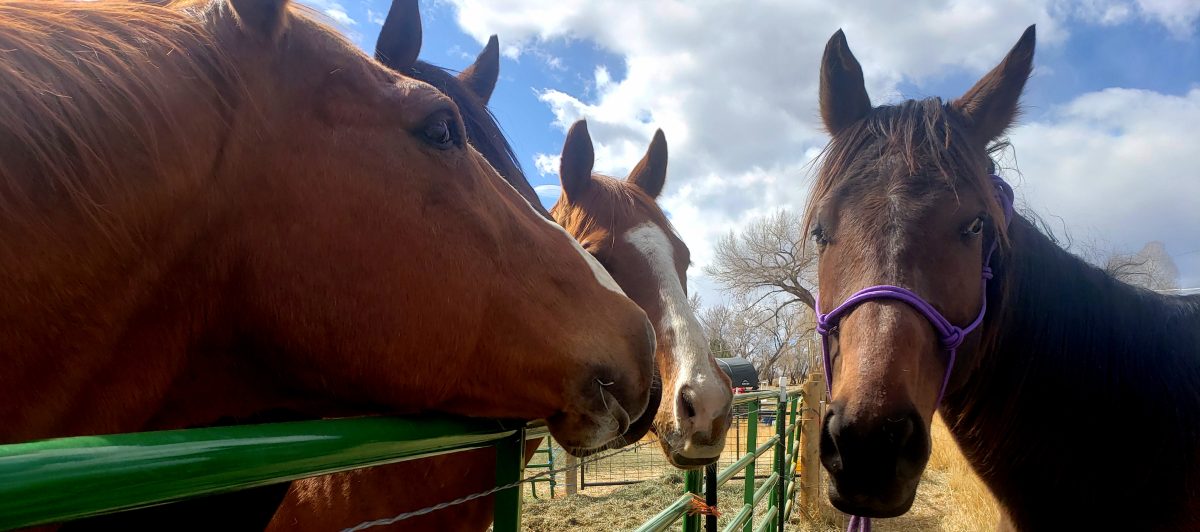
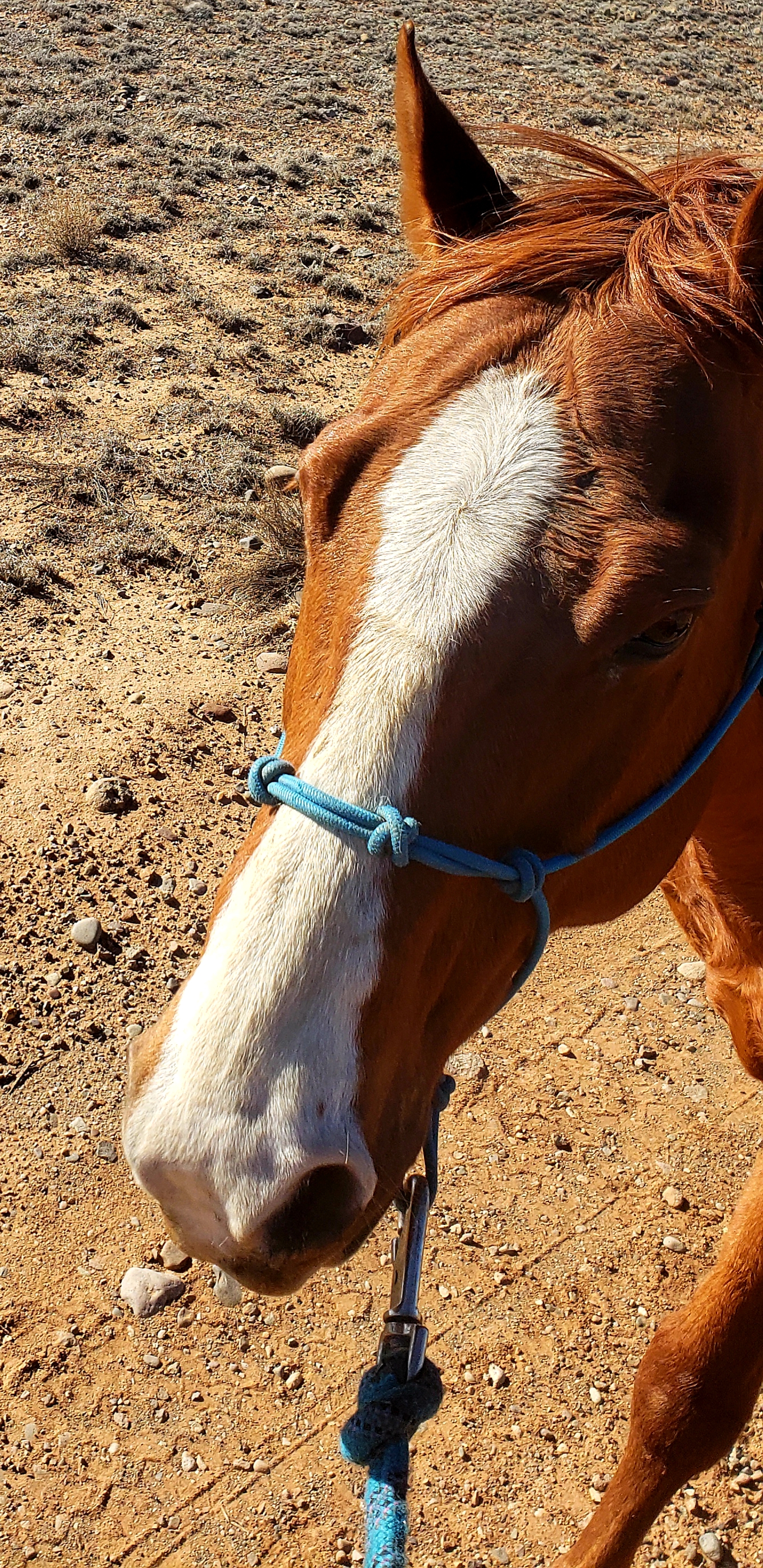

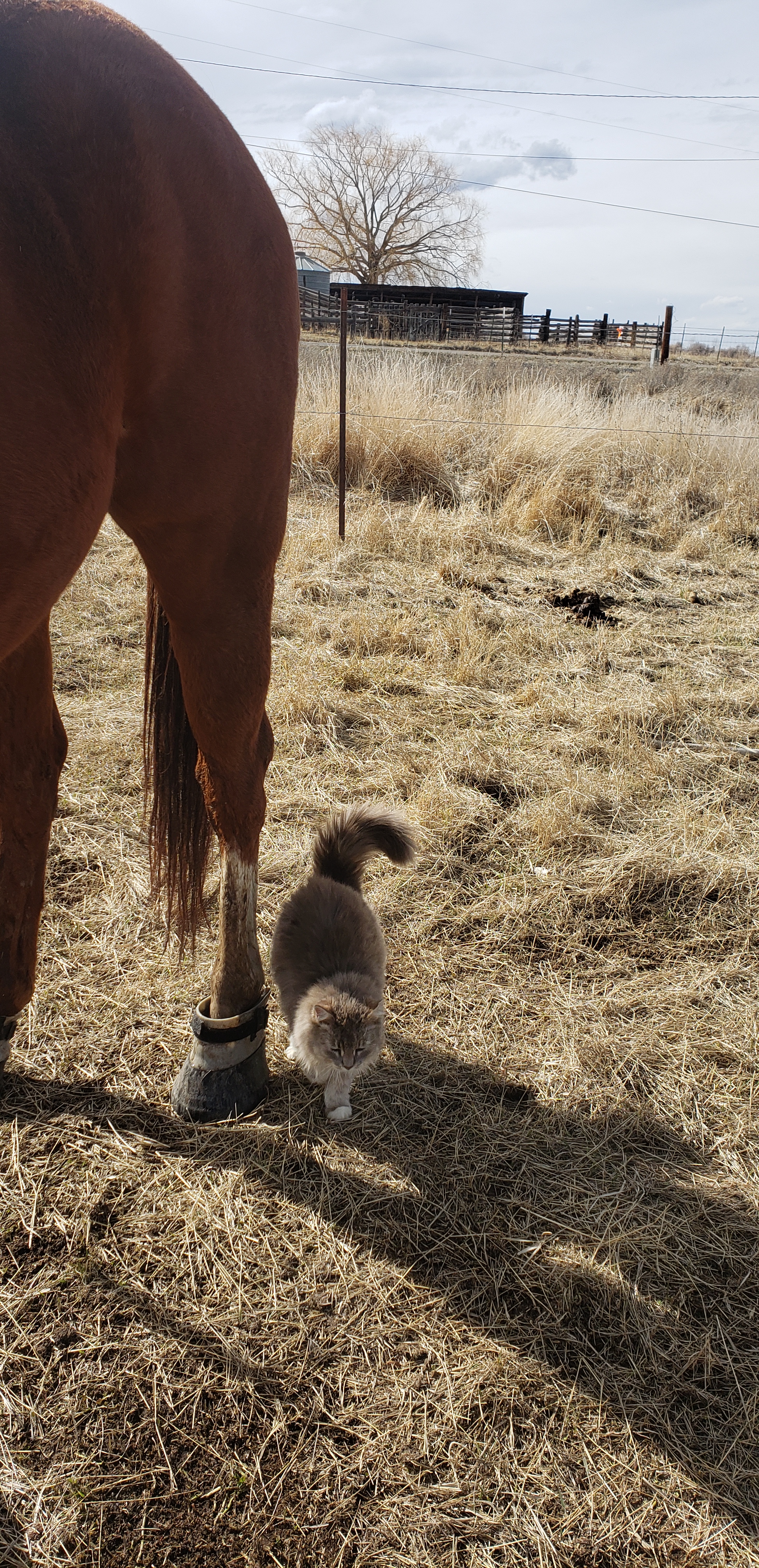
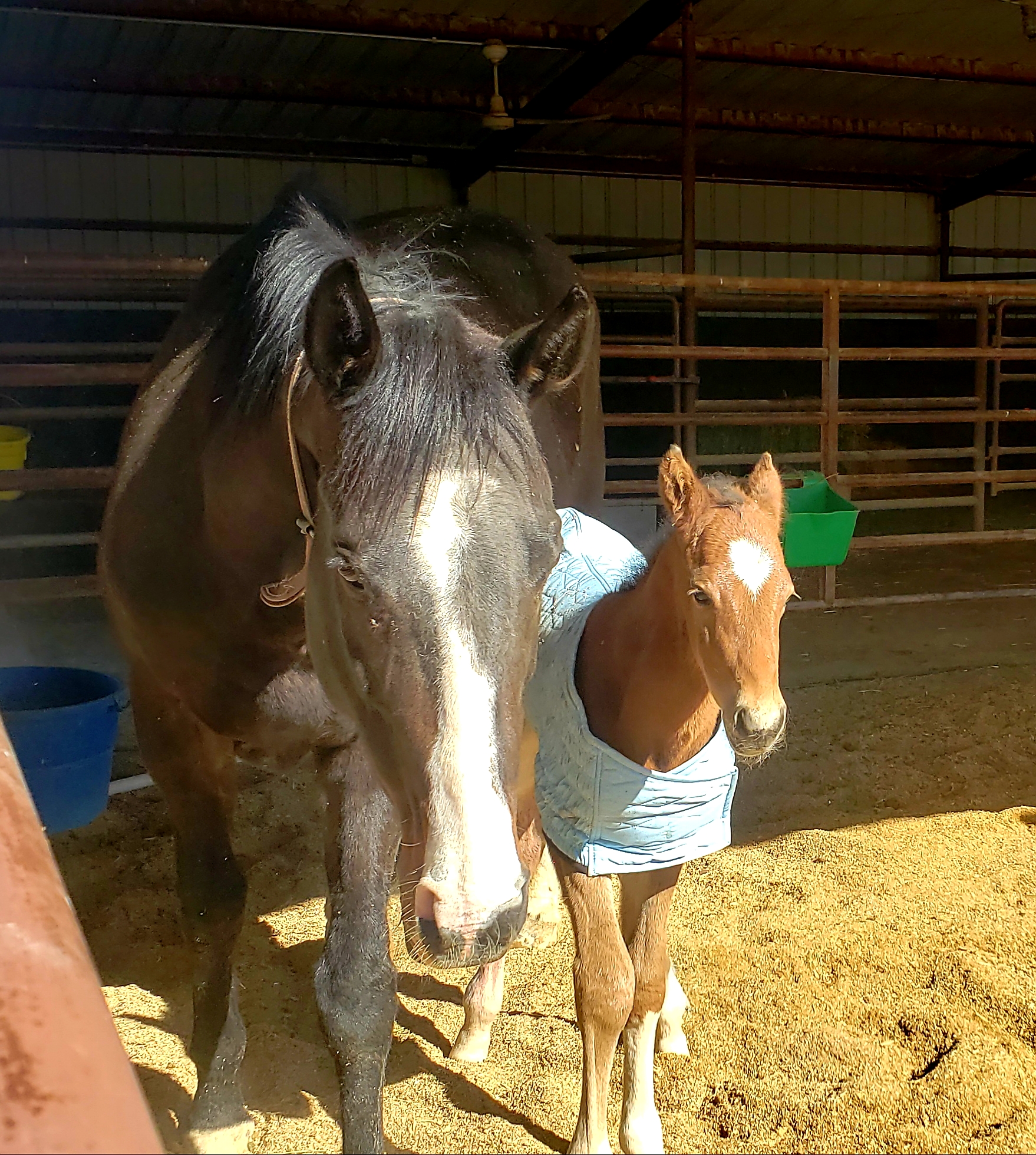


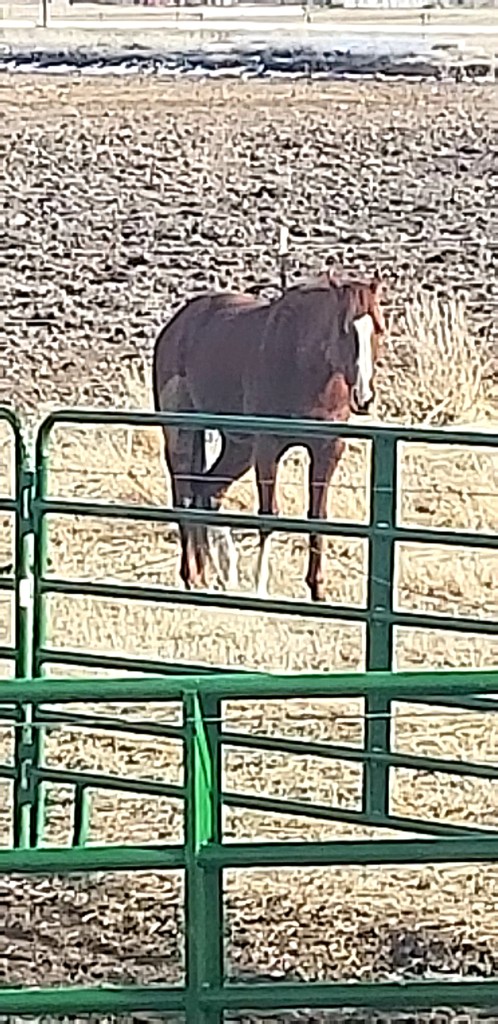


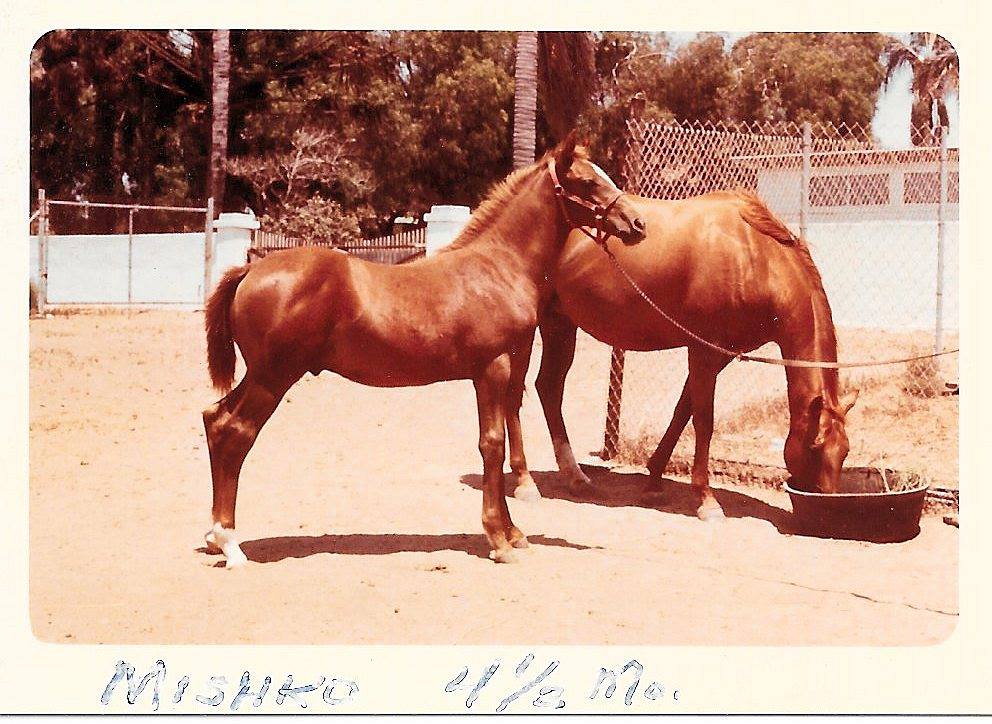
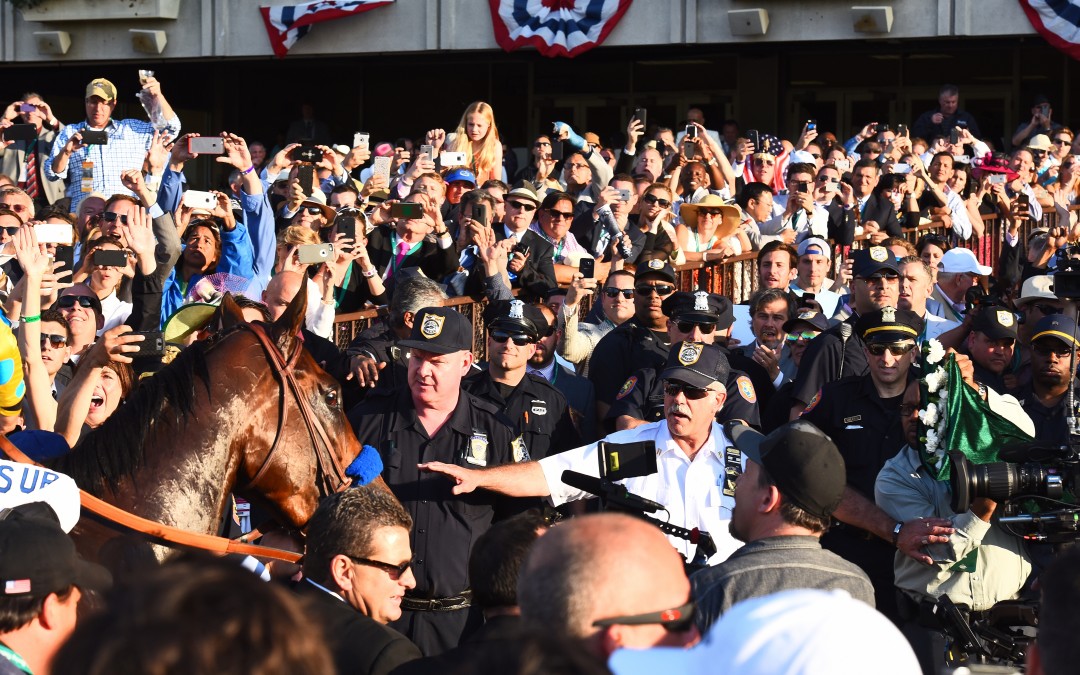


 Reenchanted Thoroughbreds