Time for our second adventure. Not sure he looks at it like that, but I’m sure one day he will…..I hope. Trailer is hooked up…check. Key in the ignition for a quick get a way….check! Pull the cat blankets and food out of the trailer…check! Look in the tack for cats….check! Go get horse and load him up…..check!
Dulce loads up easily, and is calm in the trailer thank goodness. I close the window and off we go. I pull in, get out, and I immediately notice that the trailer isn’t rocking back and forth like last time. Dulce is patiently waiting inside the trailer. I hear a moan. It’s a an odd sound, one that I never heard a horse make before, and then the sound comes from the trailer again much louder. Oh my gosh, a cat is in the trailer! I open the side door, and there she is holding on for dear life in the hay feeder. Even though my hay field is kitty corner, an accidental pun intended, from my neighbor’s place, I doubt she’ll find her way home. I quickly close the door, apologize to Dulce, and turn around and head back home. When we get back, she is curled up in the feeder much calmer now. I lift her out, and she takes off. Only me stuff like this happens to. I wonder how long it will be before Goldie forgives me.
Note to self: Always check the hay feeders before I drive off.
When I decide to desensitize my horses to sounds in the horse trailer, I go all out. Surprisingly, he takes it all in stride. When we get back to the arena, he stands calmly waiting for me to open the slant. I can’t believe the night and day difference from our last trip. He learned.
We walk into the arena, and he begins lunging himself. This time he is much calmer about everything. He must have learned the more riled up he gets the longer he works.
Before I know it, I decide to put the saddle on. He stands perfectly. I ask him if it’s okay for me to ride him. He drops his head to my heart. I climb on, and he stands perfectly. His attention isn’t on me enough though, so we yield hindquarters and walk off a few steps and repeat. He does really well considering he’s nervous. Only wanted to toss me once to go for a run. I stay on him until I feel like he and I are working more like a team before I hop off. I would have loved to trot him, lope him, but we need a bit more work together before I add speed. Everything I’m asking of him is so different for him. Even though I want to do more, I need to take it slow. Take a few steps and give him some time off to think about it. I’d rather take it slow and get it right instead of rush it and have huge gaps all over the place in our relationship.
That’s what this is all about; us learning each other and how to work together. I don’t believe in forcing a horse to be submissive. Instead, I need to learn from him even more than he needs to learn from me. He is so smart. Give him a day off to think about it, and the following day he is ready to take the next step.
I can’t wait to see what he’s like the next time around minus a howling Goldie I hope.
P.S. Goldie did show up tonight after her escapade as a stow away. However, she is avoiding the horse trailer as if it is laced with the plague, but she is following Dulce everywhere now. I think he has a new friend.
Today I woke up and decided today was the day. It was time to step up Dulce’s training. We were going to go on our first field trip away from home that had nothing to do with a vet visit thank goodness. Butterflies swarmed my stomach wondering if he was up to it. It seemed not too long ago I wondered if he would make it through the night, and now I was hooking up the trailer for our first adventure.
How far were we going? Only a quarter of a mile down to the neighbor’s arena. Dulce and trailers aren’t friends, and to be honest a lot of thoroughbreds never get the chance to learn how to be calm in a trailer. Often they are tranquilized first before loading. The trip from Kentucky and making him leave his best buddy didn’t help him out at all. Now Dulce needs to learn that even though we go somewhere in the trailer he gets to come back home and be with his buddies. It took awhile for Chaco to learn this, and I imagine Dulce will need a bit of time as well.
I headed up to the pasture to get Dulce, and we had a nice chat on the way to the trailer. It must have helped, because he loaded up beautifully and remained calm. Off we went to the neighbor’s, and when I opened the window all bets were off; chaos erupted. He pawed at the floor of the trailer that the whole thing shook as if the earth quaked. I dropped the ramp, and he lost sight of me. He panicked and he tried to turn around in the slant. Once he saw me, he calmed down a bit. I realized quickly where I went wrong. I didn’t drop down the rear window, so he could see me. Note to self: Never make that mistake again!
My sweet, calm horse didn’t exit the trailer; instead I had a racehorse on my hands. On the muscle he pranced alongside me with nostrils flared. The cat took one look at him and ran as fast as possible in the opposite direction. Me? I had the biggest grin on my face. For some reason I love seeing and working with a horse like this. Maybe it is because this is known to me; it reminds me of the old days with my grandpa and all of our racehorses. Saddle work was out of the question today; groundwork was it.
Once we got into the arena, all he wanted to do was run, so I lunged him. He made his, “Weeeeeee” sound, tossed his head all around, bucked and settled down into a fast canter. We worked all over the arena, and instead of showing signs of tiring out, he seemed to gain more energy. Better hooves, better gut and better teeth created a fiery Dulce.
I watched him run around me in awe. He has such raw power, such agility, and beautiful, graceful, strength. We fell into a rhythm together as we danced our way to the north end of the arena where the steers are. My neighbor is a roper, so he has several steers. Being a bit nervous he stood behind me at first. I stepped forward towards them and then Dulce took a step behind me. He trusts me. Good.
At first I wondered if I should even bring him down here alone, but Chaco is on sabbatical for a couple of weeks as he heals from a bruised hoof. I didn’t want to bring Harley and leave Chaco alone, so I decided to do this solo with Dulce. I thought it might be a good way for the two of us to learn how to trust one another, to lean on one another, and to feel secure in new and different situations.
He spent about ten minutes checking them out before I asked him to walk off. We began lunging again, and again he was hotter than heck. He kept trying to tilt his nose to the outside of the circle dropping his shoulder in, so I kept asking for him to tilt it in towards the circle. After about ten minutes, he had it down. We then worked the other direction doing the same thing. Intermittently, he would call out for the other two before bringing his attention back to me. I’m not sure who got the bigger workout; him or me, but by the end of it we were both tuckered out and relaxed.
We walked back down to the steers, and I felt pretty good about our first adventure together. Maybe it was our second if you consider the trip from Kentucky to Colorado, but whatever way it is we did okay. We had our bumps, which I fully expected. I realized he may be five, but he’s more like a two year old. I kept stroking his neck, and finally his full attention was on me. We’ll get there.
Before I loaded him I made sure that back window was open. After the fourth try, he was in, and a lot calmer this time around. I drove us home, and the other two were at the fence waiting for him. This time no turning around in the slant. He did paw a couple of times, but as soon as I put my hand on him, he calmed down.
Not an hour later did the neighbor to the south of us receive his yearly cattle. Each year over a hundred head come down to this property for a few months. I got Dulce desensitized to them just in time.
Next time I take Dulce to this arena, I’m getting on. Today was schooling. As we cooled out together, I thought about Dulce’s sire. I loved watching him race. He ran with such smarts and easy power. His turn of foot always intrigued me as to what it felt like to ride. I asked the two jockeys that rode him, two of my most favorite jockeys, what their experiences were. Julie Krone said he was sensitive, smart, agile, and really easy to ride. Gary Stevens said the following:
I saw how Dulce turned it up the moment he was out of his home environment, and I can’t wait to hang on and enjoy the ride.
I let my hips sway with his back, and each step he loosens up more and more. I exhale and place my reins on his neck and completely let go of any apprehension. I raise my arms out to my sides and lift my face to the sky in gratitude. We both ride away from our worries.
Chaco and I on the trail right before we came across a black bear.
These tales come on the backs of some beautiful Thoroughbreds.
* * * * * * *
It’s been awhile since I rode Chaco. I love riding him, and I trust him with every ounce of my being. I’m not riding him much, because of his leg. After a couple of miracles, he is perfectly sound, so I decide to take the chance on a short trail ride. I fear messing his leg up, but he is bored out of his mind. He needs to get out, so I promise myself we’re going to go for a short, easy, and relaxed ride. I miss being with him in this way. He is so easy to ride, so intuitive and responsive, and he moves across the ground like Baryshnikov. You hardly feel the ground while on him. I’m resigned to the fact that all we will do are short rides, and that’s wonderful. He loves it, and I love it. As soon as I get on him, which can be difficult, because he is so tall, a smile spreads across my face. I lean forward and whisper, “I so miss us.”
I let my hips sway with his back, and each step he loosens up more and more. I exhale and place my reins on his neck and completely let go of any apprehension. I raise my arms out to my sides and lift my face to the sky in gratitude. We both ride away from our worries.
Chaco’s leg before today has been up and down. Last month it hit me hard between the eyes and in the heart that I will one day say goodbye to him not because of old age but because of his leg. I pray for a miracle every day and eventually I was led to a couple of them. One night I found out about a way to feed a horse turmeric, and how the combination of Turmeric with Boswellia could be the anti-inflammatory punch I needed. After I found out about Total Gut Health for Dulce, I found out about Total Equine Relief made by the same company. The Turmeric was already working wonders, although he still had bouts of pain whenever he took a sharp turn at the canter. When I finally got TER, that changed things. It doesn’t have any of the side effects of bute, and it works in two hours. Ever since I put him on this, life improved for him. Each time I see it, I stop to take a picture, because I feel like I got my miracle even if it is for a short time.
We’ve decided after Christmas to try IRAP. ProStride hasn’t worked, and I don’t know if IRAP will do any better. Chaco deserves the best we can try for him. He is the sweetest horse with the biggest heart. He takes care of Dulce, he dotes on Harley, and he loves anyone that needs extra attention. A distant neighbor stopped by a couple of weeks ago to say hello to the horses, not me, and Chaco dropped his head to him and let the man rest his head upon his. Later this neighbor told me he had cancer, and how Chaco lifted his spirits on a bad day. Chaco is a healer. I want to give back to him that which he gives so freely to everyone.
We’re riding along on the easiest of trails with our dog Winx out in front, and Chewy and Bella behind. No one is around for miles, not a human sound to be heard except for my breath. I listen to the sounds of his hoof beats, and I smile. Reluctantly, we turn around with me using my body to guide him to turn back without using the reins.
That’s when we hear a yipping sound. All three of my dogs
stop dead in their tracks facing west. I know this sound, the dogs know this
sound, and Chaco knows it. I look west, and there he or she is. Her silvery
coat sparkles in the Fall sunlight when the coyote yipped at us again. Chaco stood
quietly as I called the dogs to stay with me.
This isn’t the first time I’ve crossed paths with a coyote
on the trail. In fact, I have a pretty fond memory of going on a trail ride
with one. It was the second time I ever rode Shandoka on the trail. It was a
stupid move on my part, because I went alone. Not the smartest thing to do on a
very green horse, but I believed in him. He did great on his first trail ride
with my friend Laura Lee, and I couldn’t handle waiting for another day with
someone else. I loaded him up and we drove down to the Basin.
We started out, and Shandoka was great despite being as green as a green horse can be. I finally got him pointed to the area I wanted us to ride into when a Coyote suddenly showed up. I expected Shandoka to react. He didn’t. We rode along while I kept my eye on the coyote and my other eye on Shandoka. The coyote quietly followed along with us, and I noticed Shandoka relaxed dropping his head down. Whenever Shandoka got nervous about something, the coyote went first to show him it was safe. I think my jaw was on Shandoka’s withers the entire ride as I watched Shandoka and this coyote dance with one another on the trail. A few times the coyote walked alongside Shandoka, and he looked up at me and smiled as if to say, “Don’t worry, I’ll get you through this ride safe and sound.” When we got back to the road where the truck was parked, the coyote disappeared. I looked all around, but I couldn’t see him anywhere.
My Unci said that Coyote was a trickster, but when he appears in an unusual way such as this, it is a Blessing. It felt like it, so when I saw this coyote while riding Chaco, I simply wanted to keep my dogs safe. Coyotes can lure dogs away, and then the pack kills them. I kept my eye on this one. He was on the other side of the canyon, which is wide and deep. He couldn’t get over to us that fast. Just then I saw him head down into its depths.
Coyotes don’t scare me as much as mountain lions do. They
say that you cross paths with a mountain lion ever three hours you’re in the
forest. I’ve come face to face with one,
heard them, seen their tracks, and once I was followed by one while riding
Shandoka.
We were heading back to the trailer after a fantastic ride through a new area. He and I worked so well together that day, and I was on cloud nine. On the way back we were both relaxed and comfortable. He was on a loose rein, and I looked around enjoying the trees when suddenly the hair on the back of my neck got prickly. Shandoka went from relaxed to alert and tense. I gathered up the rains, and slowly we walked through this area we had to get through to get back to our truck when Shandoka went from tense to life threat mode. This area is filled with oak brush, so you can’t see if something is crouching on the other side of the bush to jump out at you. When a horse hits flight mode, all bets are off, and it’s a struggle to communicate. Shandoka wanted to run. I wanted to let him, but if I did, the animal that I thought was following us would break out into a run making us his prey.
We spiraled in circles, zig zagged and anything I could do
to keep him from breaking out. It took every ounce of strength I had to keep
him with me instead of with his fear of what was following us. Shandoka was a
huge horse, the most powerful I’ve ever ridden, and I don’t know how I kept him
at a walk. As soon as we got to the trailer, I hopped off, and Shandoka
literally loaded himself with saddle and headstall still on. I closed the
trailer as quick as I could, got into my truck when I saw him. A mountain lion
emerged from the Aspens pausing for a moment staring into my eyes, and before
my next breath, he was gone.
The dogs and I are moving along the trail when the coyote appears on our side of the canyon within minutes. Dang they are fast and agile. Time to pick up the speed and get the dogs in the truck. We have a half mile to go, and I’m worried about doing this to Chaco’s leg. I wanted him to enjoy an easy, relaxing ride; one that didn’t tax his leg. However, if we kept going at this pace, the coyote would be on the dogs quick. My dogs are too curious about the coyote to go slow. We long trot over rock and dirt. Chaco is unphased. Chaco feels my urgency, so he immediately moves into an extended trot.
On one of Chaco’s first major trail rides we came across a bear. I think on our way down the trail he caught a whiff of this female bear, at least we assumed she was a sow. We came to this spot on the trail where he was hesitant about stepping forward. The entire way down he led the way without a problem until this one spot. My friend then went to the lead, and he followed easily. We came across elk, which horses normally don’t like the smell of, but he didn’t care about them. On the way back when we came upon that spot, we saw her. There she was off in the trees maybe 150 feet from us, a black bear. Chaco didn’t back up, didn’t get nervous, and in fact he stepped forward towards the bear when we tried to get a picture of her. We think she had cubs nearby, so we decided to move on quickly. Chaco and I were in the rear with the dogs tucked up close to his hindlegs. He never minded any of it, so I wasn’t worried about him with this coyote.
As we long trotted, Winx stayed in front of us, and Chewy
and Bella were tucked in close to Chaco’s hindlegs. Chewy had no interest in
hanging around with the coyote, Bella wanted to chase him off, and Winx was
looking for some shade to lie down in. I knew if I needed to chase off the
coyote, Chaco would help me do it, but luckily the coyote hung back far enough
for me to not consider it.
We got back to the truck, I hopped off, and there was the
coyote about 200 feet away sitting in some sage brush gazing at me as I gazed
at him. I knew we all were safe at this point. I stepped forward a step to get
a better look at him. He seemed to have a big smile on his face. Like my dogs
he sat their panting in that relaxed sort of joy they have after a good run. Another
blessing.
A coyote, a horse, and three dogs enjoying the trail together.
What do you do if your horse is having diarrhea, but you don’t think it is caused by ulcers? This is blog is about what I did to save Dulce who had diarrhea and daily gas colic.
I’m lying in bed exhausted. The camera volume is turned all the way up. Despite the loud buzzing sound from the camera, my eyelids begin to close. I remember thinking, “Maybe I can sleep tonight.” I hadn’t slept through the night since all of this hit a high note in July. It’s a warm September night, and I begin to drift off when I hear, “Bang, bang, bang!” I wake up immediately, and I look at the cameras. It’s happening again. Dulce is kicking the barn walls and rubbing up against them. Pain….severe pain.
I throw boots on without any socks and run outside to help him. I think I had most of my clothes on. Before I get to the gate, I see Chaco chasing Dulce out of the barn, and they run past me. Chaco is my healer. He rarely leaves Dulce when he feels bad, and when things go wrong, he tries to help me make it right. Running is the best thing Dulce can do. Harley is the cutter. Whenever Dulce tries to break away from Chaco, Harley cuts him back into Chaco’s driving force. I’m always amazed at how horses help each other. Hopefully, their efforts will free up the gas trapped in his tight colon. I block Dulce when he heads for the barn. After fifteen minutes, it’s all over. Dulce is calm and eating. Chaco is right by him and Harley is on his other side. Shaking I hug all of them. I walk inside crying fearing that one night soon it won’t end well.
——————————-
Horses have the most mysterious gut. There is so much that goes on that scientists are still trying to understand and figure out solutions for. I always say that when I die the first thing I want to talk to God about is why in the world can’t horses burp?!
Dulce began to struggle gut wise the moment he switched to my hay back in April. I wish I could have brought more hay home with me, but none was available. I think if I could have transitioned him more slowly, I could have avoided a lot of this. However, maybe not. I think this all began to develop long before I even knew of him or the rescue organization took him in.
When I brought him home, I got the first hundred pounds on him easily. However, when we hit 930 pounds, we embarked on a crazy rollercoaster ride. It was as if his body rejected the weight gain like a body rejects an organ transplant. As soon as he hit 930 his body suddenly produced profuse diarrhea in an hour or two causing him to lose those 30 pounds in a day. He’d go back to 900 where his manure improved. He’d gain 30 pounds again, diarrhea again, back down to 900 pounds, and then his manure improved again and again and again and again. After he got his vaccinations, he plummeted. Diarrhea became the norm, and he went down to 880 pounds. Winter is around the corner. It may be hotter than heck this pastAugust, but I could see it coming. I needed to get his body to accept the weight gain quick.
You all probably think he has ulcers. Maybe, but he never acted like it. From the beginning he continuously had a healthy appetite, which horses with ulcers rarely have. I could scratch his belly without even a flicker of the ear, which horses with ulcers hate. I put him on gastromend when I brought him home. I put him on two rounds of Egulsin, and nothing ever changed. Talking about another horse with a friend about the use of Bute got me thinking about Dulce. Racehorses usually get two shots in the morning, and one of those shots is usually Bute. Bute can cause ulcers and a leaky gut.
The big piece of the puzzle that caused him to go downhill rapidly happened long before I even knew he existed. His teeth were never floated until he landed at the rescue. He developed two ulcers on his tongue after being retired due to hooks on his teeth. He couldn’t eat, lost weight, and developed a hindgut ulcer. The ulcers in his mouth were healed, he went through a month’s round of gastroguard, after which he was scoped and no ulcers were found. All of this was done by the rescue, and I am so grateful to them for all they did for Dulce before I picked him up. This is when I believe things began their downhill descent. Were all of his problems now because of ulcers? Did they return? Even though ulcers is the easy choice for gut issues, my gut kept saying something different.
In addition to all of this, his feed changed three times. The first time was when he left Louisiana for Kentucky where he was fed something different at the rescue organization. He then moved to his breeder and went onto a different feed, and then he move to Colorado with me where his feed changed again. He also did a lot of long distance traveling in a year. He went from Louisiana to Kentucky, and from Kentucky to Colorado.
I began researching the causes of a leaky gut, and I found that a change in hay, travel, Bute, medications (I have no idea what other drugs he received at the track besides Lasix), and vaccinations are all causes. I feared this was the problem knowing it can be fatal. I quickly researched treatment, and the best treatment found so far is administering Butyrate and zinc.
What is Butyrate? Butyrate is a short chain fatty acid, which is vital in horses to maintain a healthy gut. Butyrate is naturally produced by the body during the fermentation of fiber. However, during times of stress or heavy workloads, both of which Dulce experienced, there may not be enough concentrations of Butyrate in the horse’s hindgut. If given along with Zinc, the butyrate tightens the junctures where the horse can be leaking through, and it can reduce inflammation of the intestinal lining.
Sodium Butyrate can help prevent inflammatory bowel disease, ulcerative colitis, and diarrhea. One of the other very important things Butyrate does is it affects and prevents the colonization of Salmonella and Campylobacter. It also positively influences the composition of the gut microbiota. If Dulce didn’t develop a leaky gut, he developed a toxic gut.
Another thought that kept going through mind was something that my friend Heather said while we were in Kentucky. She said that Dr. Kellon talked about how horses may not have ulcers at all, but rather they may be suffering from a disruption in their gut flora. Butyrate was my option to address both possible situations.
I immediately put him on Butyrate, and I couldn’t believe the change. Within five days, his diarrhea disappeared. He hasn’t experienced anymore bouts of horrible diarrhea. This doesn’t mean his poop was perfect. I think it went from 0% to 10% of normal to 50% to 60% normal in those five days. Now he ranges from 75% to 90% normal. It’s been a slow process. I needed to remind myself over and over that it took awhile for this to develop, and it will take time to heal. The great thing about butyrate is he started gaining weight, and this time he’s keeping it on. We went from 880 to 900 to 930 to 950 to 970 where we are today. We are 80 pounds away from our goal of a 1,050.
I wish I could say all of our problems were solved. They weren’t. Ever since the worming and the colic, he developed bad bouts of gas throughout the day, and they all happened at regular intervals. The first was at 8am, second 11am, third 3pm, and the fourth was between 8pm and 9pm. The only way to resolve this without administering banamine all the time was to walk him, let Chaco chase him, or he would roll before I could get to him. He then would poop, and go back to normal. This was my day every day since July.
The vet stated he had a tight colon, which filled with gas, and his blood work was all within normal levels. I believe the gas was caused by a toxic gut due to a massive disruption in his gut flora when his mouth ulcerated all those months ago. The bad flora took over, and the good flora were outnumbered and couldn’t gain ground. I believe the bad flora were producing huge amounts of gas that his body couldn’t tolerate. My vet suggested that I put Dulce on an MOS prebiotic.
MOS stands for Mannan Oligosaccharide, which is an indigestible carbohydrate compound that is harvested from the cell wall of a certain type of yeast. This compound immobilizes any pathogens located in the gut, and it boosts the immune system. It binds onto harmful bacteria such as Clostridium, E. Coli, and Salmonella clearing them from the gut while bolstering the colonization of needed probiotics naturally. Thus, the horse will be able to digest and absorb nutrients much better.
After I started Dulce on this, his poop improved more; a lot less mush with more pellets starting to form. Also, the 8am and 11am bouts of gas disappeared. The other two lingered. I then read in Tomas Teskey’s book about feeding alfalfa as a supplement. I couldn’t feed Dulce any alfalfa when I brought him here, because massive amounts of diarrhea ensued. His body simply couldn’t handle it. When a horse is as underweight as he was and worse, their organs shrink; so you have to go slow with what you feed them and feed them several small meals a day. Alfalfa can be way to rich for a malnourished horse.
Since Dulce wasn’t absorbing the nutrients quite like I wanted him to with too much water still in his poop, I need to be careful with alfalfa since his hindgut is still trying to find balance. I also need to worry about him getting gut stones, which are like kidney stones but in the intestinal tract. Unlike kidney stones, gut stones kill horses.
Gut Stones
If you feed too much alfalfa, it can cause major problems with a horse’s hooves. It can cause the hoof walls to chip away, and/or cause them to be tender footed. I decided to start him out on one pound of alfalfa a day slowly working up to three closely monitoring him. Feeding him this way improved his digestion a bit more, and it got rid of the 8pm bout of gas. So far so good with his hooves.
Another thing I added to his feed is Triple Crown Naturals. I LOVE this feed. No GMO’s or soy, all of the ingredients are locked in, and it has MOS prebiotics, probiotics and butyrate in it. There is no corn, and it has flaxseed oil in it. I am only feeding 1/4 pound a day at this time. When it is time to wean him off of the Butyrate pills, I will keep him on this for another month or two before weaning him off of this.
You’d think that was the end of all my struggles, that I was on the right path, and I can relax. Well, that episode of him kicking the stall wall happened a week and a half ago. His 3pm bout of gas still happened daily, and if it didn’t happen at 3pm, it happened later in the evening like that night.
When I came back in, I couldn’t sleep. I got out my phone, and searched the net in utter fear of finding absolutely nothing. I kept praying to find something, because if I couldn’t get this solved, I feared he wouldn’t make it. The image of him pounding his body on the side of the barn from the gas pain kept me searching until 3:30am when I stumbled upon a discussion group. A woman described similar symptoms and stated that her vet told her to try Total Gut Health by Ramard. She said in five days all gas pain, biting at his sides, rubbing…all of it was gone. This product never came up in my searches before.
I went to every single horse site reading the reviews, and there was not one negative review. Everyone swore by it, everyone said within five days they had their horse back, and everyone said all signs of gas colic were gone. I bought a bottle at 4:30am, and went out to check on Dulce.
I kept thinking about Campylobacter. The MOS prebiotic didn’t say it worked against this, and I was wondering if this was one of the problem bacteria in his gut causing all of this horrible gas. TGH seems to works specifically for horses with gas, gas and sand colic issues, and horses with gut flora issues. It says that it can help with ulcers, but I feel the colic issues are where this product works the best.
When I got the bottle of TGH, I didn’t expect any improvement. This was my desperate Hail Mary. Twenty four hours after the first dose, he had a bad bout of gas, but this time it resolved all on its own. I thought maybe we lucked out this time. Forty eight hours and two doses later, the only sign was a twitch of his tail and lifting of his head before he let out a big, long fart. After that, he hasn’t had any signs of gas pain or trouble. He hardly bites at his sides, and all of that stress he was in is gone. He no longer chews on the buckets, rubs his side on the barn, and he is a happy, mellow horse. When he plays, he is no longer short strided from gas pain, and floats over the ground.
I believe all of these problems go back to the fact that his teeth (https://chacoottb.com/2019/04/09/teeth-and-ulcers/) were never floated until he ulcerated after being brought in by the rescue. I feel I’ve been running around putting out fires those hooks on his teeth caused. Please, if you take anything away from this, please float your horse’s teeth once a year. The health and well being of a horse’s teeth are as important as a horse’s gut and his hooves, and their lack of care affects every aspect of your horse. They need to be balanced, and if they are, then you have a much better chance of having a healthy horse with a healthy gut and hooves. Please, float their teeth.
I have no idea if I will ever take him off of TGH, because it brings us both peace. I’m sure I will one day, but his gut is still healing, still finding balance, so he will stay on TGH and Butyrate for awhile longer. I’m praying writing about this won’t jinx anything, because yes, I still have the old horse racing superstitions running through my veins.
I sleep with the volume all the way up on my camera screen, and I spend a lot of my night watching him. Last night and all night for the first time since he arrived here, all of his manure was normal; all signs of the past troubles are gone. It is 3:30pm right now, and instead of him being in pain, he’s playing with Chaco.
Update: Dulce is now up to 983 pounds. Since I started him on the Butyrate on August 10th, he has gained 100 pounds.
Some of What I Mentioned
Triple Crown Naturals feed is a wonderful feed. No GMO’s, no soy, no corn, and it has butyrate, and an MOS prebiotic in it. It is also made with flaxseed oil amoung many other wonderful things.
Triple Crown Natural Ground Flaxseed. They’ve found a way to stabilize it for 24 hours without using soy. Soy can be extremely aggravating to a horse’s gut, so this is why I haven’t used rice bran, which is stabilized with soy. Also, the Naturals Ground Flax made by Triple Crown feeds is GMO free.
Did I mention how important floating your horse’s teeth is? I think so, but it needs to be said again.
I bought the butyrate in pill form from Amazon. I put the powder into one of the Horse Pill Carrier cookies made by Standlee Hay. I top it off with a dot of honey, and Dulce gobbles it all up. There is a probiotic made with it for horses, but it is pretty pricey.
California Trace.
Gastromend
Ramard Total Gut Health
All horse supplement stores sell Gastromend and Ramard Total Gut Health. I highly recommend both products. Even though I don’t think Dulce has ulcers, I think Gastromend prevented them from developing again. I also believe it helped heal any damage the worms may have caused. Total Gut Health I believe saved him. It was the missing piece of the puzzle. If any of my present or future horses are sensitive to sand colic, colic, are gassy, chews at his sides a lot, I will go with Total Gut Health. If I think he has ulcers, I would go with Gastromend personally.
I buy my MOS prebiotic from Oak Creek Services at http://www.oakcreeks.com. The price is reasonable, and you only have to feed a tablespoon once a day. She also ships it out immediately. It is a big help in Dulce’s recovery, and Forco, as much as that helped Chaco and Harley, had no effect on Dulce. I saw noticeable improvement once I put him on this. I now have all three horses on this.
If you decide to try any of this, SPEAK WITH YOUR VET FIRST! I’m not suggesting in any way that any of this could be a solution for your horse. I’m not prescribing anything. This is what I tried, and luckily it seems to be working. I did all of this with my vet’s support.
Since Dulce was a racehorse, he barely had what could be called a saddle on his back. The exercise riders use a bigger saddle, but they are still smaller than the traditional saddle. If he was going to wear a Western saddle, there were some steps to take before I put one on his back.
I’m going to write three blogs to update you on different aspects of Dulce’s healing and progress. I say let’s start with the fun part. Before I start, I am not teaching anyone how to proceed with training their horse. I am simply sharing what I did with Dulce. What you do with your horse is totally up to you, and I bear no responsibility or liability with that. Let’s get started.
Dulce and I have been doing a lot of groundwork and desensitizing work. Movement plays a huge part in his healing and recovery, so I decided to put him into light training. We’ve been working for 15 to 30 minutes four to five days a week followed by stretching and massage.
Since Dulce was a racehorse, he barely had what could be called a saddle on his back. The exercise riders use a bigger saddle, but they are still smaller than the traditional saddle. If he was going to wear a Western saddle, there were some steps to take before I put one on his back.
Before going any further, I want to state don’t do as I do if you are nervous about it. If you don’t feel confident about training your horse to do this transition, get a trainer to help you. You want to get your horse off to the right hoof with a bigger and heavier saddle.
Before you start, you want to make sure there is no back or shoulder pain. I’ve been working on Dulce since I brought him home. He had severe back, shoulder, poll, TMJ, and neck pain. I worked with the Masterson Method, Acupressure, Myofascial Release, stretching, and Tellington Touch before I even considered putting a saddle on him. Also, I waited until he gained enough weight. Most racehorses have severely tight polls, back pain and sacrum area pain to say the least. Again, to get off to a good start, make sure you have all of this worked out.
Since Dulce has been turned out for about a year with no work, I started out with simple desensitizing work such as tossing a rope over his back, rubbing my stick all over him, petting him all over with a plastic bag, and rolling a ball underneath him and at his legs for instance. I also desensitized him to what it might feel like if a rope or wire got wrapped around around his leg. We walked over poles in all sorts of different positions to start strengthening his hind end and topline, which were weak.
I then put a rope around his barrel where the cinch would go. I slowly tightened it, and as soon as he relaxed by cocking his leg, letting out a sigh, or licking his lips, I immediately released. I gradually worked with this increasing the tightness until we got to where he probably would be cinched to. He never had a reaction to it, and actually would start to fall asleep.
I also rolled a big, inflatable ball along his back to remind him of what it felt like to have something on his back. Sometimes I lightly bounced it and other times I put pressure on it. He accepted this easily.
All of this teaches him he can trust me. I always start with the lowest of lowest intensities and slowly work it up. Whenever he shows signs of relaxing at each level, I stop, and I love on him big. The first day I may only do the lowest of intensities, next day take it a slight step higher, and we keep progressing until we get to where we need to get to. However, if he ever shows signs of nervousness, we may stay at a certain level of intensity for a few days until we find the right amount of relaxation, or I may need to take it down a noch before we progress. I go based upon what my horse tells me he needs; not what I think he needs.
We then began to do some light longing work. I do this to help develop communication with my horse on the ground preparing for when I get into the saddle. We both learn each other’s cues. I can find holes in his training and work on those areas. I learn how he responds to different stimuli, and I decide what to toss out and what to keep. I want us to have a great working relationship, so groundwork is a time for us to learn each other in a good and steady way.
People want to skip over groundwork a lot when they get a new horse that has been ridden before, and this can be a huge mistake. The horse had a trust relationship with his previous owner; not you. There is a story about how the famous jockey Angel Cordero asked to sit on Nashua or Bold Ruler, I can’t remember, and the horse bucked him off. Why? He wasn’t his jockey. You aren’t your horse’s jockey. You need to develop a good relationship with your horse before you get on his or her back. You want your horse to know that he can follow you even if he is nervous, to trust you in scary situations, and to listen to you when there are a lot of voices all around.
To prepare him for the western saddle, I put on a surcingle. I will longe him around and hand graze him with it on. This way he gets used to the feel of the cinch in moving through the different gaits and walking on uneven ground. Once he is good and solid with the surcingle, I put the saddle pad on his back, put the surcingle over it, and then I hand walk him over poles and hand graze him. The saddle pad is much bigger and heavier than anything he is used to, so this is a good prep for the saddle. Once this is good and solid, I put a bag of feed on his back to remind him about carrying weight on his back. If he responds well to this, I bring out the saddle and I put it on the fence. The first couple of times I just let him explore it and sniff it. We then move on to me holding it while brushing his side with it to see if he spooks. He never did. If he did, I would have stayed at this spot until he was over his fear of the saddle.
Since he was perfectly calm with the saddle, I gently put it on his back. I didn’t cinch it or anything. I simply loved him all over letting him know that he could relax and how proud I was of him.
The next day I slowly saddled him up, letting him sniff the saddle pad, letting him sniff the saddle, while loving on him after putting the saddle pad on…loving him after I put the saddle on. I slowly pulled the cinch off the saddle, slowly brought it up to his belly letting him feel it and then releasing it, bringing it to his belly and releasing before I finally started to cinch him up. I did it slow as I have done everything else to make sure he was comfortable. Each time I went up a step, I would stop and pet him making sure he was comfortable while also being ready to release it. I watched his ears, head and back to see if he had any signs of discomfort, anxiousness, or irritability. None were seen. Finally, I got him to where I knew if he bucked, it wouldn’t slide, and I began walking him. This is so important! Don’t do any kind of movement work if the saddle is loose. You don’t want it to slide down under his belly causing him to become terrified of the saddle. If you don’t feel comfortable fully cinching the first time around, that is fine. .This is what I did with my horse Shandoka. I put the saddle on his back, brought the cinch under him, got him used to feeling it, and then I tightened it without pulling the latigo through. Instead I grabbed the metal loop where the latigo is tied on to, and I pulled down on that gently while lifting up with the cinch. I worked with it this way until I got him to where he could stand a full amount of tightness with the saddle being pulled down on his back without having to tie it off. This way if he moved, I could let go, and the saddle would slide to the ground instead of the underside of his belly. It didn’t happen of course, because I did a lot of surcingle work with him, so the cinch turned out to be pretty easy. Remember, you want to get off on the right hoof.
He was so calm with the saddle on that I wasn’t worried. If he wasn’t calm, I would have stepped way back to be prepared. Is bucking bad? No. It is something that can be worked with, so if you aren’t experienced working with horses that buck, get yourself a trainer.DO NOT HANDLE THAT ON YOUR OWN. YOU AND YOUR HORSE COULD GET HURT.
As you can see, he was very calm with it.
I let him have a day off to think about everything that we did. On Monday he and Chaco had their morning race, so all of their fresh energy was worked out. It was the perfect time to put the saddle back on going through each step slowly. I walked him around with the saddle, and then I round penned him with the saddle on. He was worn out from his morning romp with Chaco, so I had a bit of a hard time keeping the momentum up. In short, he did fantastic. I had him walk, trot, and canter in each direction, had him turn directions a few times, and there was never a buck, hesitation, or any sign of being uncomfortable at moving under a western saddle.
I then decided to get on him, but before I did, I put downward pressure on both stirrups with my hands to make sure he felt okay with that. He did, I then patted the saddle and put some downward pressure on the saddle. He was fine with that. I brought him alongside the fence, climbed up it, and I put my leg across the saddle while pushing down on the saddle with my leg. He was fine with that. I then slid onto the saddle, talking soothingly, and rubbing my hands all over him. He loved that! I then moved his feet to the right a few steps, stopped, and rubbed him all over. I moved him a few steps to the left, stopped and rubbed him all over. I then walked him along the fence talking to him the whole time letting him know what a good boy he was. We went a hundred feet. I stopped him, and prepared to dismount. This is an important step before hopping off. I put alternating downward pressure with with both of my feet in each stirrup to get him ready for me putting full weight on the stirrups for a dismount. I first push down with my left foot, then right foot, left foot and so on. When I feel he is calm, I bring his nose over towards my left leg, which disengaged his hindquarters preventing him from being able to buck, and I get off. He was a perfect gentleman. I couldn’t be more proud of him. Not only hasn’t he had anyone on his back in a year, he also did all of this bitless! He picks up on everything so fast!
How did it feel to finally ride him? Sweet!!!!!! He walked easily, full stride, calm, held his head in a good way, and listened to me as I spoke to him.
Did I find any holes that need to be worked out? Yes. The moment the saddle went on Saturday, I realized he got nervous any time my training stick went towards his hindquarters. I think he was worried I may hit him with it like one would with a riding crop. I’ve watched his races, and his jockey used the crop on him a lot. Since then, I’ve spent a lot of time desensitiizing him to all sorts of things touching his hind end with the saddle on. Yesterday, he really relaxed. We will keep doing this until he shows no signs of caring about it.
Do I follow this plan for each horse? Loosely. The horse will tell me what he or she needs, and I adjust accordingly. I may have to go back to the very beginning steps of our groundwork if the horse shows me he or she needs more work on something. Remain willing to adjust and be flexible while working with any horse. If you are rigid in your training, then your success will be highly limited.
Remember that OTTB’s received a lot of training at the track. They were asked to do all sorts of things from a very young age, and learned to deal with all sorts of things around them. Thoroughbreds are smart and versatile. They can do anything out there. The only limits they have are those that you put upon them, or physical injuries they incurred from the track.
When I go out to train my horses, my attitude means everything to the success of our work. I’ve learned from my past mistakes on this. If I go out there doubting me and my horse, the lesson will fall apart. The horse doesn’t fail at all, rather I failed my horse. If I have an attitude that my horse is going to spook or overreact to something, guess what my horse does? Spooks and overreacts. Horses are perfect mirrors for our doubts, fears, and insecurities.
If I go out there calm, my horse will be much calmer, easier to work with, and more open to me and my suggestions. Does that mean that our lessons always go as planned? Of course not…lol. If I go out there with a calm and positive attitude, then I am more open to solutions in the moment to help my horse. Usually, it is an error in my idea for how to proceed that creates an issue, and for us to have success depends upon how well I learn from what my horse is trying to teach me and implement it.
Of course issues arise due to past training and failures to solves past issues by the previous owners/trainers. These issues can be more difficult to resolve, but usually it is possible if you allow yourself to step outside of the box and find new ways.
When a problem arises, it is important for my mind and ego to not take it personally, to take a step back and breath, watch, and then figure things out. You are the deciding factor in so much of the work you do with your horse. Yes, you will have problems, but look at it as a chance for you and your horse to learn from one another, to get to know each other better, and to learn how to communicate better. Each problem is an opportunity. That is what riding is all about….communication and partnership with your beloved horse.
Here I am again underneath a cloudy sky watching my horses; specifically Dulce. To my west lightning strikes the earth every ten to thirty seconds. A storm is coming reminding me of a year ago tonight. I walked Shandoka in endless circles while it drizzled rain begging God and Shandoka for some sort of miracle. Dulce is in the barn Shandoka stood in that night, and Dulce is struggling like Shandoka did but not as bad. So far his problem can be solved. Different horse different night I chant over and over to myself.
He had his third dose of the worm medicine today. I was asked if I wanted to do this, and if I thought it was a good idea to worm Dulce five days in a row. Well, no I don’t want to do this, but I need to do what I have to do to get him right. When I took Shandoka in years ago after he came to live with me, he was filled with worms too. One night he coliced four times after I wormed him. Not only was he getting colic from the worms, he got colic as he shed off the worms. It’s not a fun process at all. I had to worm Shandoka four months in a row to knock the worms down enough. I believe he had irreparable damage from the load of worms he carried, because he got colic after the initial problem about every three to six months for the rest of his life until a year ago this night when the colic fought its final battle. No I don’t want to do this with Dulce but I have to.
Dulce takes the wormer like a champ, forgives me immediately, and joins Chaco rubbing his nose on Chaco’s side each morning. He had a challenging morning Saturday….severe gas pains before pooping two times. I’m sure he started shedding the worms, and the worms may be acting up in there as the wormer embarks on mass murder. Now in addition to gas colic, I need to watch for an impaction. I put a bunch of peppermint and mineral oil in his feed to ameliorate that nasty gas. When I die, God and I are having a long talk about why He/She made it so horse’s can’t burp.
Last year on this night I knew Shandoka wouldn’t make it even though I begged and bargained and prayed and got furious over what I knew I would be forced to do. When I look back at pictures of him, I think he started dying the day before it all hit the fan. He looked tired in the pictures. The normal sparkle and power in his eyes disappeared. I thought it was the heat at the time, but now I’m not so sure. I want to delete those pictures, but for some reason I can’t.
Under a cloudy sky I sit with Dulce on a warm summer’s night wishing I could fix this, realizing all I can do is nurse it along, and pray that we come out good on the other side. It’s night six, and I think God must hate me to put me through this again on the anniversary of Shandoka’s death. Probably not, but it is easier to think that way than to face all of this again. I wanted to avoid this night by focusing on anything else but this. Instead, it’s right in my face saying, “It’s time to let go of the guilt you’ve carried this past year.” People tell me to relax about Dulce, but when you watch your amazing horse and partner thrash from insurmountable pain, you don’t relax until they are completely out of the cycle of colic.
I go through the littany of things that I remembered doing, I go through my checklist, and I know I fought as hard as I could for Shandoka. I did everything that worked in the past. Nothing worked that night. Nothing. All I can do is forgive myself and hope Shandoka forgives me.
I’m talking with Shandoka and Dulce as the moon journeys from east to west playing peekaboo with the clouds. I see a backwards question mark and Lenin’s face and pointy beard. Yep, I see Lenin in the clouds. I need some sleep, but here comes a light rain. I stay out in it. It feels good, so I close my eyes and listen and feel this cool rain splash all over my face washing away my tears.
Chaco comes up to me and sticks his nose on my nose. I’m lying flat on my back looking straight into his eyes trusting him completely. He grabs hold of my blanket shaking it around like a wet rag before he lets it go and puts his nose on my nose again waiting for me to blow into each of his nostrils. That’s our thing. Not sure how that happened, but it is our thing. Those eyes, how they look at me. I melt into a big smile before he saunters off to tease Dulce for a bit.
I see signs of improvement from this worming program despite the tummy pain earlier this morning. Dulce played with the other two a couple of times, and he finally left the barn for a short period last night. I’m waiting for him to do that tonight. Ever since he started to not feel well, he goes in the barn at dusk and stays until the sun is up the next morning. I drag him out twice during the night to make sure he walks. Seeing him out in the moonlight playing with Chaco last night was a good thing. Two more doses of wormer…just two more doses.
I also have my own plan. When we’re done with the wormer, I’m putting him back on Marshmallow Root, which is really good for an inflamed digestive tract. I will put him back on Gastromend to heal up any damage the worms may have caused, and I’ll continue adding his probiotic, peppermint, and aloe vera gel to his feed. I’m also going to treat him with the homeopathic remedy of Nux Vomica, which fits him perfectly. Maybe we can avoid the steroid.
I let out a sigh when the rain stops. The clouds move east, and the stars shimmer above. Stars sparkle and dance around leaving me in awe as to how in the world we even exist in this amazing swirl of galaxies far far away. I look at Shandoka’s grave missing him terribly when I notice that a deer is standing on his grave. She is about three feet away from me, and I try to not breath for fear of scaring her off. We look at each other for about thirty seconds when she decides I’m no threat and starts to graze. Shandoka’s name in Ute means Storm Bringer. Between the storm and the deer, I feel like he is telling me he does forgive me.
Chaco and Harley are such a huge part of Shandoka’s story. I don’t want Dulce to be though. I want Dulce, Chaco, and Harley to be part of another story; a new story. We have a lot of adventures to go on, and it is time for Dulce to get over this hump…to knock these worms and colic to the curb, put some more weight and muscle on, grow out these hooves, and to get out there and have some fun. I want to ride all three of them whenever possible. I so miss riding. It’s time to get back out there. My three boys are waiting for me.
Dulce saunters out to the water bucket and takes a long slurp of water. When he’s done, he lets me hold his head in my arms. He is such a sweet boy. I look at my watch. “Only a few more hours until sunrise Dulce, and we can start our new story.”
Ever since I brought Dulce home, I felt like I’ve been in a horse race with some sort of invisible issue. He seemed fine. He improved, but something gnawed at my gut. Something was stalking him, and all I could do was stay ahead of it without resolving it. Not my idea of fun.
Whenever a horse has a dull coat and is thin, you worm the horse. Worms are often the culprit. I wormed Dulce a week after he got here and at the end of May. He immediately responded by developing a shiny coat and putting a hundred pounds on. I thought I dotted that “i.”
————
I went out to catch Chaco to get looked at by the vet. Dulce was standing with him quietly when suddenly he went nuts. He ran hard, he tried to climb a fence, and paw his way through the barn wall. I caught him, and his eyes were wild. I finally got him to look at me, and he slowed down. I suspected a yellow jacket sting since Chaco recently was stung four times and behaved similarly. After searching his entire body, Ifound a sting in his groin area. I iced it and put a poultice of baking soda and tobacco on it. He immediately calmed down and went back to eating with Chaco.
I didn’t like it. I felt that gnawing feeling. I stayed home instead of heading to the vet, because I knew the stalker was lurking around. A few hours later I went out to feed them when I saw it. Dulce kicked at his stomach. Was it a fly? Another kick and another. No. He pawed at the ground, and I ran in with the lead rope and grabbed him before he could go down. I walked him in circles, and his stride shortened and shortened from the pain in his gut. I gave him a dose of banamine, loaded him in the trailer, closed the slant, and he began thrashing. It took every ounce of strength to not fall apart and close up that trailer. I jumped into the truck and hauled the heck out of there. I called my vet as I drove, but nobody answered; after hours. I felt Dulce moving around hard in the trailer, so I aimed for a washboard dirt road. I called my friend Jessica asking her to call the vet, because all I could hear in my head was, “No! No! No! Not again!”
The year anniversary of Shandoka’s death from colic was six days away; I couldn’t go through this again.
I drove over washboard, and Dulce stopped moving around. I headed to the BLM hitting whatever bump I found. I pulled over at the turn around to check on him. I dropped the window finding him calm and breathing normally. We averted the kink or twist or impaction or horrific gas bubble that was hitting him. I closed the window heading back to town. Jessica got a hold of Nikki at another vet clinic and she was waiting for me. I headed straight there behind every slow poke and hitting each light on the way.
By the time we got there his pain level dropped. I walked him in for the examination. What I found out was that his colon was tight and filled with gas. She tubed him, she did a fecal exam, and gave him some more medicine. He relaxed more. Since he has off and on diarrhea, if that doesn’t improve after the five day wormer, she suggested we give him a one time steroid to address possible inflammation of his intestinal tract. A plan, we have a plan.
The fecal exam showed a high number of stronglyles, and she wanted me to put him on Panacur Power Pack for five days, but they didn’t have any in stock. It would be in the next day.
How did he get this high worm count since I wormed him twice? Well, we’ll never know for sure. Since his teeth were never floated on the track, there is a chance he wasn’t wormed regularly. We claimed a couple of horses that had high worm counts due to this. Maybe they did worm him, so then how could it have happened? I know that he was wormed when he went to NTWO and the breeder. My guess is that if he was wormed on the track, when he developed the ulcers in his mouth and lost all the weight, he became the perfect host for a worm explosion. Then I moved him from Kentucky to Colorado inducing stress, creating an even better environment. His hay then changed, and being so different, it probably enhanced the environment for worms. The vet told me that even though he was wormed all of those times, the count was so high, that the over the counter wormers barely had any effect on them. All the previous wormers did was help him maintain. Whatever the cause or reason, it doesn’t matter. What does matter is that now I have to be grateful to a yellow jacket for creating this situation, which brought the stalker out in the open. I’m hoping this is only an acute situation and the colic will not become a chronic issue.
The problem after visiting the vet became getting the Power Pack. For four days I waited. I’m not good at being patient especially when I saw Dulce spiral around the colic drain. I felt like he and I were walking along a cliff trying to not fall off the edge. Every morning I needed to give him banamine. I’ve slept outside by him each night getting up whenever he needed to be walked or showed the beginning signs of distress. After I publish this, I’m heading out to spend another night with my horses, Chewy and the Milky Way.
After a heated discussion with UPS, I finally got the wormer yesterday. He is now on his second of five doses. I’m seeing some improvements already, although we aren’t out of the woods yet. I didn’t have to give him banamine this morning, and for the first time in a couple of weeks, he didn’t roll before he pooped after eating. I’m hoping the gas in his colon is moving out of his system with those worms.
Monday is our last round of the wormer. We’ll see what happens after that.
If a horse can find a way to hurt himself, he’ll go all out.
Part 1
Things have been a bit rough horse wise. It all started on July 4th way before the fireworks started. The heat was a bit oppressive, and the horses were grumpy. As I gathered their buckets I saw it happening, and there was nothing I could do to stop it. Chaco pinned his ears and bit Dulce hard on the hock, and Dulce responded with a left hook.
Chaco took one to the jaw. Swelling is all gone now, and this hasn’t slowed him down a bit.
Chaco immediately ran straight for me when I saw the mark on his face, a little bit of blood dribbling out the side of his mouth, and Dulce following him. Dulce clocked Chaco on the right side of his jaw. I think Dulce knew he hurt him, and he immediately felt bad about it. I got them separated, and looked inside Chaco’s mouth to see if there was any damage. His cheek quickly became the size of a softball, so I couldn’t see anything. I ran into the house, got a bag of ice, ran back and held it to his face. There wasn’t much blood considering how vascular this area of the face is blood rich, and within a half hour he stopped drooling and began eating as if nothing happened.
I iced the heck out of it for twenty four hours, palpated it, and he is good. No teeth luckily were involved, and he shows no signs of pain while palpating the heck out of his jaw. All of the swelling is gone, and I’m hoping they both learned from it? Probably not.
Then last Sunday I went with Bill into town, and I came home to this:
Uggh. Of course I was going to ride him this week….sigh. I guess he gets another month off.All cleaned up and sprayed with Underwood. This is right before I apply Baking Powder.
Bill and I replaced and fixed our fence for the horses 4th of July week. There was one spot that we didn’t address, because we didn’t see any problems with it. Well, Chaco decided to show us that there was. I came home to find dried blood that ran down his neck and leg covered with flies. Usually one thing at a time happens to a horse, but not two things within three days of one another.
I ran into the house, created a betadine mix, ran back out and scrubbed the heck out of it three times making it bleed each time. I wanted to make sure I got everything and anything out of there. I then found my bottle of Underwood and sprayed it all over the wound and covered it with baking powder, which acts as a bandage. Not one fly could be found. I’ve healed several bad wounds with Underwood successfully, and it is famous for healing wounds that people think can’t be healed. I highly recommend it.
The next day I decided to take Chaco to the vet to get the wound looked at when everything fell apart. What I hoped I’d never see again, was right there in front of me as if to say, “You’ll never escape me.”
Chaco and I never made it to the vet. Instead Dulce went.
——————————-
Part 2 of this blog will be about Dulce, and how what happened with him nearly struck the both of us out.
Thank goodness no one was on the road this morning, because I can drive down the middle of the road. I have Chaco in my horse trailer behind me, and if I make one wrong move, we both could go over the edge falling 1,000 feet straight down. There are no guardrails in this stretch; a sheer rock face on one side, and a straight drop on the other. This is Colorado, and normally I love this drive, but one of the loves of my life was depending on me to not make any mistakes. The road is narrow, and I’m driving a 3/4 ton truck with a horse trailer, both of which take up the entire lane.
—————————————
As you know Chaco had surgery to remove three huge chips from his stifle. The chips caused a lot of cartilage damage, and his surgeon suggested that I get IRAP injections for him. Problem is it is a series of five injections over five weeks. Another option was Pro Stride, and that requires only one injection and can last for close to a year.
I hate the idea of injections. Growing up in horse racing, I saw other people misuse this practice to make their horse appear sound. They used cortisone, which also can cause laminitis. IRAP and Pro Stride do not use cortisone. Instead, what is injected is created from the horse’s own blood. The only main side effect is pain from the injection, and it prevents further damage of the cartilage from inflammation caused by movement. I don’t want to mask anything, but I want to prevent anymore damage. Chaco deserves all the help he can get; he deserves it.
How and why does it work? Pro-Stride concentrates the blood’s natural anti-inflammatory proteins. When this highly concentrated solution is injected into a joint, it binds and stops the inflammatory proteins that are causing pain and cartilage destruction. It can be injected into a joint that has previously been injected with steroids, and since I have no idea if that ever happened, it made Pro Stride a possibility. Also, it only takes thirty minutes for it to be created and injected, which makes it even more appealing.
The main problem for Chaco and I has been weather. We got record snowfall this year with a record amount of avalanches. The only vet I could find that did it on the Western Slope is based in Durango, three major passes and narrow roads away. Every week I checked the weather, and almost every single day it snowed. People told me stories of semis swerving on icy roads. May comes along, and when the weather should be turning to rain, it is still snowing in the mountains I was feeling desperate for Chaco, because every now and then he got sore. I stopped riding him, and all I thought about was going to Durango to get this done. Finally, a week after Memorial Day there was an opening. Sunshine for four days. I called Durango and got an appointment. The other direction to Durango was buried in a huge rock slide, so going over Red Mountain was my only option.
We headed out early on a Tuesday morning, and my stomach swished side to side as if I were on choppy seas. It wasn’t about the drive as much as it was about what Chaco and I were about to do. I didn’t want him to hate me. He and I have gone through so much together, and now I was going to let some man stick a really long needle into his joint. Uggh!
Luckily, no traffic, so we navigated the narrow roads and the many hair pin turns with ease. One day I need to count how many turns there are, but you can only go 20mph max through the turns. With Chaco back there, we went 15. I didn’t want to stress his joint. We descended into Silverton after passing several areas covered with avalanche debris. Four cars in front of me turned around and headed back to Ouray after seeing the debris fields.
In Silverton, I tried to get him to drink some water, which I knew he wouldn’t do. I climbed into the trailer to check on his legs and to pet him for a bit to make sure he knew all was okay. After my last attempt to get him to drink, we headed back to the road and over the next two passes. Again, we encountered hardly any traffic, so the drive was stress free. As usual Durango was filled to the max with traffic and people driving way too close to the horse trailer. I tried to not yell at them as we headed east of town towards the vet.
Chaco checking out the scenery in Silverton
The vet has his offices in the hills and his road is filled with beautiful pastures and horses. I found his place easily but not him. No answer at the door. I finally called, and found out he was in the back. I quickly unloaded Chaco who was very excited to get out. Chaco kind of forgot that I was on the other end of the lead rope, so I had to zig zag him around until he remembered me. He loaded into the stocks easily, and this is when I thought I might throw up. I could tell he was nervous the moment the gate closed. All I did was focus on him, petting him, stroking his head and neck telling him that I loved him. Slowly his head dropped into my chest, and I held his head.
The vet pulled his blood easily, and put it into the device that separate the platelets. I kept talking to Chaco letting him know that I was right there with him. The vet then pulled out the platelets, and I helped him with the next step. Back into the machine it went, but his time for only 2 minutes. Again, I helped him get the injection prepared. I held Chaco’s head as he injected the fluid. Chaco fought it. I can’t imagine doing this five times for an IRAP. Finally, we got him still enough that the vet was able to get it all into his stifle. He let him out of the stocks. and Chaco and I both were covered in sweat.
Loaded in the stocks Drawing bloodThe machine that separates the plateletsThe vet withdrawing the platelets after the first round. There was another round after this.
I was shaking and Chaco was exhausted. I loaded him back in after visiting with a couple of horses. I then helped the vet learn how to run his new credit card machine, and then finally we headed back over the three passes, hair pin turns, and narrow roads again with little traffic.
When we got him, he had to be on small turn out for the next three days. I felt his leg, and there was no heat. However, he was sore, which is no surprise from the shot and dealing with the drive. I ran cold water over his leg for a bit, which he seemed to like. He was thrilled to be back with Dulce and Harley albeit separated by a fence.
The next day I noticed he was still sore, so I turned him out on a small amount of pasture to walk around and get those muscles and tendons moving, and I ran more water over his leg. After time on the pasture, he walked much better. After three days, I noticed he was finally putting all of his weight on his right leg and resting his left. Yes! I turned him out with Harley and over the next few days brought Dulce back into the mix.
He has since galloped hard with Dulce several times, and no soreness yet. I think this was the right thing to do, although I still haven’t ridden him. I’m pretty nervous about it. My plans for Chaco are to do a lot of trail riding, which he loves. I don’t plan on competing in anything with him. He has given so much of himself to horse racing for several years of his life. He is actually considered a war horse, because he started thirty six times. It’s time for him to do what he wants, and that’s trail riding. We’ll see how it all goes. I know he’s bored just being turned out on pasture, so it is time for me to get over my fears and concerns and climb back into the saddle with him.
Part 2
After writing this, I watched Royal Ascot. There is nothing like watching Ryan Moore and Frankie Dettori, two of my favorite jockeys, to give me the courage to go outside and get on Chaco. Jockeys have always encouraged me to ride, and even though they are across the Pond, they still do.
I headed out, pulled my saddle out for the first time in three months, and caught Chaco. Caught…that is so funny. All I have to do is walk into the pasture, and he walks up to me. We did a bit of work together, and then I climbed on. Most horses you can’t do that with. You need spend a few days doing groundwork before you get back on after a long time off. The thing is I trust Chaco with my life, because I know he will always take care of me. We ponied Dulce for the first time, and they worked so well together. No matter what I ask of Chaco, he does an excellent job at it. People tell me how lucky he is that I took him in, but they got it all wrong. I’m the lucky one. I’m the lucky one.
One day while going through Shandoka’s pedigree, I came across a name that took my breath away; Count Fleet. “No way,” I whispered to myself. Count Fleet raced long before I was born, but that didn’t mean I didn’t hear about him. After Count Fleet died at the age of 33 not long after Secretariat won the Triple Crown, my grandpa decided to tell me a story. He started it off by saying, “Before there was Secretariat, there was Count Fleet….”
Count Fleet was born on the Stoner Creek Stud Farm outside of Paris, Kentucky where he was bred and raised by the Hertz family; the rental car magnate. He was a small colt that didn’t impress John Hertz at all. The Count, as he was known, was out of Reigh Count, who won the Kentucky Derby in 1928. Reigh Count as a sire was known for producing colts of stamina without a lot of speed, so he became an unpopular sire. Hertz decided to only breed him to four mares a year that were all speed. One of those mares was Quickly, a sprinter, and the two of them created Count Fleet.
First impressions aren’t always accurate. He was a small colt, and as he developed, he was narrow, looked more like a filly, and flat muscled with a lot of leg. He also had an interesting personality.
Count Fleet stopped munching a mixture of clover, timothy and alfalfa to take a playful nip at his exercise boy at Belmont Park today and Trainer Don Cameron’s eyes glowed as he looked at the wonder horse of 1943.
“He’s a big fake,” the ruddy-faced Scotsman smiled. “He wouldn’t hurt a baby. Watch.”
Cameron shoved a ham-like hand into the stall and the Count flashed his big teeth toward them like a man without a ration book diving into a steak. Inches away the mouth closed and the shiny brown horse nuzzled Cameron’s hand with his velvety nose.
“See what I mean?” Cameron asked. …
– Oscar Fraley (UP), Nevada State Journal, April 4, 1944
There were many stories of people going up to his stall, how he would walk up to them and let them pet him, and as soon as they turned their backs to walk away, he would give them a strong push down the shedrow with his nose.
The great, and one of the best jockeys of all time, Johnny Longden, said in a biography written by B.K. Beckwith, “He was not, you understand, a mean horse. Just one full of the devil with a mind which was very much his own.”
My grandpa always said that the great horses know exactly who they are and what they can do. If Hertz would have spoken with my grandfather, maybe he wouldn’t have even considered selling him.
“He didn’t really have the look of a top prospect then. He was medium size-about fifteen hands three inches-and, though he was deep in the girth and had a good shoulder, he was weedy behind. As a two-year-old he looked more like a filly than a colt. And those rough, unpredictable manners of his didn’t exactly endear him to anyone,” explained Longden to Beckwith.
In Hertz’s autobiography, Hertz recounted the following story:
Sam Ransom…was the first person on his back. … Ransom was drafted into the Army. Before leaving, he came into my office to bid me good-bye, and on that occasion said to me, “Mr. Hertz, don’t ever sell that leggy, brown colt. He has tried to kill me in every way I know of, not out of meanness, but he sure has brushed me up against every tree and barn on the place that he could. Mr. Hertz, when that leggy, brown colt wants to run, he can just about fly!”
– The Racing Memoirs of John Hertz, as told to Evan Shipman 1954
Longden took him out for a work on the Belmont track and somehow the work didn’t end in tragedy. One day, with his mind set only on running, the Count headed straight for two horses coming right at him. “Somehow I managed to steer between them, but how I’ll never know,” said Longden to Beckwith.
After this story got around the backside of the track, Hertz decided to sell him deciding he was too dangerous of a horse. Asking price was $4,500; some say $3,500. Longden was at the barn, when the Count was brought out for another trainer to look him over. Longden immediately hopped on his bike and rode to the nearest pay phone where he called Hertz begging him to not sell. After a discussion where Longden assured Hertz he wasn’t afraid of the horse, and that he was something special, Hertz took the Count off the market. The rest is history. In 21 starts, he won 16 times, with four times placing second, and one time placing third; he never finished out of the money.
When asked why the Count lost those other races, Longden said, “He beat himself. He never should have lost a race, but he was a tough customer to handle, green and rough in those early starts, and you couldn’t take a hold of him-you couldn’t even properly guide him. You had to let him run, and if he didn’t have racing room, he’d go to the outside or just climb over horses. If you were in close quarters with him, you were in trouble.”
For instance, Count Fleet was expected to with the Futurity at Belmont easily. However, his amorous ways got the best of him. Longden explains:
“He broke alongside Askmenow, the Hal Price Headley filly. I called on the Count for speed, but he was not interested. He was flirting with a glamour girl. He kept alongside Askmenow, nose and nose, and nothing interested him except to remain in her companionship. If she spurted, the Count would spurt with her; if she slowed stride, so did he. I tried everything that was possible to end her fascination and pull away from her—but nothing helped.”
Despite being a flirt and not always willing to work with his jockey, he won ten of his sixteen races during his two-year-old year. Even though he lost five times, he completely dominated the horses he faced often beating them by four to six lengths. He entered his three-year-old season as the favorite to win the Kentucky Derby and the Triple Crown.
Due to World War II, the Kentucky Derby almost never happened. War changed the landscape. Traffic on the railroads was jammed, and talk of ending racing for the duration of the war floated across the country. The Kentucky Derby had been run continuously since 1875 thanks to Matt Winn who ran Churchill Downs. He was asked if he intended to keep it going despite the war, and he said that he would even if there were only two horses in the race.
In February of 1943, Joseph B. Eastman, chieftan of the Office of Defense Transportation, issued a statement pointing out how traffic conditions had worsened. He asked that all unnecessary travel be abandoned including the running of the 69th Kentucky Derby. Matt Winn worked with the OFDT discouraging out of towners from coming to the race, but remaining committed to keeping the race going. It thus became know as the “Street Car Derby” as locals took the street cars to the race. The expectation was that there would be a low turnout, but somehow just under 65,000 people showed up to watch the Count race.
However, in the Wood Memorial, his prep race for the Derby, a portion of his left hind hoof was nearly torn off. They had to remove it and packed it with sulpha drugs. Longden was so concerned about The Count that he rode with him on the train to Kentucky while packing the injury with ice. Luckily, he healed in time.
He won the Kentucky Derby after being boxed in and facing a couple of light challenges. All Longden had to do was cluck at the Count, and he took off winning easily by three lengths. After suffering from a second injury in as many races that wasn’t deemed serious, he shipped to Pimlico.
There was a slight challenge in the Preakness. New Moon broke out of the gate with the most speed, but Count Fleet quickly overtook New Moon to win easily by eight lengths. He demolished the track and his competition. He even went wide in the turn with ease not losing a step or tiring a bit. This is a horse that grabbed hold of the bit and ran; not because Longden hit him with the whip or forced him to go. He ran because he loved it.
“They’d (his competition) get dizzy trying to stay with him, and the rest would be easy,” explained Longden.
Did he rest for the three weeks between the Preakness and the Belmont? Not at all. He raced in the Withers two weeks after the Preakness and one week before the Belmont. How could he do this you ask considering no modern day horses can? Back then horses didn’t run on Lasix. They were able to recover much faster after a race, and no they didn’t drown in their own blood. Man o’ War took the same route to the Belmont after racing in the Preakness.
The Withers was a mile, so it is a good prep race for the Belmont. It gave Count Fleet a chance to blow out his pipes, help him relax, and get him out of his stall. He faced only two other horses on a muddy track, went off at 1-20 odds, and won with ease by eight lengths.
The Belmont is where we are made completely aware of his sheer power and will. Lots of horses need to stay with their competition, otherwise they get bored, their attention wanders, and they slow down until their competition catches up. Count Fleet never needed another horse to get his blood going and his racing hooves flying over the surface. The Belmont proved this.
Sid Feder in an Associated Press recap story published in the June 6 edition of the Tallahassee Democrat said it best, “From end to end, any resemblance between yesterday’s Belmont and a horse race was purely coincidental. When the gate opened, jockey Johnny Longden sent the Count charging right out and away from the others, and all the way ‘round he lengthened his edge with each stride.”
He won by 25 lengths, although the New York Times stated it was by 30 lengths. The Count unfortunately got hurt in this race. Longden explained, “He fractured a small bone in his left front leg. I felt him bobble in the long stretch and knew he had hurt himself. I started to pull him up but he’d have none of it. He just grabbed the bit in that bull-headed way of his and took off again. He coasted home by some 30 lengths.”
Count Fleet’s margin of victory was a staggering 25 lengths . The length of victory held until Secretariat ran his Count Fleet Belmont winning by 31 lengths. His time of 2:28 1/5 was a new stakes record to be tied by Citation in 1948 and finally broken in 1957 by Gallant Man.
Unfortunately, the next day Count Fleet was so sore they couldn’t get him out of his stall. Some say that he hurt his fetlock, his leg or his knee. Some say that the injury involved a tendon and the limb was fired. What is known is that the country waited in hopes that the Count would return to racing only to be disappointed. After reaggravating the injury, the Hertzes retired Count Fleet to stud at their farm in Kentucky; where he was born. He went on to become a very successful sire, and his blood runs through all three of my thoroughbreds.
In Racing in America 1937 – 1959, Robert Kelley wrote a chapter called “The Year of Count Fleet” and said:
This year in Thoroughbred racing (1943) will always be remembered as “Count Fleet’s year.” And that is an interesting thing, for Count Fleet ran only six times during the entire season and he was out of action before the end of June. Not in modern years has there been a greater impression left on racing people than that left this season by the son of Reigh Count out of Quickly.
Count Fleet’s sophomore year was like a skyrocket flaring across the sky to reach its climax of blinding white, then suddenly blacking out. Man o’ War and, in later years, Citation had somewhat the same effect on the sport. But the shortness of this one, with complete dominance over racers of all ages and sex, is almost without parallel in the Thoroughbred annals.
Here is a quick video biography of Count Fleet.
Was Count Fleet a super horse? Does he deserve to be mentioned in the same breadth as Man o’ War and Secretariat? I believe so.
Longden, recounted in “The History of Thoroughbred Racing in America,” says it all:
“The only jockey to ride the Hertz colt in a race, Longden also exercised him at times, and he later stated that once, just once, he turned the brown flash loose for an instant, to satisfy his curiosity concerning how fast Count Fleet really was—but he felt such a surge of power that he took him in hand again almost immediately, fearful of the consequences.”
Count Fleet lived to the age of 33. Assault, another Triple Crown winner died in 1971 leaving Count Fleet to be the last of the Triple Crown winners to be alive. Some say that he was waiting for another horse to win before he left this world, and the horse that came along won and raced like he did; the amazing Secretariat. After failing to stand for two days, he died from an apparent blood clot on December 3, 1973 only a few months after Secretariat won the Belmont.
When Longden was asked who was the best horse ever, he responded emphatically Count Fleet.
“I guess it’s no secret the way I feel about him. I’ve said it a thousand times-he was the best I ever rode and the best I ever saw. Maybe I’m prejudiced. because we won the Triple Crown together, but there was a horse who could do anything-go five-eights or five miles, run on a bad track or a good one, rain or shine, hell or highwater, it made no difference to him. Just give him clear sailing ahead, and I don’t honestly think the horse was ever foaled who could beat him.”
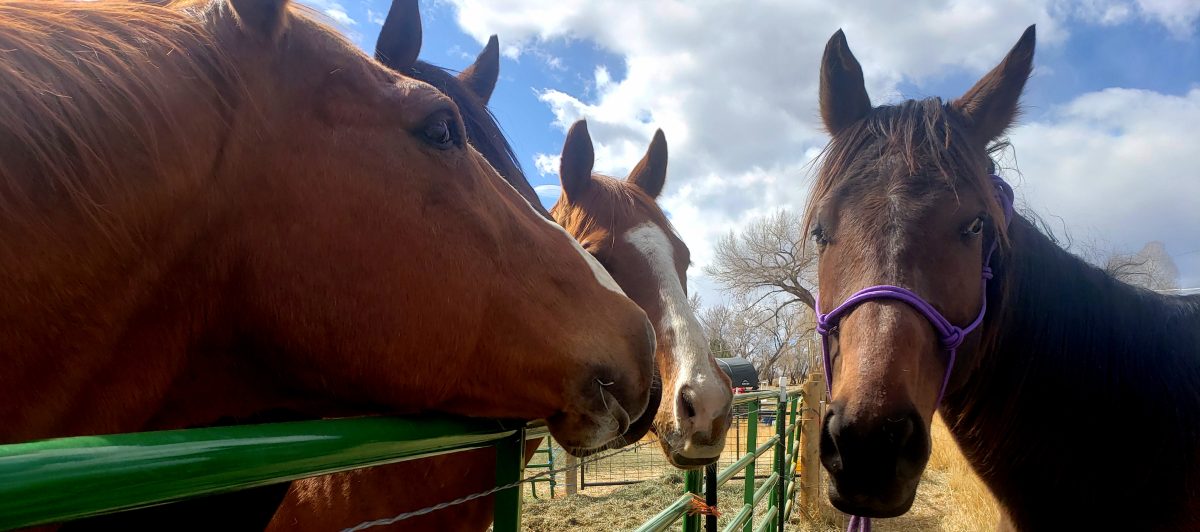


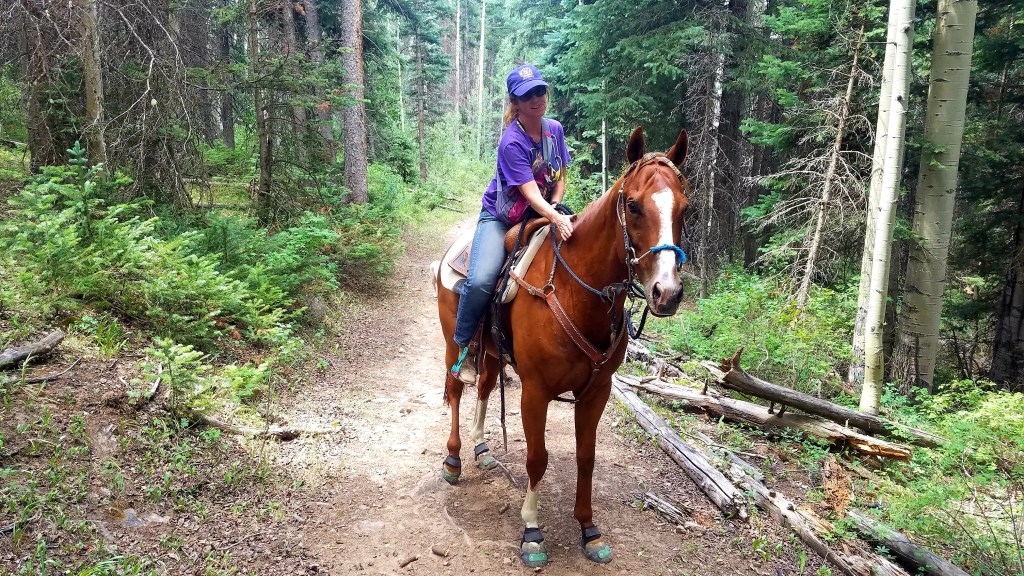

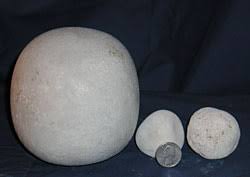


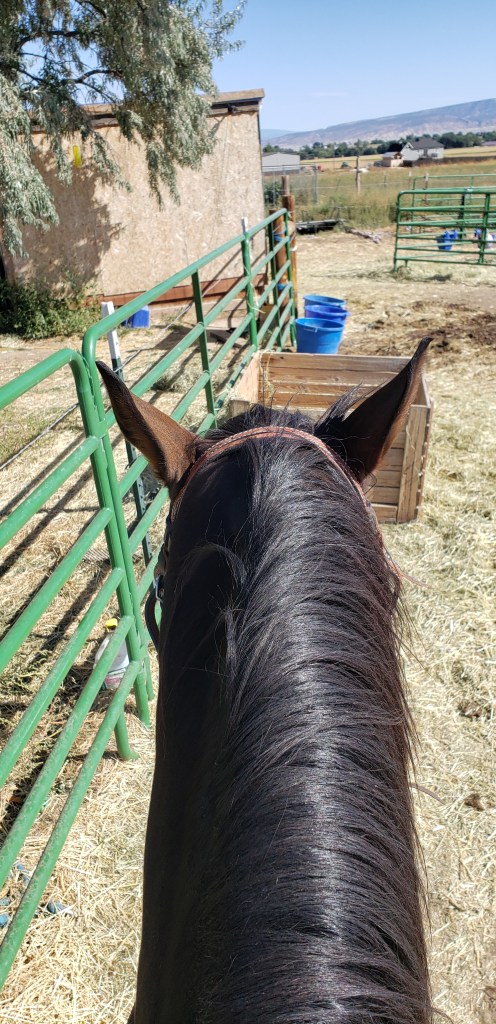
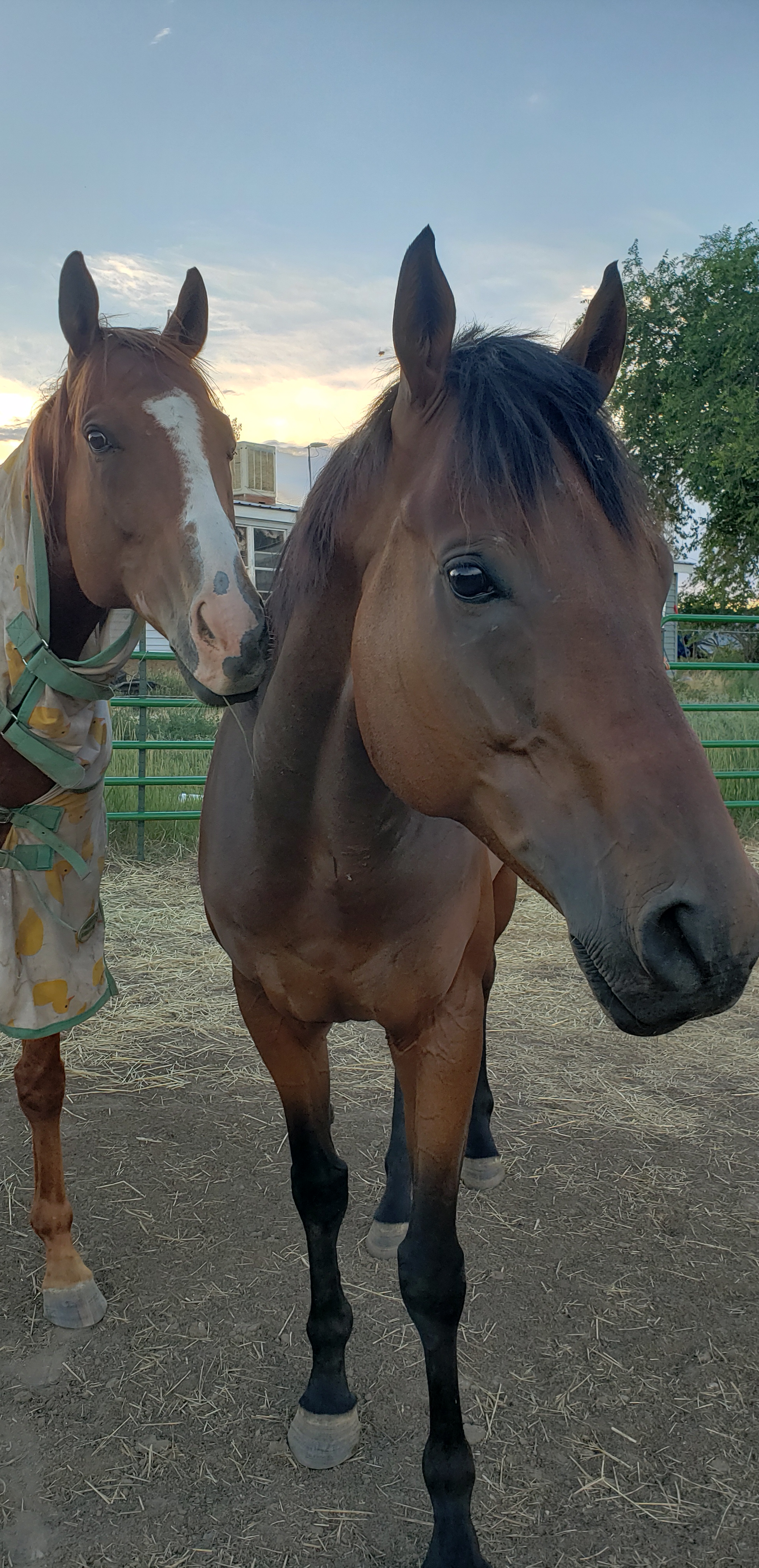
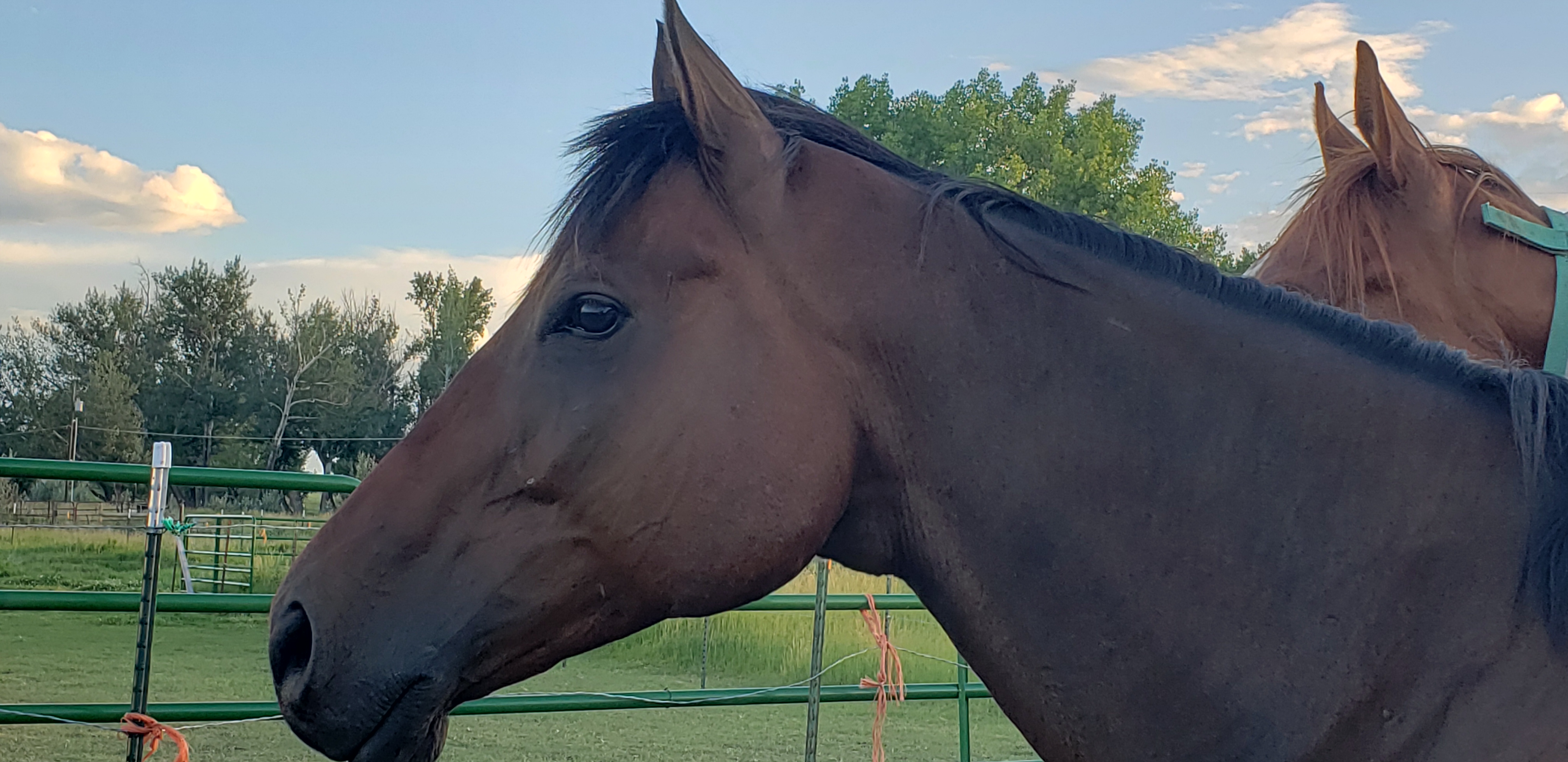



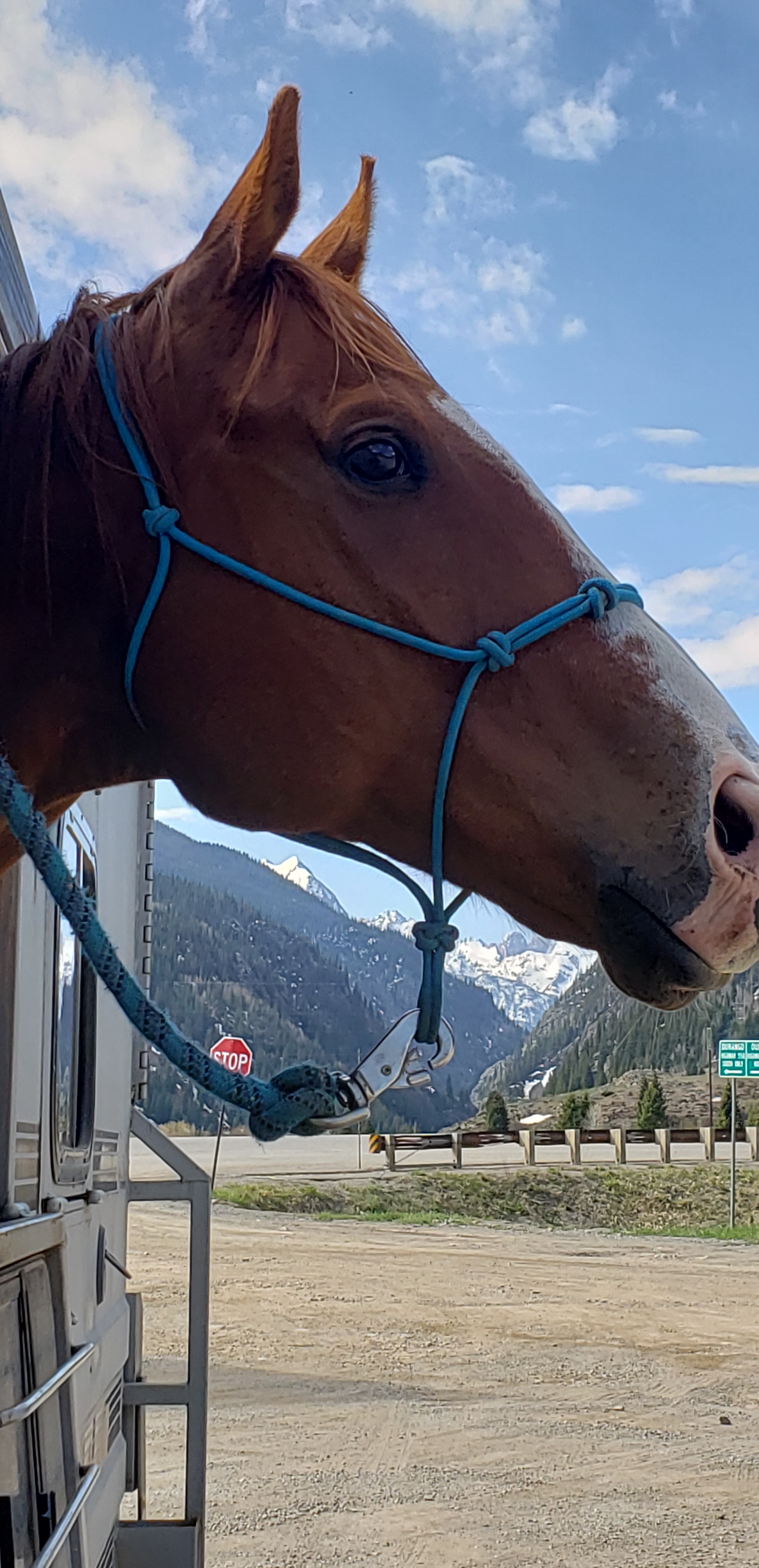
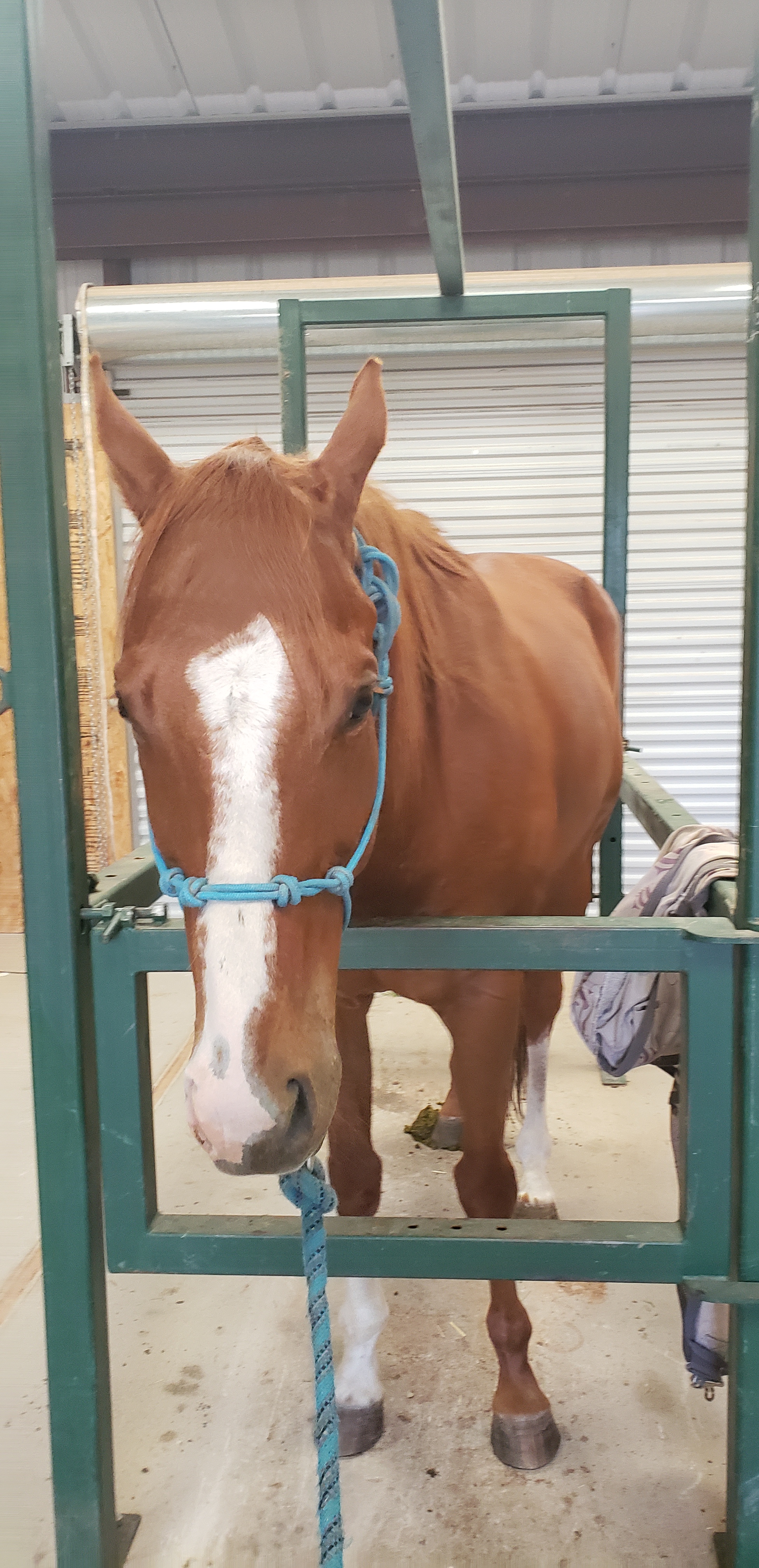


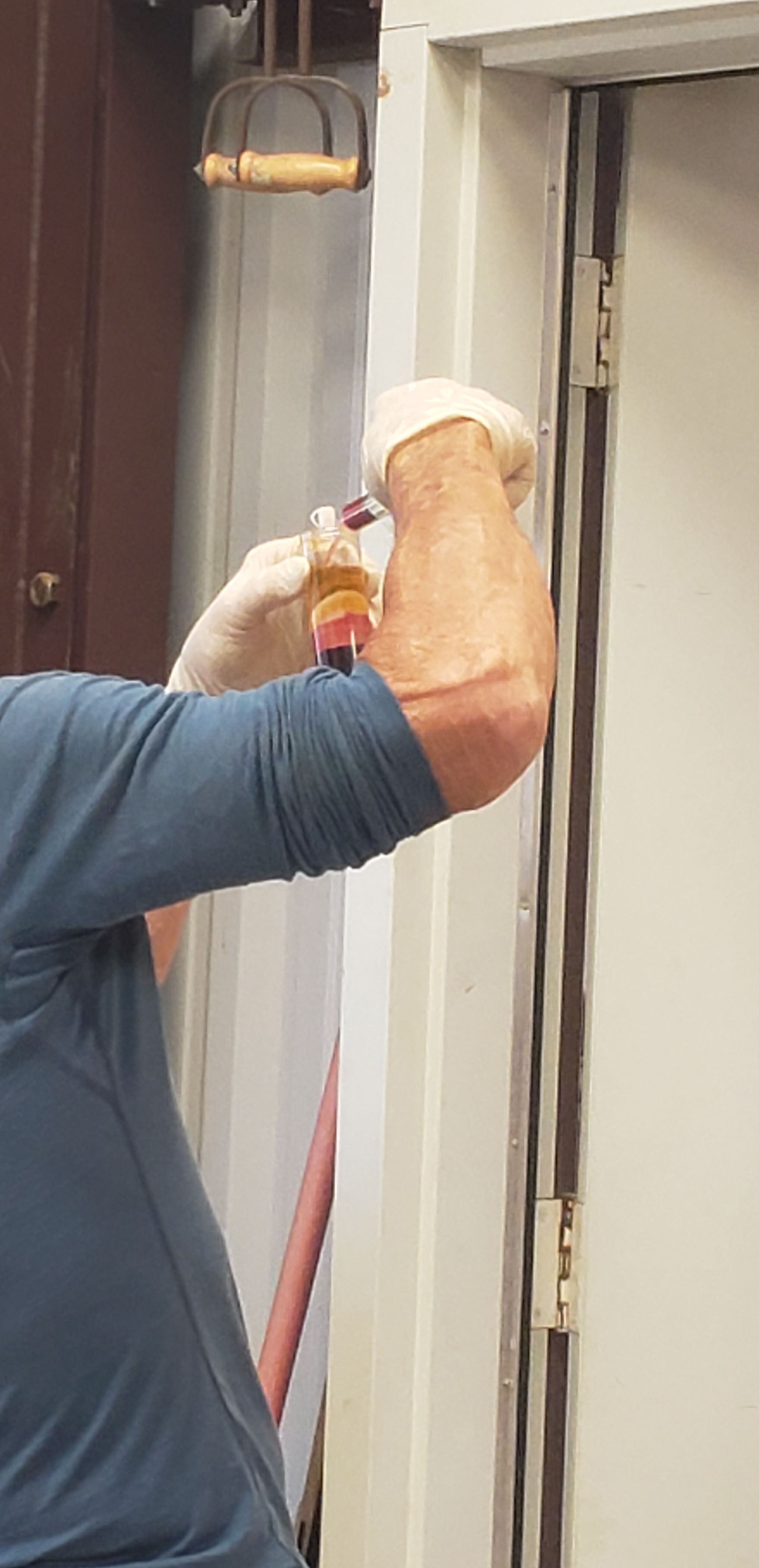
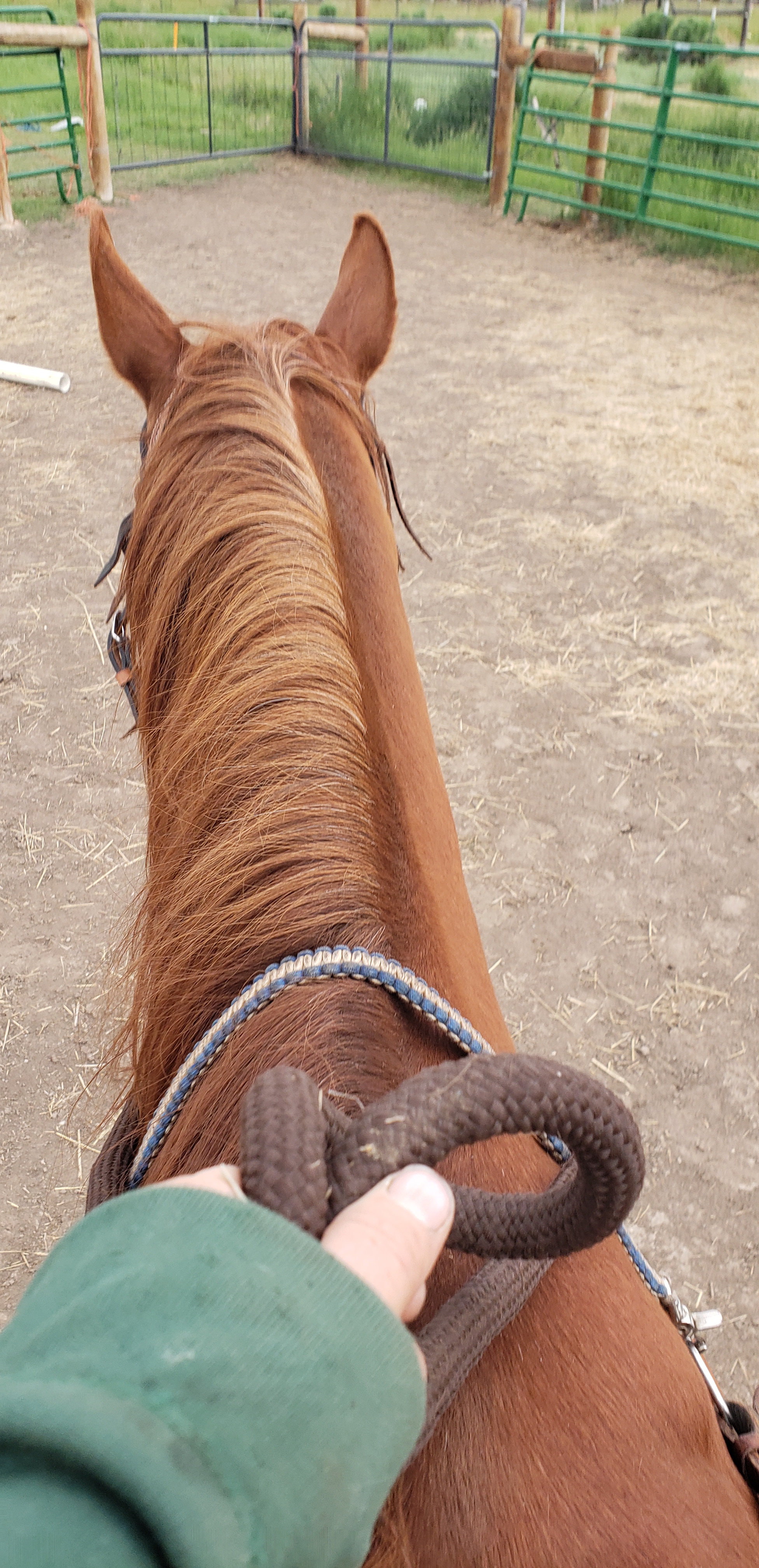
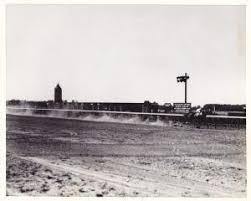

 Reenchanted Thoroughbreds