Man o’ War – First Year

Born of Royalty

Feelings were mixed when he went to the Saratoga sales. Sam Riddle already passed up buying him months before. Recovering from distemper, he was on the thin side with a dull coat. Questions arose about one of his hooves and if it could withstand the demands of racing. Despite all of this, a few saw through all that could be considered wrong and saw all that was right.

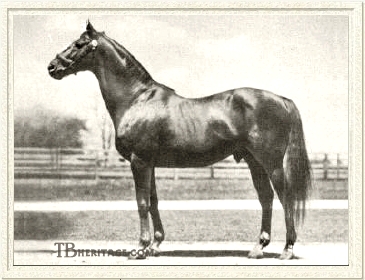
Bred by August Belmont II, Man o’ War was born on March 29, 1917 at the Nursery Stud just before midnight. His coat was chestnut, and he was tall from the moment he hit the ground standing three and a half feet high with a wide girth holding the biggest of hearts and most powerful of lungs with the capacity to run at any distance. His dam was Mahubah and his sire was Fair Play. Several foals were born at the Nursery Stud that year, so Man o’ War didn’t necessarily stand out, but he was noticed.

Mahubah was a nervous yet gentle filly like her sire Rock Sand who won the English Triple Crown. She was a bay mare with a long body and strong hindquarters perfect for speed and distance. She only raced five times winning one race and placed second making a total of $390 in her racing career. Belmont never raced fillies that he intended to breed for long. He raced them to see if they showed any promise, and then retired them for breeding saving their energy for their foals. She was bred to Fair Play five times having five foals, which is why everyone refers to her as Fair Play’s wife. The most famous of her five foals were Masda, My Play, and Man O’ War. After her fifth foal, she became barren. Mahubah and Fair Play are buried next to one another in Kentucky.

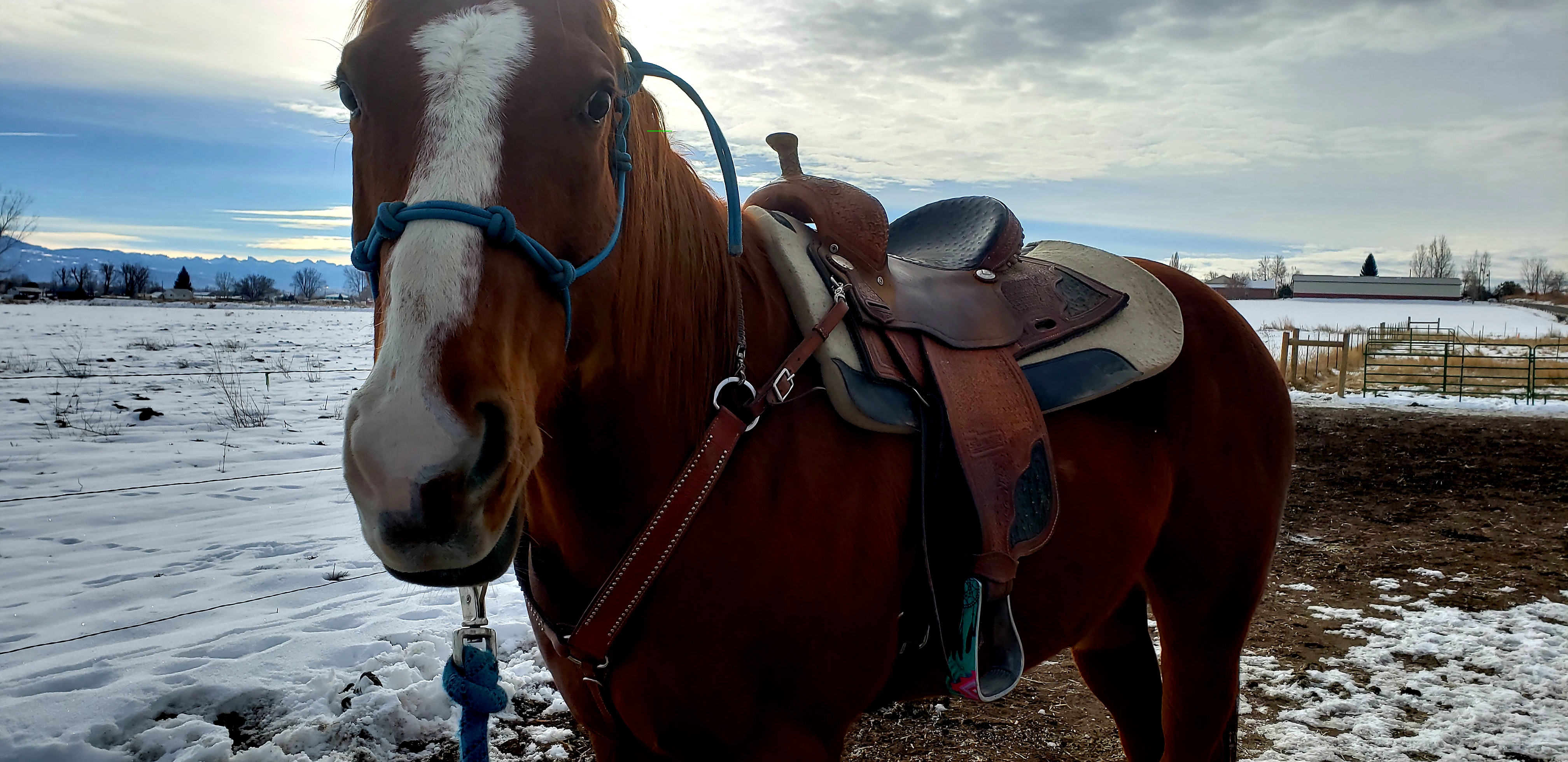
Man o’ War got his chestnut coat from his sire Fair Play as well as his unusual white blaze that ran crooked down his face. Fair Play’s sire was Hastings who was quite the racehorse in his day, and known for his fiery personality.

Louis Feustel, Man o’ War’s future trainer, used to be an exercise rider for August Belmont II. He knew what Man o’ War would be like after having to work with Hastings, Fairplay and Mahubah, but Hastings really showed Man o’ War’s hand.

“I was assigned to gallop him [Hastings] an easy half mile one morning. Two miles later, with him going like a runaway locomotive, somebody picked us up. I was never allowed to get on him again. And that was alright with me,” said Feustel.[1]

The 1896 Belmont Stakes winner, is said to have bit and rammed other horses during races. When Hastings retired, his nasty temperament worsened. They say Hastings became so hard to handle that he refused to wear a halter, and his groom carried a big stick at all times whenever he went in to handle him. Finally, it became so dangerous to work with him, they built a fenced path for Hastings to walk from his stall out to his paddock to minimize handling.

Hasting’s son Fair Play would have been considered a great horse if he didn’t have to compete against Colin who ran undefeated in 15 starts beating Fair Play several times. They say Colin had another gear, that when threatened by another horse, he switched into that gear and could leave everyone behind with ease. During Colin’s third year, he bowed one or maybe two tendons. After Colin was hurt and healing, Fair Play easily won many major races setting several records.

One of the most exciting Belmont Stake’s ever run was what turned out to be a duel to the end between Colin and Fair Play in 1908. Colin three weeks earlier beat Fair Play in the Withers Stakes by two lengths at a cost. Rumors spread that he bowed a tendon in one of his forelegs. After a work, it was said he pulled up lame. On the day of the Belmont Stakes, he appeared in the paddock with his legs wrapped. Some stories say his trainer, James Rowe, didn’t believe that Colin should race, however other versions state he and his owner James R. Keene insisted he was sound and not in pain. A veterinarian also backed up Keene’s statement. There he stood in the paddock with Fair Play ready to duel again. Fair Play was up to the challenge hot with excited energy kicking the sides of his stall demanding to hit the track.

It was a stormy day, and the track became a thick, deep mud. The rain came down so hard nobody could see the race as it progressed. However, two horses with hearts of champions emerged fighting it out down the stretch. It seemed that Colin despite his bad leg would win the race easily by three to five lengths. However, there was a different finish line for this race, which was 150 feet away from the normal finish line. When Colin’s jockey, Joe Notter crossed the standard finish line, some say he began to ease Colin up forgetting they still had more race to go. Others say that Colin’s leg began to falter or he started to tire. Whatever the reason, Eddie Dugan and Fair Play did not forget. Fair Play charged on fighting with each stride narrowing the distance between him and Colin. Colin feeling Fair Play gaining tried to gain momentum, which is challenging for a racehorse to do once they begin to slow. Notter immediately began to ride Colin hard as he heard Fair Play’s thundering hooves closing in. Fair Play would not give up. Colin won by maybe three feet, but it was Fair Play’s fight to the end that caught the eye of all. That heart, that fight, and the desire to win, Fair Play gave to Man O’ War.

When New York tracks shut down due to new laws prohibiting gambling, Colin and Fair Play were shipped off to England to race. Colin suffered another injury and was retired to stud in England. Fair Play raced six times never winning a race. Racing on turf was not his thing, and his attitude quickly soured. Hasting’s temperament seeped into Fair Play who was retired to stud in Kentucky where he began his new career as a successful sire for August Belmont.

Belmont became strapped with debt and embroiled in the First World War, so he decided to sell off most of his horses. At first, he was going to keep two colts one of which was Man o’ War. After some thought, he decided that would hurt the sale of his other horses if people thought he kept the best horses for himself. He decided to sell Man o’ War with the others.

Sam Riddle actually had a chance to buy the horses prior to the Saratoga Sale, but he decided against it baffling his young, new trainer Louis Feustel. Riddle decided to trust the judgment of his niece’s trainer rather than Feustel due to the fact that Mike Daly was older and had more experience. Daly found them to be unimpressive. Despite being ill with distemper, Man o’ War caught the eye of Feustel who kept him in mind when they attended the Saratoga sales.

At Saratoga interest swarmed around the Belmont yearlings, since Belmont was the premier thoroughbred breeder at the time. Again, Man o’ War interested some while turning others away.  Riddle claimed that the moment he saw him, he recognized his greatness.  This claim was disputed by others including a sworn affidavit by Jim Maddux in 1920.  According to Maddux, Riddle stated that he wouldn’t spend one dollar on Man o’ War. Man o’ War s coat was dull and rough with ribs popping out caused by the lingering effects of distemper. He also hated staying in a stall after roaming freely on pasture most of his life. Not only did they see an unhealthy looking coat but a nervous horse. Nervous horses tend to use up all of their energy before a race even starts. Another question that worried prospective buyers was would he be able to handle the boredom of being in a stall for up to 20 hours a day? Also, in his conversation with Maddux, Riddle stated that Man o’ War had a crooked foot, which his trainer, Louis Feustel pointed out to him. Feustel later denied this stating that his left forefoot was a tad narrower than his other feet. Pointing this out didn’t mean that Feustel had given up on Man o’ War at all. Quite the contrary.

Four horses were the limit on what Riddle would buy, and Man o’ War was in the top four. Feustel wanted Man o’ War, but he wasn’t sure Riddle would pay the price he might go for at the auction. Feustel went to the real boss in the family, Elizabeth Riddle, Sam Riddles wife.

Man o’ War was the seventh yearling to go up for auction. When led in, he “showed plenty of spirit in the sales paddock,” commented Kentucky Derby promoter Matt Winn. Riddle faced some steep competition in bidding. When the number climbed close to $5,000, Riddle was about to let Man o’ War go. Feustel couldn’t get him to budge.  The auctioneer kept prodding the audience for another bid when Mrs. Riddle sealed the deal by urging her husband to buy him for their trainer who showed a lot of belief in him. She told her husband that if he didn’t buy him, she would. His wife won, and Riddle put in the final bid of $5,000. Sam Riddle bought the best horse that some say ever lived, because he couldn’t say no to his wife. With that an amazing journey began.

Riddle soon began to question his purchase when it seemed impossible to get a saddle and rider on his back. According to Lou Feustel, he had problems with Man o’ War, or Big Red, from the very beginning. Like Fair Play and Hastings, Big Red rebelled against everything different. His grandsire Hastings threw every exercise boy he could until a young man named Red came along. For some reason Hastings liked him, and from then on he improved to be the fasted horse in the barn. He still was one of the meanest horses around, but luckily Feustel handled Hastings and his offspring. He was totally prepared for what Big Red would throw his way.

Feustel was a true horseman in that he knew trying to overpower a horse could ruin their spirit. Instead, it was better to walk alongside the horse with each new introduction and create the space where the horse figures out what you want while thinking it is his or her idea. When it came to someone sitting and moving on his back behind him, he challenged Feustel with everything he had.

The first time someone got on his back, he exploded with such rage that no one could catch him for fifteen minutes after. They say that he threw the exercise rider forty feet. This replayed over and over. He didn’t like the feel of the bit or the snugness of the cinch. He especially didn’t like the weight of someone on his back.

“Once or twice I really began to wonder just when and how it was going to end,”[2] commented Sam Riddle.

Feustel once said, “He was hell to break, a headache to handle, and a catapult to ride.”

Finally, along the shores of Maryland, Big Red gave in. Man o’ War realized that they weren’t going to stop trying, and he decided to finally go along with it. He was paired up with a much calmer horse named Major Treat, which helped Man o’ War focus his energy where it needed to be; on racing fast.


[1] “Step and Go Together: The World of Horses and Horsemanship,” by B.K. Beckwith 1967

[2] John Hervey “The Turf Career of Man O’ War” unpublished manuscript (1933) later serialized by Horse magazine; available through the National Sporting Library (Middleburg (1933), Virginia).

Next week I will publish a blog on his first year of racing as a two-year-old.
Age Isn’t Slowing Him Down

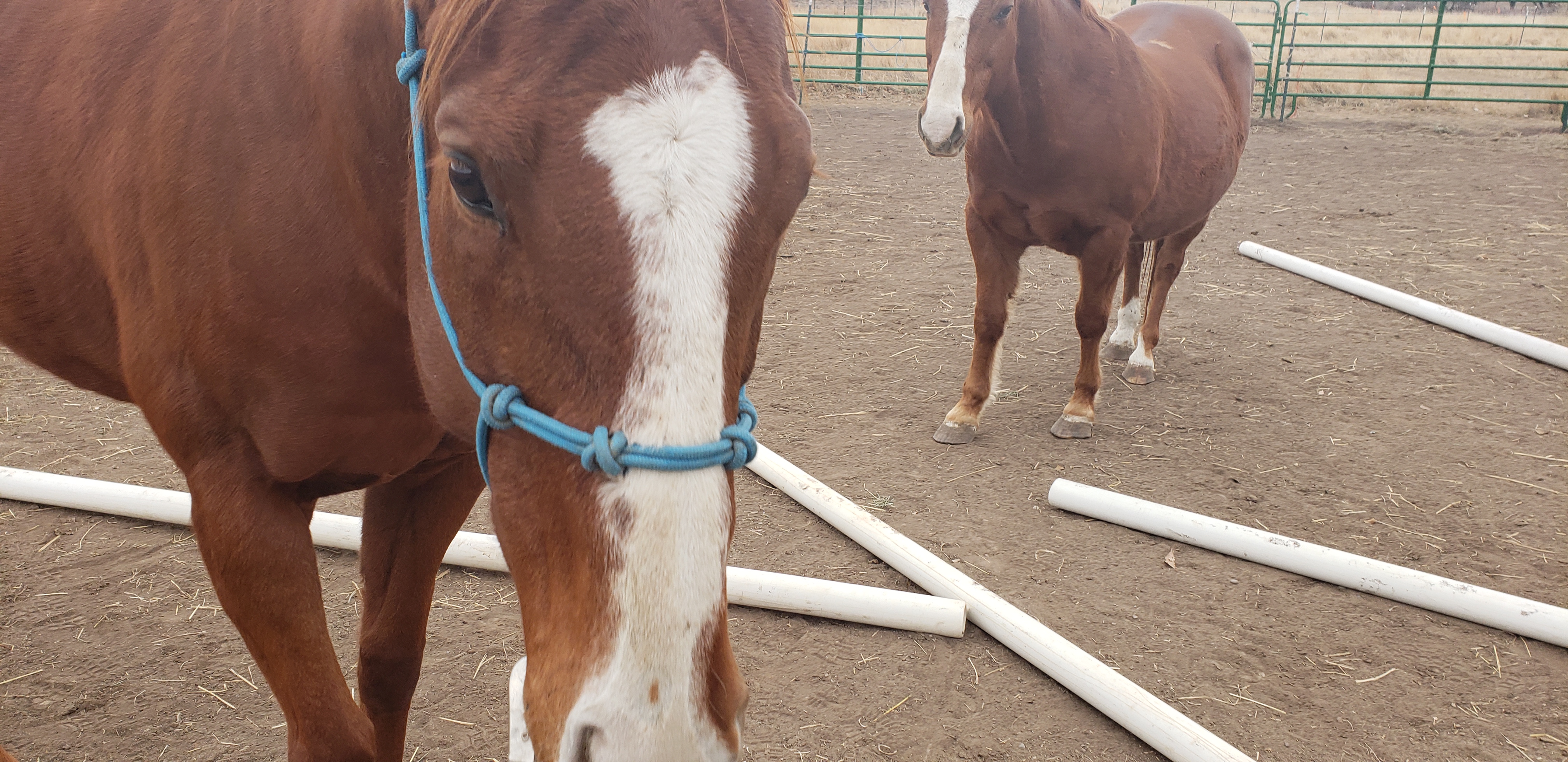
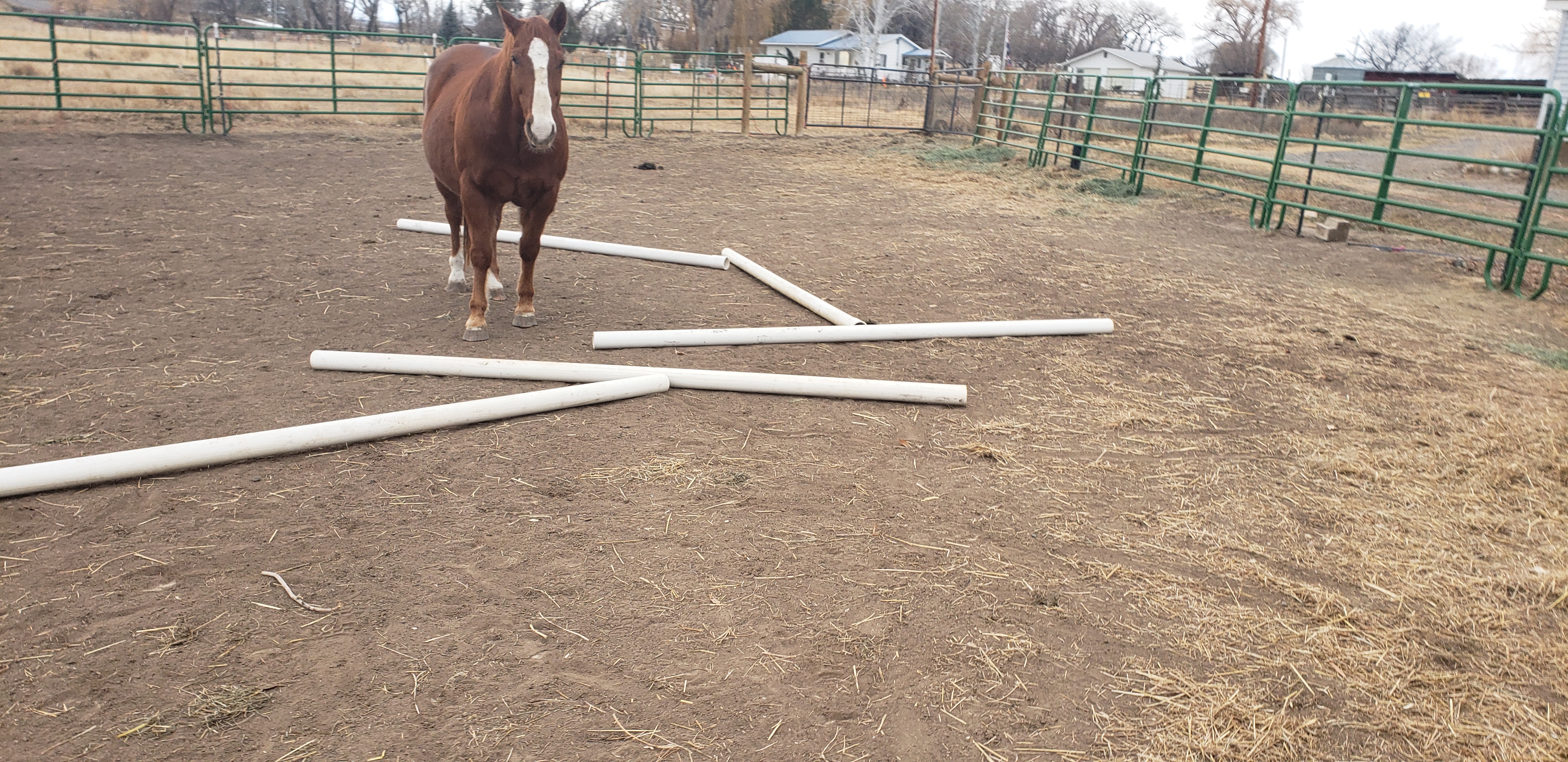
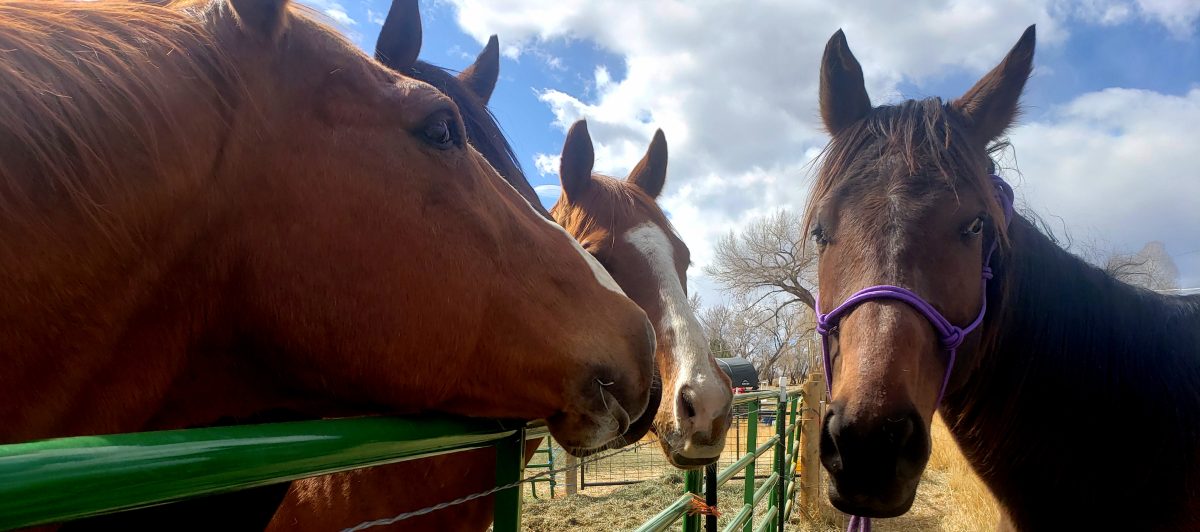
Chaco and Harley checking out the poles before we start working

Since I don’t know the day Harley was born, I count the first of the year as his birthday like they do for thoroughbreds, which means he is 19. Yes, he is getting up there, but he is pretty spry. He doesn’t wan’t to retire yet, and he gallops around with Chaco easily. Christmas Day 2017 he came up completely lame in his left front leg with swelling and heat. Each time I wrapped his leg he would shake with fear due to the pain. It killed me. It broke my heart, and ever since that day he has had a recurring gimpiness in his left front leg. I call it gimpy, because even though I wouldn’t call it a full limp you can tell it bothers him from time to time.

Harley is the best horse. He will do whatever you ask of him simply because he trusts you to not lead him into trouble. For years he gave kids rides at a local dude ranch serving as the horse in their cowboy dreams. I often wonder how many times the kids kicked him pretending to chase after the bad guys, or how many screamed and cried scared to death; he never bucked anyone off as far as I know. What I do know is when my neighbor brought her toddler over one morning, he ran the other way. He wanted nothing to do with any kid anymore. Can you blame him?

While he was at the dude ranch, they never did any physical conditioning, so Harley is going to have a sway back. He carries all of his weight down in his stomach because of this, and I feel that this lent to the problems with his leg. They also didn’t take care of his hooves at all, and his toes were way too long and he walked toe first. His front left hoof was the worst. In another blog to come, I’ll tell you about how I learned how to trim hooves because of him, and how his hooves are in much better shape.

When Chaco went in for surgery, I decided to do exactly the same rehabilitation with him as I did with Chaco. He got a month on small turnout, and I began walking him for fifteen minutes a day when Chaco started. Now we are doing 25 minutes a day. As he progressed I added poles, and we walked and then trotted over them. However, I never put him on the lunge line; instead I led him through all of the routines. Each time after our works I expected him to be sore, but each time he comes out of it better and better.

This is when I realized this is a much better way to work with a senior horse. Why in the world should they be put on the lunge and forced to do circles, which can be hard on their joints? Harley and I trot circles together, but his leg seems to handle them better when we trot them off the line and together instead. Why? Off the lunge, he and I can vary the circle size based upon how he is doing that day. I think not having the strain of sustaining the same size circle over and over is much easier on his joints, and I can trot him out of it into a straight line whenever I want. Basically, getting away from the lunge allows for a lot more creativity in what you can do with your horses and how to get them back into shape. We can easily vary the exercises without the constraint of the lunge line, and the fantastic thing is he has lost weight while his leg remains sound.

This is called picking up sticks. I kept them all on the ground the first time without any elevation as we worked with this exercise, and we crossed the poles in all different ways getting more and more challenging as we went along. Harley decided to check it out and move a few of the poles to positions he liked better. He literally picked them up with his mouth and moved them.

I do several targeted exercises based upon Jec Ballou’s book, Equine Fitness, for both of the horses. I find that they really create balance and symmetry in the horses, and they help strengthen and warm up the joints in a beneficial way. Instead of riding Harley through the exercises, we do them all on the ground together. Soon we will do them under saddle, but this was a great way to start. I like going through the obstacles with him for another reason; it really develops a strong relationship. When he sees that I am right there with him, it strengthens our partnership; he doesn’t have to face it alone. Harley wasn’t worked in the arena much at all during his life after his initial training, so everything I’m asking of him is new and mentally challenging for him. It can be scary, so being by his side helps. More importantly, we have a lot of fun together. For Harley the exercises have helped strengthen up his back, and I did get it to lift a couple of inches since I brought him home.

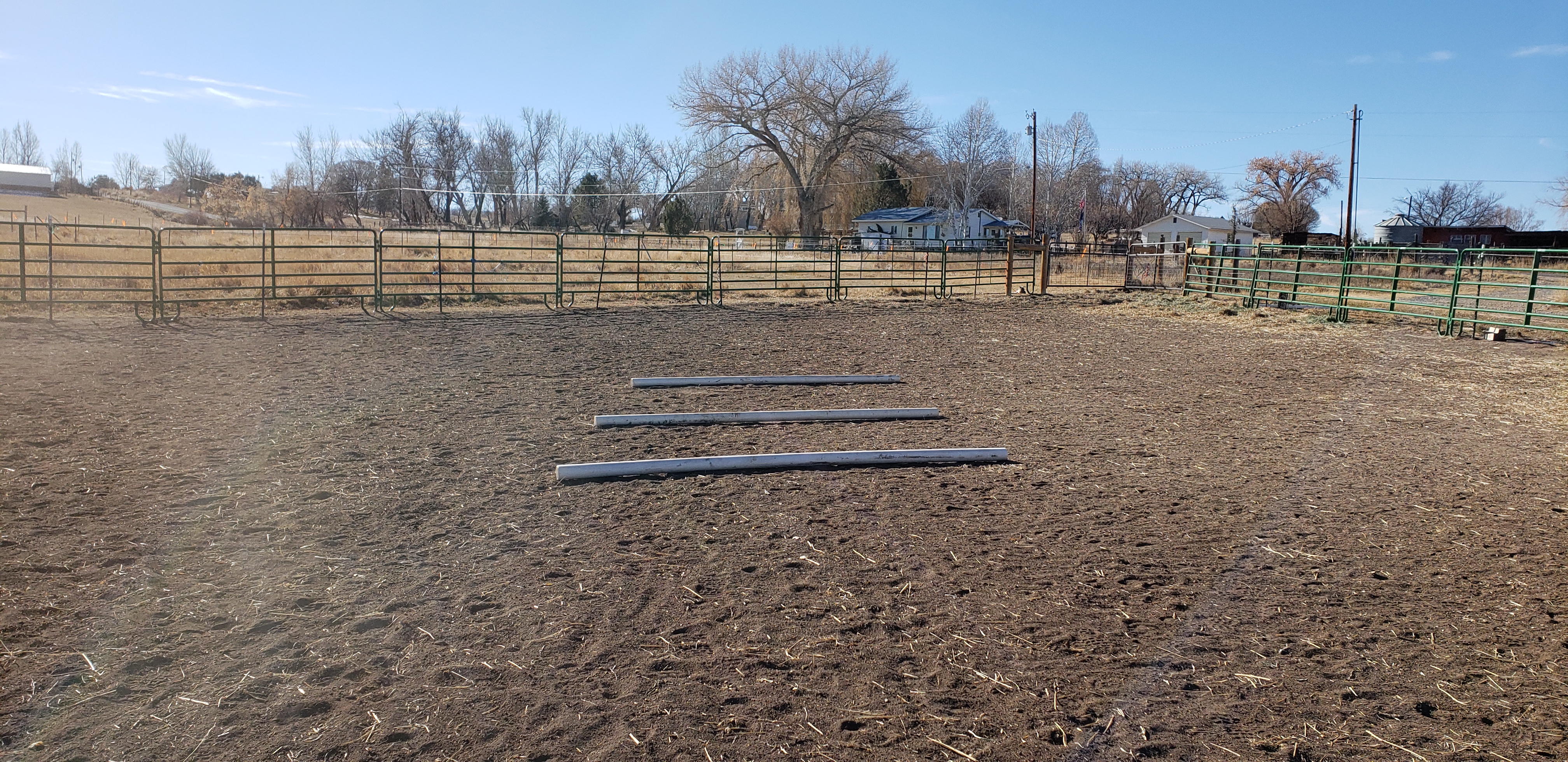
This day we did all sorts of routines. We walked straight across them, we walked through them diagonally, and we wove around them. We also did small figure eights crossing diagonally over the middle one. We did each exercises first at the walk, and then we trotted each exercise.

This weekend it is time to put a saddle on him and ride him for fifteen minutes. I’m looking forward to see how he does. When I can start riding Chaco, Harley will be by his side each step literally. He is healthy and sound enough to hit the trail with Chaco again, and his age isn’t slowing him down. He will let me know when he’s ready to retire, but for now, he is as eager to go as Chaco is.

Forget that lunge and really work WITH your horses instead of standing there while they run around you. It is a lot more fun, a lot more creative, a lot more dynamic, and a heck of a lot more beneficial for you and your horses; senior or otherwise.

So Close But So Far

Snow moved into Colorado after a very long absence over the holidays bringing a sigh of relief to everyone fearing another year of drought. Do we still have to worry about drought? Yes, but we are gaining.

I discovered this morning that two fox made a den by the year-long creek that borders my neighbor’s property. I couldn’t figure out what was spooking Chaco and Harley so much until I heard the fox chatting with my dogs while we were walking this morning. In the past Chaco and Harley would stand behind Shandoka, and when he stopped worrying, they would. Now they don’t have him to let them know if they are safe or unsafe, so Chaco is on a major learning curve. Harley got over it faster than Chaco has, but even he got nervous. I believe the fox worked their way to our property one night, because they both refused to cross this imaginary line in their paddock. Harley swiped his nose through the snow a few times while standing his ground. I had to catch them and walk them over that line to show them that all was well.

A week before the storm came and a few days after Chaco was put out on full turnout, I could tell that Chaco was sore. He was fine when I said goodnight to him, but the following morning he favored his leg. He walked fine on it, but when at rest, his right rear was the one that got all the rest. I saw a bunch of deer scat next to the fence, and I instantly knew what happened. Chaco and the deer were playing with one another when he strained something. Luckily, a few days of rest healed it all up, but it slowed down our rehabilitation program.

The storm brought seven inches of snow, which could have been a problem with continuing Chaco’s walks. However, I decided it was perfect to work out those muscles and to get him to lift his leg, all of his legs, higher while walking. It became the perfect exercise tool. He and Harley had to work to walk, and to walk they needed to use those muscles of their hind end a lot! The snow I believe caught us up on the days that we lost to the deer incident.

However, I am supposed to start riding him for fifteen minutes a day, and I’m not sure where or how. The snow, due to warmer temperatures, is a sheet of ice in most spots. The footing is not good, so I will continue walking him until I can get on him. The last thing I need is for him to take a bad step with weight on his back.

I have him on a supplement for his leg, and it seems to be helping. However, I do believe he needs more protection due to the cartilage damage. The surgeon wanted him to get Irap injections. I’m not going to describe that whole process, but basically they draw blood and create the Irap to inject back into the joint that is injured. It is completely natural, and it has no known side effects like steroid injections do. We can’t afford that though, because it would cost about $2,000 due to all of the damage. We are going to do a Pro-Stride injection, which is similar, and he would only need one injection per year. The Irap would require five injections over five weeks per year. Also, the cost is only $450.

Pro-Stride output produces a concentrated solution of cells, platelets, growth factors, and anti-inflammatory proteins, and is created from the horse’s own blood. When this highly concentrated solution is injected into a joint, it binds to and stops the inflammatory proteins that are causing pain and cartilage destruction. This is what Chaco needs to be pain free, and prevent anymore cartilage damage. I’ve read how it is very effective with stifle joints. There are three small joints in the stifle, and Chaco only has damage in one of the joints, which is called the femoropatellar joint.

Right now I’m trying to figure out how to get there, because the only vet that does this on the Western Slope of Colorado is three hours away over several mountain passes in Durango, CO. I need to figure out the safest time to go, because the vet can’t come here. Keep your fingers and toes crossed for us.

In the meantime, we walk, he grazes all day, and we goof off. He is bored to death though, and he wants to get back to work. He likes to go to the arena and work hard, and I know he misses trail riding. I keep promising him soon enough even though it seems so far off.

Rillito Boy

rillitoguysandolls
My grandpa is standing to the left of the Guys and Dolls banner with his hand on my Aunt Carole who is wearing the polka dotted skirt. My grandma is holding up the banner at the corner by Rillito Boy. My mom is standing behind her towards Rillito Boy and holding the white purse.


If a horse loses an eye, some will tell you to put the horse down. They say the horse will never be able to get around or be able to do anything of merit. Luckily, other people realize that it is just something that a horse can adjust to and overcome, because of their amazing senses.

A couple of years ago a thoroughbred named Patch qualified for the Kentucky Derby, and he is proved that losing an eye has nothing to do with speed and heart. While many are in awe about this with good reason, my grandpa wouldn’t be surprised by Patch. He also would love to follow Hard Not To Love. He would understand what she goes through before a race better than most.

**********************

Back in 1951, a bay thoroughbred colt was born to Mrs. Marge Allen; a prominent horse breeder and horse racing enthusiast in Arizona. The story goes that one night a bad storm moved in with a lot of thunder and lightning. Rillito Boy was a newly weaned colt, and he got the idea that the stallion in the next pasture might be good to hang out with during the storm. I’m sure he was scared, and he wanted to be with an older horse for comfort and protection. Whatever the reason, Rillito Boy climbed through the barbed wire fence injuring his eye causing him to lose all vision in it. Mrs. Allen and her trainer, Manny Figueroa, both saw a horse that didn’t seem hampered at all by the loss of his eye, so they put him into training when he was ready. Figueroa told my grandpa, “This is why he is so tough.” Rillito Boy had a reputation amongst humans and horses for being fierce as you will see.

Whenever I visited my grandpa, I pulled out the photo albums of his horses and asked him to tell me about Rillito Boy again and again. I never tired of hearing about him. He is the type of horse that most people run from, but for some reason he was the exact horse my grandpa and I both were drawn to. He told me about how hard he was to handle by past grooms, how he ripped a groom’s lip off, and how he took a chunk out of another groom’s ribs one day.

My mom, Lanie Fouch, recently said, “There were many times that we had former grooms come up and tell us that he had put them in the hospital, or at least knocked them against the wall. I could always go in with him, and so could Daddy. However, I never let my guard down.”

Grandpa marveled at his desire to win. “Once he bit a horse on the neck that was beating him, and he got disqualified for that,” chuckled my Grandpa. He got such a kick out of horses that had fire in their belly.

My mom said, “If a horse acted up next to him in a gate, he would reach over and bite his neck. It must have gotten around among the other horses, because eventually horses that were next to him were perfect in the gate.”

My grandpa was born and raised in Milwaukee, Wisconsin where he brought jukeboxes, pinball machines and the first drive-in movie theatre to Fox Point, Wisconsin. When my mom developed rheumatic fever, the family moved to Tucson, Arizona where my grandfather got involved with horse racing.

“Our first quarter horse was kept at Mr. Jelk’s place on the backstretch at Rillito Park. That must be how Daddy got to know Manny (Figueroa) and Mrs. Allen. The whole atmosphere around that little race track and the people were great. We had lots of rich people, we had mobsters, and we had the people on the backstretch; they were great. They accepted Daddy and the rest of our family right away,” said my Mom.

My grandpa also lost vision in one of his eyes. My mom isn’t sure what happened, but he came home from the eye doctor in severe pain. She remembers my grandma doing everything she could to help him. He never made an issue of it, and in fact, he seemed to see things more clearly than all of us with two eyes. He would take me to visit the horses, and he taught me to close my eyes while running my hands down a horse’s legs. Eyes can fool us he explained, but our hands feel the truth. I still do this, and he’s right; our eyes see what they want to see.

When my grandpa and Rillito Boy met, I think Rillito Boy, a thoroughbred, knew my grandpa understood him, which made him feel a bit safer. They both knew what the other one went through. That silent communication between horse and human that my grandpa excelled at possibly allowed Rillito Boy to let his guard down a bit. My mom said she always kept an eye on him when she was around him, but my grandpa said she could walk under his belly if she wanted to. Rillito Boy knew he found people that understood him, accepted him, and didn’t try to muscle him. My grandpa always told me to be creative when working with a horse; that trainers get into ruts thinking one method is good for every horse.

Some might think a horse with only one eye couldn’t be a good racehorse, because they can’t see their competition coming. While horses have great vision, their hearing is often what alerts them as to what to look at. Since they are prey animals, all of their senses are heightened, so losing an eye could be a problem; not a disaster. My guess is Rillito Boy could hear them and feel them coming. It sounded to me from all of the stories I heard that he was an incredibly astute horse. He learned what my grandpa taught me; your eyes can tell lies.

Rillito Boy was a sprinter that placed in the money forty-eight times. One race in the photo album stood out the most for me, because everyone is so happy in it. It is a race that stands out for my mom as well.

On April 13, 1956, the Arizona Republic spotlighted the 5 ½ furlong race called Guys and Dolls at Arizona Downs. The six horses in the race were “Arizona Downs” stars, and Rillito Boy was one of those horses. He just won at Santa Anita Park in California, and he was going against two others that the paper thought could win the race: Sistony and Karen Arthene.

When the gate opened that day, the other horses never had a chance. All of the fight and love for running that roared through Rillito Boy’s veins broke out of the gate on top leaving all the horses with perfect eyes in his dust. Try as they might they couldn’t catch him. Rillito Boy ran with such purpose and drive that he led the others by more than six lengths in the backstretch. When he crossed the finish line, he broke the track record with a time of 1:03 3/5 and ran one of the fastest sprints in 1956 winning by several lengths.

If Mrs. Allen or my grandpa thought Rillito’s lost eye ruined him, Rillito Boy never would have been able to do what he loved most; run. Some horses are never made to hit the track, but Rillito Boy was. He loved to run, and my grandpa enjoyed every moment with him. I enjoyed sitting at this feet listening to him tell me stories about his stride, his powerful shoulders and hindquarters, the fight in him, the grooms that he had his way with, how he won by a tongue (yes, he stuck his tongue out to win a race), and how he thought Rillito Boy would have liked me; which I asked him all the time. My grandpa taught me through these stories to not give up on a horse because others have, or because others tell you to. If you see something in a horse, believe in it. They also taught me is that disabilities aren’t a limitation unless we make it so; my grandpa showed me that every day. Often a horse’s limitations are the ones we impose upon them, and luckily no one did that to Rillito Boy or Patch or Hard Not To Love.

Losing Your Heart Horse

20160413_073038-1

I received an email from someone today who just lost her “heart” horse saying that she resents her other horses, and she doesn’t know what to do. She asked me how I reconnected with my other two after Shandoka died. I know to some this may seem strange, but I’ve seen this more than a few times.

What is a “heart” horse? A Heart Horse is that horse that you have the most amazing bond with, a friendship that transcends all friendships, a trust that is immeasurable, and a love that runs as deep as it gets.

Shandoka and I were as close as a human and horse could get. He had a rough start in life, and when I took him in, he challenged the heck out of me. I don’t blame him. Humans never gave him a reason to trust him, yet for some reason he decided to give me a chance. I took that chance with little confidence in myself. I hadn’t been around or worked with horses in years. All I had in my back pocket were my grandfather’s words and teachings, and I didn’t know if that would be enough.

My grandpa was a natural with horses, and he said that I was as well. All I know is that I loved them deeply. There is nothing like the partnership, because that is what it is, between a horse and a person. They don’t have to have anything to do with us at all, but for some reason they allow us in. Getting in isn’t always easy. You need to earn their trust, and more importantly their respect. Once you do, it is amazing. It is a privilege that I never take for granted.

Shandoka was wild and distrustful. The wild part never bothered me, but the distrustful part concerned me. Sometimes a horse after being taught they can’t trust humans never will. The first time I put Shandoka in the round pen with me, he did everything he could to try and make my feet move. See, that is the key to the start of any relationship with a horse. You want the horse to know that you can move their feet forwards and backwards and move their rib cage, hindquarters and shoulders.

Shandoka was determined to move my feet, and I was equally determined to move his. He ran at me several times. I didn’t move. I used my stick to redirect him by swinging it in front of me; not by hitting him. He ran by me and bucked at my head. Lucky for me I do yoga, and I did a nice back bend; his hoof never landed. I made him trot and lope around, changing directions often until finally he would let me touch him. Did I mention how he didn’t like to be touched when I got him? After he let me touch him, I would quit and walk away. The moment you relieve the pressure the horse learns what the best choice is.

When I was a teenager, we claimed a horse named Scubber at the track. He was a big, beautiful bay horse that carried his head so elegantly. He had a nice shoulder and even better hindquarters. He came to us with an elevated white blood cell count, worms, and scared of everyone. My grandpa told me to get into the stall with him, and to let him come to me. Scubber had a gentle heart and soft eye, and I never felt threatened by him at all. He didn’t know if he could trust us, and a lot of that came from his last trainer I believe. He didn’t have the best reputation on the track. My grandpa never liked people with a heavy hand or belief in the 2×4 method of training a horse. He always said to me, “Why would anyone want a broke horse when you can have a gentled horse?” All horses loved him, because he understood them. Grandpa may have been blind in one eye, but he could see everything that needed to be seen in a horse, and they all responded to that.

I never felt like I had my grandpa’s eye, but I climbed into the stall, stood in the corner, kept my eyes down on the ground, and waited. Within a few minutes, Scubber came up to me and let me start loving on him. Scubber and I adored one another. I often snuck down to the track to visit him and sleep with him in his stall. My friends had just been murdered, and Scubber and Vehicle (our other racehorse) were my solace, my peace, and a bit of healing. All of the dang tears I wept on their shoulders.

For those first three days I went into the round pen with Shandoka, I brought the spirit of Scubber in with us. Each day Shandoka challenged me, each day I stood my ground, and each day it took less time before he walked up to me letting me pet him. On the fourth day I told him I wouldn’t round pen him if he let me walk up and pet him. Tense, his head held high and taught, I slowly walked up to him and reached out towards his shoulder. My hand touched him lightly, and the muscles twitched under my fingers. I put a little bit more direct pressure upon his shoulder as I pet him while he stood there letting me. However, his eye was wild. There was nothing soft in them, so slowly I kept petting him moving from his shoulder to his neck. I reached around to the other side of his neck while facing him when I found a deep, scabbed cut at his poll. He tensed as I ran my fingers gently around it until I rested my hand upon it. This is when everything changed. He let out a deep sigh licked his lips, and his eye softened. He lowered his head and let me run my hands all over him. For the first time of many times he let me rest my head upon his shoulder.

We became so close that I don’t even know how to explain it. We were partners and spent many, many hours with each other out on the trail, playing, or just hanging out. When he died on July 14th, I felt like I buried my heart with him. A huge part of me died with him, but my two other horses needed me.

Chaco became so stressed after Shandoka died that he literally got colicy within an hour of burying Shandoka. I had to give him meds, walked him, and hosed him down. While this was going on. Harley stood by Shandoka’s grave nickering for him almost to what some could call hollering. We all were in mourning.

Instead of even trying to work with your horses or ride them after you lose your horse, go out to their paddock, pasture, or barn and find a place to sit with them. Don’t ask anything of them. Sit there and wait. Let them come up to you when they feel ready to. Let them love on you, walk away, and come back to you. They understand better than anyone else about your loss, because they are going through it too. They need your guidance and care, because you are part of their herd. They will comfort you if you allow them to. Five days after Shandoka died, I realized that Harley wasn’t nickering for him anymore; he was calling to me. He stood by the fence close to my desk window and nickered until I went out, He would hug me while I draped myself over his withers.

If you approach or ride your horses with resentment, you could damage your relationship with them permanently. They will lose their trust and respect for you and respond to you in disrespectful ways. If I had someone on my back that resented me, I guarantee you, I’d buck you off. You can earn it back, but it will be harder to do so. They’re going to wonder why they should give those two things back to you when you threw them aside.

If you can’t sit with them without projecting resentment, try to stay away until you can put it aside. Take a step back and really watch your horses and how they are acting. This is when you can see their pain if you are open to it. I saw how Harley slept next to Shandoka’s grave each night; he still does six months later. I saw how Harley chased Chaco out of barn if Chaco tried to eat out of Shandoka’s hay bin. I saw Chaco go and stand by Shandoka’s grave each day, which he still does, and I saw Chaco shut down emotionally towards me.

Sometimes horses can get aloof after loss. This isn’t a reflection upon you at all, but an indication of how devastated the horse is. Chaco went through this, and I believe he did for a lot of reasons. Part of it was I think he blamed me for taking Shandoka, his first, best buddy, away from him. He went through a lot of change as a racehorse, changing hands, etc, and I think he wondered if I was going to get rid of him next. He really didn’t want much to do with me. I remained patient and kept trying to work my way back in. Every now and then his guard fell, and he would bury his head into my chest for a hug. The aloof wall would go back up quickly, and off he’d go. He then began to push me away hard, and this is when I put him in the round pen. We worked for 40 minutes one day before he finally joined up with me, and when we did, the wall came tumbling down.

See them for who they are. Chaco and Harley will never be Shandoka, but Shandoka could never be Chaco or Harley. Each horse, like a person, is an amazing individual. If I compared my two boys to Shandoka, I would be missing out on so much. They are such wonderful, caring, funny horses. I am grateful to have these two being in my life, because they simply amaze me each and every day. Our herd changed dramatically with the loss of Shandoka, and neither Harley or Chaco has emerged as the alpha. Instead they look to me, and when I’m not around, they take turns in leading one another. Although, when it comes to eating hay, Harley is the boss. The point is my relationship with them will never be like my relationship with Shandoka. Does that mean we aren’t as close? No. I love them so much.

It’s been six months, and all three of us still miss Shandoka more than I can express, but through the loss of Shandoka our relationship has deepened all because I listened to my grandpa and I listened to my horses. If I wouldn’t have, I can’t imagine what we’d be like right now. They are my inspiration, and I treasure my relationships, my partnerships with Chaco and Harley. Chaco’s former owner wanted me to give Chaco back, and there is simply no way that will ever happen. Not because of anything to do with him, but because of how much I love him, how close we’ve become, and how he is an integral part of all of our lives. And Harley is my big goof ball that loves to have his butt scratched and is my teddy bear. They are both my heart horses.

If you lose your heart horse, go out with your horses, watch them, listen to them, and simply be with them. You will all heal together and find yourselves in a different yet wonderful place. You can have amazing relationships with each and every horse in your life that can’t ever be compared to one another due to their incredible uniqueness.

President Grant Loved a Fast Horse!

West

I thought I would share this tidbit of history. This is not about politics, rather it is about the love of fast horses, respect, and two veterans of the Civil War…one of which was the President of the United States.

President Ulysses Grant became President for many reasons, but one of the main reasons was to make sure that everyone’s rights were being respected; especially those of freed slaves. He and his men fought and died for their rights, and he wanted to make sure those rights were honored.

President Grant loved his horses, and he loved even more racing them down the streets of Washington, D.C. Grant had quite the reputation for his horsemanship skills, which dated back to his West Point days. “In horsemanship,” said James Longstreet(a West Point classmate and future Confederate general), “…he was noted as the most proficient in the Academy. In fact, rider and horse held together like the fabled centaur.”

Grant preferred to ride the strongest horse and the horses that people were frightened of. He relished the challenge. He got into major trouble with the press when he supposedly instigated and participated in a high speed carriage race through Central Park after a political rally in 1866. Grant denied the accusations saying the stories were “almost” without foundation. He said he did take the reins, however there were no high speeds.

After he became President, the streets of D.C. were filled with reckless carriage drivers causing accident after accident. The D.C. police stepped up their patrols of the streets flagging down all hazardous riders.

The day after a mother and child were run over and seriously hurt, President Grant took to the streets with his buggy at break neck speeds passing M and 13th streets. Immediately police officer William West pulled President Grant over. West was a former black soldier who fought in the Civil War himself, and here he was pulling over the man he fought under. Instead of being intimidated at the sight of the President, West stood his ground.

The story goes that West put up his hand to pull over President Grant. Grant was going at a good clip, but with some effort he brought his horses to a stop. Like anyone riding a fast horse, no one likes being brought to an abrupt halt, so President Grant was a little bit testy when he asked why in the world the officer stopped him.

West said, “I want to inform you, Mr. President, that you are violating the law by speeding along this street. Your fast driving, sir, has set the example for a lot of other gentlemen.”

The president promptly apologized, stated it would never happen again, and he cantered away. However, when you appreciate the speed of a good horse, it is hard to never do it again. His self control only lasted for twenty four hours.

I imagine President Grant walked out to his stables seeing that his best horses were feeling full of their oats and thought, “What could it hurt to take them out for a little spin and burn off some of their energy?”

Again, as he was racing along the streets, West stopped President Grant at M and 13 streets. This time it took President Grant an entire block before he could get his horses stopped.

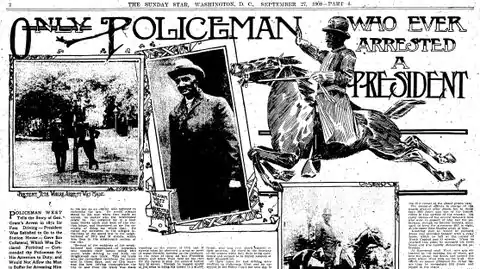
In the Sept. 27, 1908, edition of the Washington Evening Star under the headline: “Only Policeman Who Ever Arrested a President,” the story of this infamous arrest is told by West himself.

The Star article states that Grant was like a “schoolboy” caught red handed by his teacher. He was a bit cocky and had a smile on his face as West approached him.

President Grant asked, “Do you think, officer, that I was violating the speed laws?”

“I do, Mr. President,” West said.

What was President Grant’s excuse? Well, it is one you may have used with the cops before; he had no idea he was going that fast.

According to the Star, West went on to say, ““I am very sorry, Mr. President, to have to do it,” he said, “for you are the chief of the nation, and I am nothing but a policeman, but duty is duty, sir, and I will have to place you under arrest.”

It is fact that President Grant and his buddies were arrested and taken down to the police station. No one knows what the President said about being arrested, however witnesses said he accepted it just fine telling everyone to go ahead and do their job. President Grant was ordered to put up twenty dollars as collateral and to appear in trial the next day. He never showed up for court.

After paying his fine, President Grant was allowed to walk back to the White House.

West and President Grant went on to become good friends as West was an excellent horseman too. They often got together when West later admitted to President Grant that before joining the police force, he was cited twenty times for being a speed demon too.

They’re Back

So, the boys are back together. I worked so hard to get their paddock reverted to the way it was pre-surgery that my shoulders were so tense with pain afterwards. I’m not sure how many horse panels I moved, I almost had six fall, had to get the camera out of the barn, moved hay back out to all of the spots that I normally leave it, clean up the whole area, move the water buckets, and finally go get the horses off the pasture.

I thought it would be this major moment of excitement about being together again. Boy, was I disappointed. When I brought Harley up, he started eating on hay and stayed there. I brought Chaco up next, and he took a long sip of water and looked around. He and Harley touched noses as if to say, “Hey bro! Nice to see you got out of the pen.”

Chaco finally started walking around checking everything out. His nostrils flared, his head was up, and ears were perked forward. He moved with stealth all around the paddock exploring every nook and cranny. When he realized I demolished the pens, he picked up his pace to a trot, and he started doing canter-by’s around Harley threatening to nip him on the rear with each pass. Harley ate his hay.

Finally, Chaco had it and nipped Harley good on the rump. Harley’s head flew up, his ears pinned back, and he flew after Chaco. The games were on. They reared, they bucked, they ran, and they play nipped until I brought out their feed. Harley went back to eating. Chaco ran up to me on the muscle. He wanted to eat, but he also wanted to run. “I promise you get to play after this,” I reassured him. He let out a big sigh of relief and followed me into the barn.

20181219_152158

I went out twice during the middle of the night to check on them. The moon was bright, so I didn’t need a flash light. When my eyes adjusted to the moonlight, I saw them racing around the paddock. The instant they saw me, they stopped dead in their tracks as if I caught them with their hooves in the cookie jar. I walked out to them, and I checked Harley’s knee first. No heat and walking just fine. I then checked Chaco’s stifle. No heat, no swelling, and walking and running perfectly.  I hugged them both and headed back to the house. When they thought I was inside, their ruckus play began. I stepped back out, and they stopped immediately looking at me askance. I went back inside the door and watched. They were immersed in such joy at being fencless.

This morning they were relaxed and totally exhausted; calmness returned. Harley jumped at the silliest things during the past month and a half when they were on small turnout. Chaco was wound up with so much stored energy that rearing up became a daily event. Now they sauntered around the paddock and sniffed my pockets gently and nuzzled lovingly. I had my horses back.  Even though they could touch one another and stand side by side, that fence may as well have been electrified with nervousness. A fence between them changed their personalities dramatically, and the simple act of taking it down and letting them run and eat and sleep together brought them back home.

They took a two hour long nap this morning. They never do that. I envied them; their ability to shelve all of their daily plans for a sunbath upon the warming, deep earth. When they finished their morning slumber, I took their work off that proverbial shelf. I walked Chaco for 25 minutes for the first time today. He did so well, and he stepped over the few poles perfectly. I then walked Harley, and he and I jogged over several patterns, which he did perfectly.

Since Chaco had the chance to blow out his pipes on Tuesday and ran around all night last night, I decided he needed some bodywork. He relaxed deeply into it, and had nice releases through the poll, neck, shoulders, and withers. Nothing too remarkable but with each release he sunk deeper and deeper into acceptance of what his body needed to do. I decided to go for the lumbar/sacral points, which after the surgery became very loaded with tension willing to be released.

I didn’t record it like I should have, shame on me, but Chaco had a big release at his lumbar/sacrum junction, which I believe is tied to his injured stifle and wreck on the track. I worked on this area holding the point with air gap. Lots of blinks and lip twitches, and his head dropped low. When he started to fidget by backing up, instead of staying with him on these points, I took my hands off of him. I had a feeling he was about to go into a release, so I stood back. His head jerked, he yawned, licked his lips, and then he shook his head. After that he bobbed his head up and down in yes/no movement. Thus, he did range of motion of c1 and c2. He pawed the ground first his with left front hoof and then switched to his right front hoof. He lifted his left hind leg, then right hind leg, and then he dropped into Downward Dog, which was a huge stretch. He then stood for five minutes resting deeply. His eyes were closed, his lower lip hung down, and his breathing slowed down. I took a picture of his right hip area to document the white hairs, which indicates previous injuries. Instead of seeing the hairs, I got the following. It was 12:30 in the afternoon, so the sun was overhead. Think of it what you will, but I see it as a good sign, and believe some sort of healing is happening.

20181220_112016

I’m so grateful for these two and whatever healing that may come.

I Was Born to Run Lady

Chaco kicked me yesterday. Not on purpose, but it did happen. He reared up. and on the way down he got my forearm with the tip of his toe. Nothing is broken, just bruised, and I seem to have a little electrical activity surging into my hand. I’m not the only one that got clobbered. Poor Harley got bit on the nose so hard that I thought Chaco fractured it. Harley is fine luckily. They are separated by a fence right now, but Chaco is so tall he can easily reach over and nip or bite Harley. Harley is so short he can’t get him back.

Chaco tolerated all of this surgery stuff and the limitations afterwards quite well. He was a total gentleman at the surgeon’s so much so that they thanked me for letting them take care of him for a couple of days. After he got home, in the beginning he was on stall rest; all he could do was walk. He accepted this without complaint, because he knew and understood that he wasn’t 100%.

Now he is on small turn out, and he can only walk and trot. He has had it with this set up. Each day loud and clear he tells me he wants to run! Thursday he gets to be turned out with Harley. I think he is ahead of schedule with his healing since he came off bute three days early after coming home. Bute slows down the healing process a bit.

Being a little concerned about him going from small turnout to an all out rumble, I decided today to let him have an hour of turnout alone. I figured this way he can get out some energy, his leg can begin to adjust, and poor Harley can be spared the chaos. He also chews on his stomach a lot, which means he has lots of gas bubbles bothering his gut. He is one grumpy horse.

When the time came to turn him loose, I didn’t want to. I was scared that he would get hurt and become dead lame again. He didn’t want to leave me either. Ever since this started, we’ve pretty much been glued to one another, and we’ve walked all over the place with one another. As soon as I took off the lead rope I wanted to click it back on. I love being with him, and letting him go is hard.

I had to get my stick to move him away from me. He then went to the second being he’s been glued to since this all started; Harley. I walked over there and made him move off again.

Here is a video of him running free! I love how he is moving. We still have a lot of work to do on strengthening that right stifle and getting the symmetry I am shooting for, but the work we are doing is obviously paying off.

He was such a happy boy running around. This is what he is meant to do, and he expressed it with such passion and joy.

The great thing is after all of the running around, he wasn’t sore, didn’t drag his hoof, no heat, no swelling, and he had no point tenderness. I couldn’t be more thrilled. Tomorrow he and Harley will be back together again! We’ve come so far in a month and a half already with some bumps, one big one, but with regards to his leg the surgery really did what I was hoping and praying for. All of the work, the money, the getting up throughout the nights to check on him, walking him, hand grazing him, nursing him through the bad reaction, and getting kicked yesterday; all of it is worth it to see him this happy and moving so well.

After all of the running, when I put him back in his small turnout area, he put all of his weight on his operated leg while giving his left leg a break after his run. This made me cry. Before the surgery this wouldn’t have happened at all.

20181218_094615

Later in the day we had the best walk down to the hay field. He didn’t rear up once or try to run off with me. He walked calmly beside me on a loose rein, giving my right arm a rest. In addition, my right arm isn’t four inches longer than my left!


Masterson That!

A week of rehab has gone by. It is filled with small challenges like how do you convince a racehorse he can’t run yet.

I am allowed to walk Chaco 15 minutes a day, but Chaco isn’t too thrilled with the limitations set by his surgeon. Usually, about 5 to 8 minutes into it he starts bumping my arm with his nose over and over again. 10 to 12 minutes into the walk, he tries to bust loose, because all he wants to do is run and play. After his little fit, he lets it all go, and we go back to walking enjoyably with one another.

As part of his rehab, I’m incorporating bodywork. The left side of his body is ridiculously stiff from compensating for his right stifle, and his neck and poll locked up from the bad reaction to the antibiotic shot.

The stiffness in the poll really bummed me out. All racehorses are locked in the poll. They don’t get all the softening work that other horses do in other disciplines. If you ever watch a horse race, when the horses run through the turn, their bodies are usually straight. They barely have any bend. When I brought Chaco home, he was so stiff through the poll, he could barely handle any work I did on it. After working with the Masterson method slowly on him, after a few months, I finally suppled his poll to where he could bend beautifully.
Now we’re back to square one.
Years ago I wanted to shift from being a human massage therapist to horse massage therapist. I apprenticed with a nice guy all over Western Colorado. I learned quite a bit from him, but there were things I didn’t like. I liked how he used acupressure points, but I hated the use of a wooden dowel to activate them. He would push in with all of his might into certain spots making the horse break out into a huge sweat before a release would happen. He said the release happened when endorphins were released. It did seem to work, and the horses did improve. All of the owners told me so, but I didn’t like the apparent distress the horses went into before they released. It made me wonder if the horses were simply blocking the pain, disconnecting from that portion of their body like humans tend to do.
I looked for another method, and I found Tellington Touch, which I absolutely love. I feel that TTouch is a great way to work with a nervous horse, one that has been abused, or one in distress. However, it didn’t give me the results I wanted for horses that had deep muscle issues.
This is when my friend Betsy told me about and taught me the Masterson Method. I loved it, because it uses the gentlest of touch to release those deep muscles. You would think it could never work, but I’ve witnessed amazing changes time and time again with my horses and on other horses that aren’t mine. Instead of pushing in with all of your might on certain points, you touch the horse with the lightest of pressure to bypass his fight or flight response. You are telling the nerves it is okay to relax and release, so the muscles can relax and release.
It starts out with me searching areas that cause the horse’s eyes to blink a lot. From there usually the lips begin twitching. With Chaco it usually goes from that to fidgeting a lot before he finally lets out a deep sigh, licks his lips, and shakes his head.

Most horses, like Harley for instance, prefer it if you step back and give them their space to relax. Shandoka liked it if I stepped back two steps, let him release, and then he would step forward and bury his head in my chest. Chaco likes me to stand next to him while he releases, and often he includes me in it by rubbing his head on me.

Releases can come in all shapes and forms. Here is a video of a minor release Chaco went through after I stretched his rear, right leg. I normally never tie him when I work on him, but I did for this video.

You can see in this picture how relaxed he gets as he processes one of the maneuvers.

20181207_095137

Chaco had an amazing set of releases yesterday. Sometimes they consist of head shakes, yawns, sighs, and licking of the lips. However, they can be a lot more dramatic than that.

Yesterday after our fifteen minute walk, I began working on Chaco. I started off working on his poll where you lightly put your hand along the spine in the neck bringing the nose towards you laterally while gently wiggling the nose to move the vertebra through their range of motion. It is a simple maneuver with powerful results. He immediately began going through a release trying to move his temperomandibular joint around, which is a release for the poll. The muscles of the TMJ are connected with the Hyoid bone, which is the same bone that the muscles of the poll connect with. Thus, when he manipulates the TMJ, he is stretching out the poll. He began moving his head in all directions, which I let him do before bringing him back into the lateral position. Finally, he calmed down and went into a deep state of relaxation. He let out a deep sigh, shook his head, licked his lips, so I moved onto his right side. When I worked on his right side, he was calmer and didn’t seem to need much work on this side. I went to stretch out his front legs. I lifted his right leg towards me, and as I did, he leaned his butt backwards while keeping his hindlegs under him. He stretched both legs forward as if he were doing Downward Dog in Yoga except I was still holding his right hoof in my hands about four inches off the ground. I was worried if I put it down it could hurt him, so I continued holding it until he indicated he was ready to come forward. That has never happened to me!

After finishing working on his shoulders, I moved onto his poll again. I have to say I was happy about his left shoulder. This was the first time he really let it drop and relax easily, and I could shake his leg with ease. I went back to his poll, and in this exercise you put the horse’s chin on your upper arm or shoulder and you lift the head up and down while moving laterally to one side and straight ahead. I started moving him to the left while I lightly placed my fingers behind C2 on his neck. He immediately started releasing again. Lots of TMJ movement, getting fidgety, and then moving his head in different positions as he moved closer and closer to a deep state of relaxation. When he finally did, his entire body began undulating. This I did experience a lot with Shandoka, and this is a profound release. This is when a horse releases not only their poll but down their entire spine to their tail. When you soften the poll, you release the sacrum. When you release the sacrum, you release more of the poll. This maneuver, for whatever reason yesterday, released his entire back. After the undulation, he then raised his head up as high as he could tucking his chin into his chest while stretching out his left hindleg straight behind him. He then dropped into a deep state of relaxation where his head dropped to about a foot off the ground.

From there I worked down his withers, worked some other points and came to his lumbar/sacrum region. Working the hind end takes a lot of patience. The muscles down there are so thick, developed and usually hold an immense amount of tension. This is why patience is key here; it takes awhile for these muscles to let go. You have to move your hands around areas of certain points looking for blinks. When you find them, you hold. With Chaco, I use what Masterson calls “air gap” touch. I am barely touching the hairs of those areas. Again, you might think it doesn’t work, but boy does it work deeply. Chaco, if you’ve been followng, had a bad wreck on the track where he fractured his pelvis. This area, not only because of his stifle issue, holds a lot of tension also from that day. I believe it holds body memories of the wreck here as well. When I start working on his hind end, he starts swinging his hips towards me, because it makes him so nervous to let go. I make my touch lighter. We do this dance where I try to not get stepped on while keeping my hands lightly in contact with these areas until he finally releases. You never punish or correct a horse when you do this kind of work, because it is their way of communicating with you that you are onto something. When I put my hands on the Lumbar/Sacrum region with my hands, he definitely responds, and I tie this to the pelvic fracture. He backs up all over the place. I stay with him. His tail twitches, and I stay with him. His legs swing around, I stay with it until I begin to see the first signs of release, and this is when I felt his spine adjust. Each time we work on this area, he improves.

His stifles? Oh yeah, there is a lot of tension there, but it is all mainly in the left from compensating for the right for so long. When we first started working on this spot, his leg would swing out into me over and over. He isn’t trying to kick me at all, but he swings it out as if he is giving himself a good groin stretch. Yesterday, he kept alternating with picking up his hind legs bending them and then stretching them straight out behind him.

When we were done, he rolled a couple of times, which is a great sign that changes occurred. It helps him adjust and release even more. He was so happy afterwards that when I walked him down to the hay field, he was on the muscle so beautifully that all Dressage riders would have drooled. He also tried to convince me to go run around with him, which we did not do. Not for another month and a half buddy.

What about Harleyman? Harley was never really open to it, but after watching me work on Chaco all the time, he is letting me work on him. Yesterday, his neck adjusted, and he had some nice releases through his shoulders and poll. He also loves his hamstring stretches! Hopefully, he will let me work on him more and more, and he will be free of as much tension as I can release him from. Harley rolled too.

Chaco has had a lot of tension in his body for a long time, and I am determined to release it all one move at a time in search of symmetry. Since the antibiotic reaction and the surgery, he is getting softer each day. We have a lot more work to do, but we are getting there. I’m not only doing this with bodywork, but I am also doing this with targeted exercises, which I’ll talk about next week.

If you are interested in learning the Masterson Method, you are in luck. He has published two books and three DVD’s that you can purchase on,-line through his website at Masterson Method. I highly recommend it. He also has posted several short videos on YouTube.

One Month Traveled


Chaco and Harley down on the hay pasture


Today is the month anniversary since the surgery. The poor guy is sure nothing happened, and all he wants to do is break out into a run whenever he possibly can, which is not for another two weeks. This means he and I have several discussions where I am circling him, zig zagging, or backing him up to try and slow him down when I walk him.

For the first two weeks he was on stall rest and unlimited hand grazing. The hand grazing was an important part of his rehabilitation. It allowed him to walk, but since he was grazing, it was all start and stop. Grazing causes horses to shift their weight on all four legs differently. I watched him use his leg more and more, put more and more weight on that leg as he gave his left hind a chance to rest.

While grazing him, I read the book Secretariat to him. He seemed to like it often putting his nose on the top of the book listening to me while I read. We often argued as he wanted to eat the grass down to the dirt, and I didn’t want him to.

20181129_141602

Two weeks after the surgery it was time to pull the stitches, and that day fell on Thanksgiving. Since he was still dealing with the reaction to the antibiotic, I didn’t want to give him anything to sedate him for fear of it aggravating his stomach more. Luckily, Chaco trusts me, and I was about to ask a lot of him. He had three portals for the surgery, which meant two of the sets of stitches were on the inside of his leg and the other set was on the outside. The skin on the inside is more sensitive, similar to the underside of  your arm. I decided to go with the stitches on the outside of his leg first, so he knew what was coming. The stitches were done so perfectly that they hadn’t loosened up even a little. Thus, when I pulled up on one of the knots, I could barely see the loop. I took the first snip, and out it came. After cutting the rest out, it was time to do the ones on the inside of his leg.

20181120_103529

The problem was that I couldn’t see the loops at all unless I went underneath him, which my grandpa taught me to never do for good reason. However Gramps, I had no choice,. Since the skin is more sensitive there, I gently pulled up on the knots a few times to get him used to the sensations before I got on my knees directly underneath him. Slowly, I nipped the rest of the stitches out. He could have kicked me, stepped on me, walked over me, but he stood perfectly still even though he was nervous. I am so proud of him.

When the stitches came out, he got to go on small turn out, which he was happy about! He trotted and reared up and rolled in celebration.

20181201_104912

This is when I began doing bodywork on him. Because of that shot, his neck and poll became very stiff. We are still working that out. I also began working on his hind end lightly this week, and we’ve found some tension. All of it is working out in a good way, and he is loving this part of his rehabilitation.

I recently moved some panels down to the hay field, and he can now graze in a very small area that he prohibits him from trotting. He and Harley are loving grazing down there. The grass is much tastier.

Now that we reached the one month mark, he can be walked for fifteen minutes twice a day. I think we both are loving this part! I may not be able to ride him, but at least we can do something together. He loved being able to move in a purposeful way. In a month, I can ride him for fifteen minutes a day, then we graduate to 20, and finally we work up to 25 minutes. After that, he gets an examination to determine if he is ready to trot and more. I will be including some calisthenics as he seems ready for it to bring equal strength to his hind end. We are moving along, and he is doing so well. Today while we walked for the 15 minutes, he didn’t drag his hoof once.

So far so good!